


Thermal Expansion Tanks: Why modern plumbing codes require them
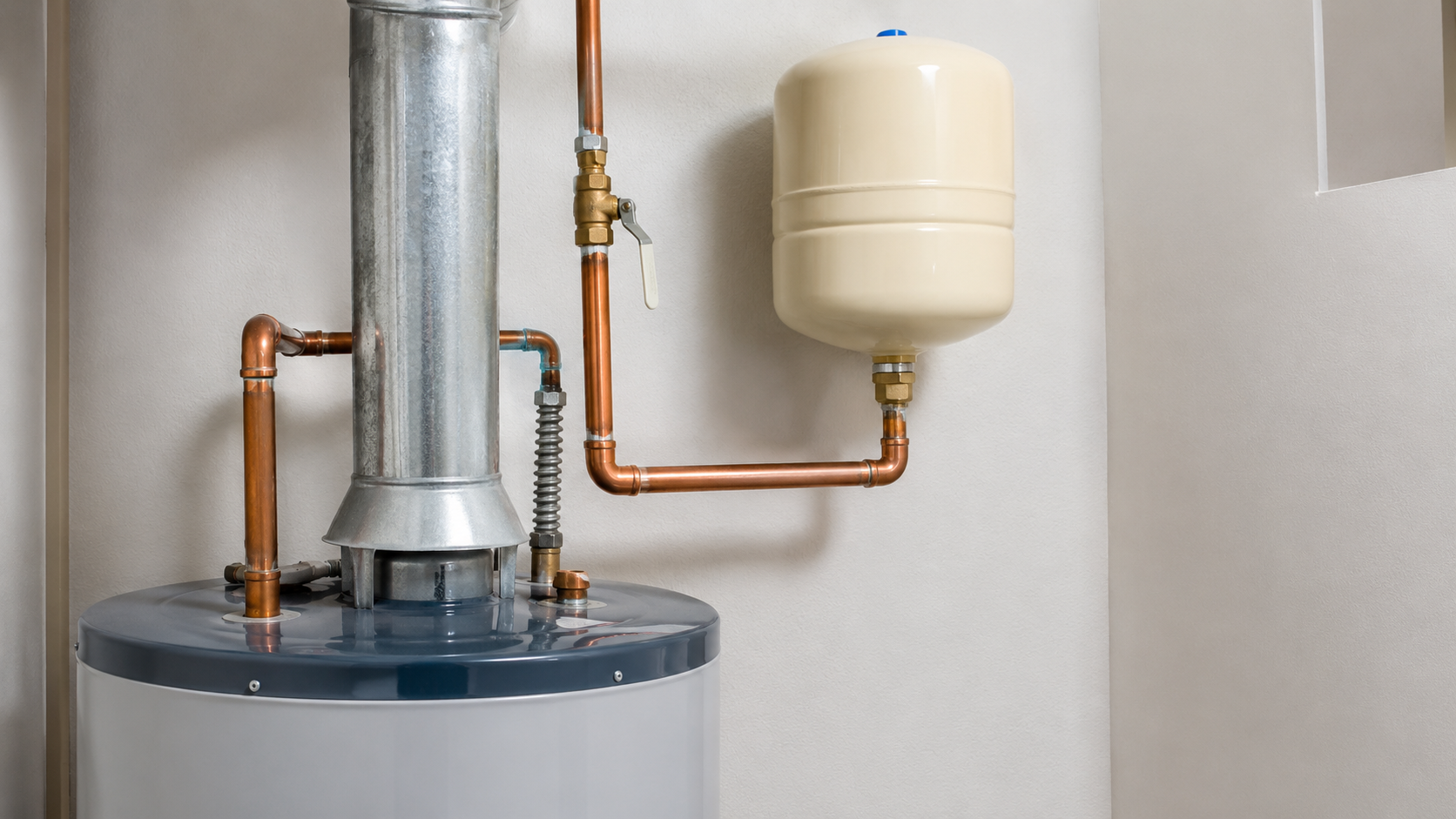
A water heater does not just make water hotter. It also changes the pressure inside your plumbing system. When water heats up, it expands. In older open plumbing systems, that extra volume often had somewhere to go. In many modern homes, backflow preventers, pressure-reducing valves, and check valves can close off that escape path. That is why thermal expansion tanks matter. They give expanding water a safe place to go, helping protect the water heater, pipes, fixtures, valves, and the rest of the home’s plumbing system.
What is a thermal expansion tank?
A thermal expansion tank is a small tank installed on the cold-water side of a storage water heater. Its job is to absorb extra pressure created when water heats up and expands. Inside the tank, there is usually an air chamber or bladder that compresses as expanded water enters the tank.
That may sound like a small detail, but it matters every day. Each time the water heater cycles and heats a tank full of water, the water volume increases slightly. If that added volume has nowhere to go, pressure builds inside the plumbing system.
A thermal expansion tank gives that pressure a controlled place to move. Instead of forcing pipes, fixtures, valves, or the water heater tank to absorb the stress, the expansion tank absorbs it. It is not there for decoration. It is a pressure-protection device that supports the whole plumbing system.
If you are replacing a heater or planning a new setup, professional water heater installation is the right place to start because expansion control should be evaluated as part of the full installation, not treated as an afterthought.
Why does water expand when it gets hot?
Water expands when it is heated. That is the simple physics behind thermal expansion. In a water heater, cold water enters the tank, the burner or heating elements raise the temperature, and the heated water takes up slightly more volume than it did before.
In an open system, that expanded volume may push back toward the supply side. In a closed system, it cannot. That is where the pressure problem begins.
Why this matters inside a home
Your plumbing system is full of parts that are not meant to handle repeated unnecessary pressure spikes:
- Toilet fill valves
- Faucet cartridges
- Shutoff valves
- Washing machine hoses
- Water heater connections
- Pipe joints
- Appliance supply lines
Thermal expansion is not usually a dramatic event you see once. It is a repeated cycle. The water heats, pressure rises, the system absorbs stress, and the process happens again. Over time, that repeated pressure cycling can shorten the life of plumbing components and create leaks that seem random until the pressure problem is identified.
What is a closed plumbing system?
A closed plumbing system is a water supply system where water cannot easily move backward toward the public water main or incoming supply when pressure increases inside the home. This often happens because of modern safety and pressure-control devices.
A system may become closed because of:
- A check valve
- A backflow preventer
- A pressure-reducing valve
- Certain water meter assemblies
- Other one-way devices on the supply side
These devices are often installed for good reasons. Backflow prevention helps protect the public water supply. Pressure-reducing valves help protect homes from excessive street pressure. The problem is that once water cannot move backward, heated water expansion has to be controlled inside the house.
This is why modern plumbing codes focus on thermal expansion control. The system is safer in one way because backflow is controlled, but it needs another safety feature to manage pressure inside the home.
Why do modern plumbing codes require thermal expansion control?
Modern plumbing codes require thermal expansion control because closed systems can experience pressure increases when water heats up. Without a proper expansion device, that pressure can stress the water heater, pipes, valves, fixtures, and appliances.
The code logic is not complicated. If expanded water cannot move backward into the supply, it needs another safe place to go. A thermal expansion tank is one common way to provide that protection.
What the code is trying to prevent
- Unnecessary pressure spikes
- Leaking temperature and pressure relief valves
- Premature water heater failure
- Damaged fixtures and valves
- Leaks at weak connections
- Stress on appliance supply lines
- Potential safety issues from uncontrolled pressure
The word “required” can make this sound like bureaucracy, but the underlying reason is practical. Codes are written around known failure patterns. Thermal expansion tanks exist because closed-system pressure problems are real, repeatable, and preventable.
Does every water heater need an expansion tank?
Not necessarily. The need depends on the type of water heater, the plumbing layout, local code, and whether the home has a closed system. In many modern homes with a storage tank water heater and a backflow prevention device, check valve, or pressure-reducing valve, thermal expansion control is commonly required.
A thermal expansion tank is most often connected with storage-style water heaters. Tankless water heaters work differently because they do not store a large volume of heated water the same way a tank does. That does not mean tankless systems have no installation requirements. It simply means the thermal expansion conversation is different.
If you are weighing tank versus tankless, tankless water heater installation can help you compare the right type of system for your household. For a storage tank water heater, expansion control should be part of the installation conversation from the beginning.
What happens if a closed system has no expansion tank?
If a closed system has no thermal expansion tank, the expanded water has nowhere to go. Pressure can rise until the system finds a weak point. Sometimes that weak point is a relief valve. Sometimes it is a faucet cartridge, toilet valve, water heater connection, appliance hose, or pipe joint.
Common symptoms can include
- The water heater relief valve dripping
- Pipes making noise during heating cycles
- Toilets or faucets wearing out faster
- Small recurring leaks
- Water pressure that seems inconsistent
- Appliance supply lines under extra stress
The scary part is that the problem may not look dramatic at first. It may show up as little annoyances. A valve drips. A toilet part fails. A faucet starts leaking. The water heater seems to work, but small issues keep returning.
That is why signs your water heater needs repair or replacement is a useful next read. Some water heater symptoms are really system-pressure symptoms, and homeowners should not ignore the pattern.
Why does the temperature and pressure relief valve start dripping?
A temperature and pressure relief valve, often called a T&P valve, is a safety device on a water heater. It is designed to open if temperature or pressure rises beyond safe limits. If it drips repeatedly, homeowners often assume the valve itself is bad. Sometimes it is. But repeated dripping can also point to a pressure problem caused by thermal expansion.
In a closed system, pressure may rise each time the water heater cycles. If that pressure has nowhere to go, the T&P valve may discharge as a last line of relief. Replacing the valve without addressing the underlying pressure issue may not solve the problem.
What homeowners should not do
- Do not cap or plug the discharge pipe
- Do not ignore repeated dripping
- Do not assume the valve is always the only problem
- Do not keep replacing parts without checking system pressure
A dripping relief valve is not just a nuisance. It is a warning that the system needs proper diagnosis.
How does an expansion tank protect the water heater?
A thermal expansion tank protects the water heater by reducing pressure stress during heating cycles. Instead of forcing the water heater tank to absorb the full effect of expansion, the expansion tank gives the expanded water a place to move temporarily.
That matters because water heaters already deal with heat, pressure, minerals, corrosion risk, and everyday demand. Uncontrolled thermal expansion adds another layer of stress.
An expansion tank can help reduce stress on
- The tank itself
- Cold-water connections
- Hot-water outlets
- Internal components
- Relief valve operation
- Nearby shutoff valves and piping
This protection matters most over time. One pressure cycle may not destroy a water heater. Repeated pressure cycles over months and years can contribute to premature wear. That is why regular water heater maintenance belongs in this conversation. Maintenance and expansion control both protect the same investment, just in different ways.
How does an expansion tank protect fixtures and appliances?
Thermal expansion does not only affect the water heater. Pressure travels through the plumbing system. That means fixtures and appliances can also feel the stress when pressure rises repeatedly inside a closed system.
Parts most affected can include:
- Faucet cartridges
- Toilet fill valves
- Washing machine hoses
- Dishwasher connections
- Refrigerator water lines
- Shower valves
- Shutoff valves
- Flexible supply lines
Homeowners often think of these failures as isolated. A toilet runs. A faucet drips. A supply line leaks. But if pressure is rising every time the water heater cycles, those failures may be connected.
A thermal expansion tank helps smooth out those pressure spikes. It does not make fixtures last forever, but it reduces one major source of unnecessary strain. If your home has leaks or water-line concerns tied to pressure or supply-side stress, water line repair may become part of the larger solution.
What is the difference between water pressure and thermal expansion pressure?
Normal water pressure is the pressure coming into the home from the water supply. Thermal expansion pressure is the added pressure created when water is heated and expands inside the system.
That difference matters because a home can have normal static pressure most of the day but still experience pressure spikes after the water heater runs. A homeowner may test pressure once and assume everything is fine, while the real issue happens during heating cycles.
Normal pressure concerns may show up as
- Weak flow
- Pressure drops
- Fixture performance issues
- Supply-line limitations
Thermal expansion pressure may show up as
- Relief valve dripping after heating
- Short pressure spikes
- Repeated fixture wear
- Pressure changes tied to water heater operation
If pressure concerns are already showing up around your home, why low water pressure happens and how to fix it can help homeowners understand that pressure problems can have several causes. The key is diagnosing the actual pattern instead of guessing.
Why are pressure-reducing valves part of this conversation?
A pressure-reducing valve, or PRV, is installed to lower high incoming water pressure before it enters the home’s plumbing system. That is a good thing when street pressure is too high. But a PRV can also create a closed system because it may prevent expanded water from moving backward toward the supply.
That means a PRV often solves one pressure problem while creating the need to manage another.
A home with a PRV may need attention to
- Static water pressure
- Thermal expansion pressure
- Expansion tank sizing
- Water heater installation requirements
- Relief valve behavior
- Fixture and appliance stress
This is not a reason to avoid pressure-reducing valves. It is a reason to install the right companion protection. When a PRV is part of the system, a thermal expansion tank is often the device that helps the water heater and plumbing system handle the pressure created by heated water.
Can an expansion tank fail?
Yes. A thermal expansion tank is a working plumbing component, and like other components, it can fail over time. The internal bladder or diaphragm can lose air charge, rupture, or stop absorbing pressure properly. When that happens, the tank may still be visible on the system but may no longer be doing its job.
Signs an expansion tank may not be working
- T&P valve dripping again
- Pressure spikes returning
- Tank feels waterlogged
- Corrosion or leaking around the tank
- Unusual pipe noises
- Fixture leaks showing up again
A failed expansion tank can make homeowners think the water heater has a new problem, when the real issue is that the pressure-control device has stopped working. This is why expansion tanks should be checked during water heater service instead of forgotten after installation.
Your article on best ways to extend the life of your water heater fits naturally here because expansion control, flushing, inspections, and safety checks all support longer water heater life.
How is an expansion tank sized?
Expansion tanks are not one-size-fits-all. The tank should be sized based on the water heater capacity, supply pressure, and system conditions. An undersized tank may not absorb enough expansion. An oversized tank may be unnecessary or awkward to install, though oversizing within reason is usually less problematic than having too little expansion capacity.
Sizing matters because the tank is only useful if it can absorb the expected expansion volume and pressure change. It also needs the right pre-charge pressure to work properly with the home’s water pressure.
Factors that affect sizing
- Water heater tank size
- Incoming water pressure
- Temperature setting
- System configuration
- Whether a PRV or check valve is present
- Manufacturer specifications
This is one reason expansion tanks should be installed by someone who understands the system. The tank is small, but the sizing and setup matter.
Where should a thermal expansion tank be installed?
A thermal expansion tank is typically installed on the cold-water supply line near the water heater, downstream of devices that create the closed system. The exact placement should follow code, manufacturer instructions, and local practice.
Good installation considers more than simply attaching the tank somewhere convenient.
Proper installation should account for
- Location on the cold-water supply
- Support for the tank’s weight
- Access for service
- Correct pressure pre-charge
- Protection from physical damage
- Clearances around the water heater
- Leak-free connections
A poorly supported tank can stress piping. A tank with the wrong air charge may not work correctly. A tank installed in the wrong location may not protect the system the way it should.
That is why your blog on water heater installations Knoxville homeowners often get wrong is especially relevant. Water heater installation mistakes are rarely about one visible part. They are usually about missing the system details that keep everything safe and reliable.
Does a thermal expansion tank improve safety?
Yes, when it is needed and installed correctly. A thermal expansion tank helps keep pressure increases under control in a closed system. That reduces stress on plumbing components and helps prevent the relief valve from becoming the only thing standing between pressure rise and system damage.
It is important to be clear, though. An expansion tank does not replace a T&P relief valve. It supports pressure control during normal heating cycles. The relief valve remains a required safety device for dangerous pressure or temperature conditions.
Think of it this way
- The expansion tank handles normal thermal expansion
- The T&P relief valve provides emergency relief
- Proper installation keeps both working in the right roles
- Maintenance helps confirm the system still operates safely
For homeowners, the takeaway is simple. Thermal expansion tanks are not optional accessories in homes that need them. They are part of the water heater’s pressure-safety environment.
What mistakes do homeowners make with expansion tanks?
Most homeowners do not make expansion tank mistakes on purpose. They simply do not know the tank exists or do not understand what it does. That leads to several common problems.
Common mistakes include
- Replacing a water heater without checking for a closed system
- Ignoring a dripping relief valve
- Assuming the expansion tank never needs inspection
- Installing a tank without proper support
- Using the wrong size tank
- Forgetting to match tank pre-charge to system pressure
- Treating leaks as isolated fixture problems
- Blocking access to the water heater area
The biggest mistake is thinking pressure control is only a code issue. It is also a home-protection issue. If thermal expansion is not managed, the pressure still exists. The only question is which part of the plumbing system will absorb it first.
For homeowners who want a broader safety checklist, plumbing safety tips for homeowners can help reinforce the habit of catching small system risks before they become emergencies.
What should homeowners ask during a water heater replacement?
A water heater replacement is the perfect time to ask about thermal expansion because the plumbing system is already being evaluated. Homeowners should not wait until after installation to find out whether their home needed an expansion tank.
Smart questions to ask
- Is my plumbing system open or closed?
- Do I have a pressure-reducing valve or backflow preventer?
- Does my local code require thermal expansion control?
- What size expansion tank is appropriate for this heater?
- Will the expansion tank be properly supported?
- Will the tank’s pre-charge be checked?
- Should my water pressure be tested during installation?
- What maintenance should I expect later?
These questions help homeowners understand the installation as a system instead of a simple appliance swap. They also make it easier to spot a rushed replacement that ignores pressure control.
Are thermal expansion tanks only for new homes?
No. Older homes may need them too, especially if plumbing conditions changed over time. A home that was once an open system may become closed after a water meter change, backflow prevention update, pressure-reducing valve installation, or water heater replacement.
That is why the age of the house does not answer the question by itself. The real issue is the current plumbing configuration.
A thermal expansion tank may become relevant when:
- A new storage water heater is installed
- A PRV is added
- A backflow preventer is installed
- A meter assembly includes a check valve
- Relief valve dripping starts after system changes
- Fixtures begin showing pressure-related wear
Homeowners often assume old plumbing means old rules. But modern safety devices and code expectations can change what the home needs now. The plumbing system should be evaluated as it exists today.
What happens during a professional expansion-tank evaluation?
A professional evaluation usually looks at the water heater, the cold-water supply, pressure conditions, visible valves, existing expansion control, and symptoms such as relief-valve discharge or repeated leaks.
A plumber may check:
- Whether the system appears closed
- Water pressure readings
- Water heater type and capacity
- Presence and condition of an existing expansion tank
- Tank pre-charge if accessible
- Signs of leaks or corrosion
- T&P valve discharge behavior
- PRV or backflow device presence
- Installation support and accessibility
The purpose is not just to sell a tank. The purpose is to understand whether thermal expansion is being managed properly. If it is not, the solution may include adding, replacing, resizing, or correctly charging an expansion tank.
When in doubt, professional plumbing services in Knoxville and East Tennessee are the right path because code-related water heater details should be handled by someone who understands local homes and local requirements.
FAQs about thermal expansion tanks
What does a thermal expansion tank do?
It absorbs expanded water volume when a storage water heater heats water in a closed plumbing system.
Why do modern codes require expansion tanks?
Modern codes require thermal expansion control in closed systems because expanded water needs a safe place to go when it cannot move backward into the supply.
Does every water heater need one?
Not every setup does. The need depends on water heater type, system design, local code, and whether the home has a closed plumbing system.
What makes a plumbing system closed?
A check valve, backflow preventer, pressure-reducing valve, or similar one-way device can prevent expanded water from moving backward and create a closed system.
Can an expansion tank stop a dripping relief valve?
It can help if the dripping is caused by thermal expansion pressure, but the system should be diagnosed before assuming the valve is the only problem.
Can a thermal expansion tank fail?
Yes. The bladder or air charge can fail over time, which means the tank may stop absorbing pressure properly.
Is a bigger expansion tank always better?
Not necessarily. It should be correctly sized for the water heater, pressure, and system conditions.
Can I install an expansion tank myself?
This is best handled by a qualified plumber because sizing, placement, support, pressure pre-charge, and code requirements all matter.
Thermal expansion tanks are small, but the pressure they control is not
A thermal expansion tank may look like a minor add-on near the water heater, but its purpose is much bigger than its size. In a closed plumbing system, heated water expands and pressure has to go somewhere. Modern plumbing codes require thermal expansion control because unmanaged pressure can damage water heaters, fixtures, valves, supply lines, and other plumbing components.
Here are the biggest takeaways:
- Heated water expands, and closed systems need a safe way to absorb that expansion
- Backflow preventers, pressure-reducing valves, and check valves can make expansion tanks necessary
- A properly sized and installed expansion tank helps protect the water heater and the rest of the plumbing system
- Expansion tanks should be checked during maintenance because they can fail over time
If your water heater is being replaced, your relief valve is dripping, or you are not sure whether your home has a closed plumbing system, do not guess. Have the system evaluated so your water heater installation protects the whole home, not just the tank.


