


Plumbing for "Tiny Homes" and ADUs: Unique drainage requirements
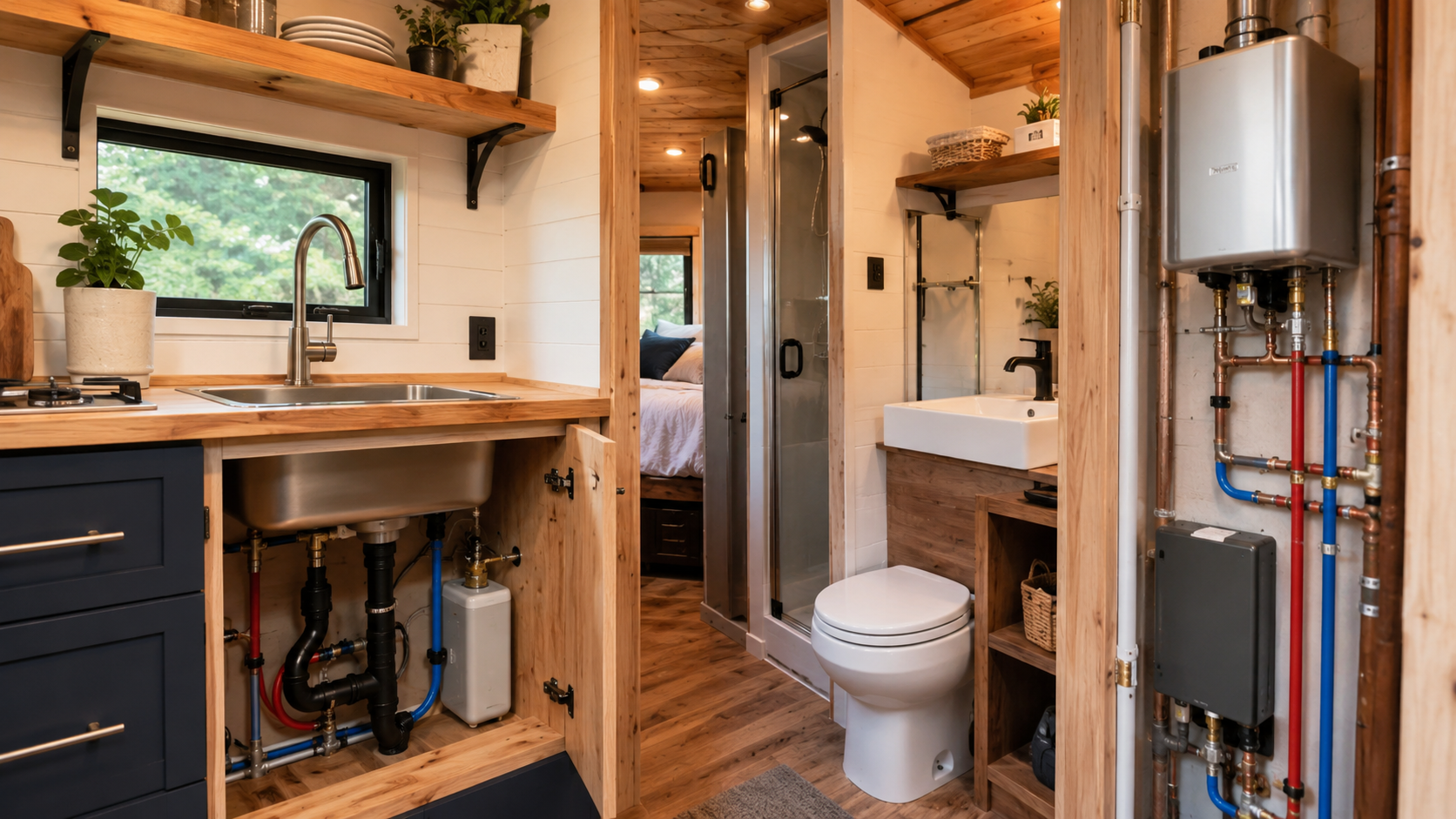
Tiny homes and accessory dwelling units, often called ADUs, are popular because they make small living spaces more flexible, affordable, and functional. But plumbing a small structure is not just a smaller version of plumbing a standard house. Drainage is often harder, not easier, because every fixture has less room, shorter runs, tighter walls, and fewer layout options. A tiny home or ADU can absolutely have a reliable bathroom, kitchen, laundry area, and water heater, but the drainage system has to be planned correctly from the beginning.
Why is drainage different in a tiny home or ADU?
Drainage is different in tiny homes and ADUs because the building footprint is smaller and the plumbing layout has less room for error. In a full-size home, plumbers usually have more wall cavities, crawlspace access, and vertical space to route drains and vents. In a tiny home or detached ADU, the drain path may be short, tight, and more difficult to correct after finishes are installed.
A small structure still needs the same basic drainage principles:
- Fixtures need properly sized drains
- Wastewater needs enough slope to move away
- Traps need to hold water to block sewer gas
- Vents need to protect trap seals
- Cleanouts need to be accessible
- The building needs a reliable connection to sewer or septic
The mistake homeowners make is assuming small fixtures mean simple plumbing. In reality, a compact layout can make drainage design more sensitive. A bad slope, poor vent location, or awkward fixture grouping can create smells, slow drains, gurgling, and recurring clogs in a space where repair access is limited.
What should homeowners decide before plumbing a tiny home or ADU?
Before any plumbing is installed, the homeowner needs to decide how the space will actually be used. A backyard guest suite has different drainage needs than a rental ADU, workshop bathroom, pool house, or tiny home used as a full-time residence.
Start with these questions:
- Will the space have a full bathroom or only a half bath?
- Will there be a kitchen, kitchenette, or wet bar?
- Will laundry be included?
- Will the unit be occupied daily or occasionally?
- Will it connect to public sewer or septic?
- Will the structure be attached, detached, or mobile?
- Will the plumbing be used year-round?
These answers shape the drain layout, venting strategy, water line placement, and sewer or septic connection. If the project is part of a larger renovation or property upgrade, plumbing for your kitchen and bathroom remodel is a useful planning resource because ADUs often combine kitchen and bathroom plumbing in a very small footprint.
Why is fixture placement so important in small living spaces?
Fixture placement matters because every sink, toilet, shower, tub, washing machine, and kitchen fixture adds drainage demand. In a small building, where those fixtures are close together, it is tempting to place them wherever they look best visually. But plumbing has to follow gravity, venting rules, trap requirements, and service access.
A smart layout usually groups plumbing fixtures close together. For example, placing the bathroom wall near the kitchen sink wall can reduce long drain runs and simplify venting. This is sometimes called stacking or grouping wet areas.
Good fixture placement can help:
- Shorten drain runs
- Reduce unnecessary turns
- Make venting easier
- Lower installation complexity
- Improve repair access
- Reduce future clog risk
Poor placement does the opposite. It can create awkward drain slopes, long horizontal runs, extra fittings, and hidden access problems. In small units, even one bad layout choice can make the whole drainage system harder to maintain.
How does drain slope affect tiny-home and ADU plumbing?
Drain slope is one of the most important parts of any gravity drainage system. Wastewater does not leave the building by magic. It moves because the pipe is angled correctly. If the slope is too flat, water and solids may not move well. If the slope is too steep, water can run ahead too quickly and leave solids behind.
In a tiny home or ADU, slope can be harder to manage because the floor assembly may be shallow, the structure may sit close to grade, or the building may be detached from the main sewer connection. That makes early planning essential.
Drain slope affects:
- Toilet performance
- Shower and sink drainage
- Kitchen waste flow
- Laundry discharge
- Long-term clog risk
- Sewer odor problems
A compact space can make the slope look easier because the runs are shorter. But short does not always mean simple. The pipe still needs the right path, enough fall, and enough access to be cleaned or repaired later. If the drain line becomes damaged or poorly performing, drain line repair may be needed to correct problems that should have been avoided during design.
Why is venting often the hardest part of tiny-home drainage?
Venting is often harder than drainage because homeowners can picture water going down a pipe, but they do not always think about air movement. Every drain needs air behind the water so the system can flow smoothly and so fixture traps do not get siphoned dry.
Without proper venting, tiny homes and ADUs may develop:
- Gurgling drains
- Slow draining sinks or showers
- Sewer smells
- Trap seal loss
- Toilet flushing problems
- Pressure imbalance when multiple fixtures are used
Venting can be tricky in compact structures because wall space is limited and roof penetrations may be difficult. In some layouts, plumbers may need to consider alternative venting methods where allowed by code and local authority. But venting should never be improvised.
A tiny bathroom can smell like sewer gas even when nothing is visibly clogged if the trap seal is being pulled by poor venting. That is why venting has to be part of the design, not an afterthought after fixtures are already placed.
What is the biggest drainage mistake in tiny bathrooms?
The biggest drainage mistake in tiny bathrooms is trying to make the room fit visually before confirming the drain, trap, and vent layout. A tiny bathroom often includes a shower, toilet, vanity, and sometimes a washer in a space smaller than many standard bathrooms. Every inch matters.
Common mistakes include:
- Placing a shower too far from practical drainage
- Forgetting access to the trap or cleanout
- Using fixture locations that make venting difficult
- Crowding the toilet connection
- Ignoring floor height needed for shower drainage
- Choosing fixtures before confirming plumbing feasibility
This matters because the bathroom is the highest-risk plumbing zone in most ADUs and tiny homes. A poor bathroom layout can lead to slow drainage, leaks, odors, and repair access problems. If your project includes a new or reworked bathroom, important plumbing considerations for a bathroom renovation is the right internal guide because the same hidden plumbing decisions become even more important in a smaller space.
How do showers create unique drainage challenges in tiny homes?
Showers create unique challenges because they need dependable drainage, waterproofing, trap protection, venting, and slope in a very compact footprint. A tiny-home shower may look simple, but it still has to move water quickly and safely without letting sewer gas into the room.
Tiny showers can create issues when:
- The drain is not centered or sloped correctly
- The trap is difficult to access
- The venting is weak
- The floor assembly is too shallow
- Waterproofing is not coordinated with plumbing
- The shower shares drainage poorly with nearby fixtures
A shower drain also handles hair, soap, shampoo residue, and body oils, so the design needs to account for maintenance. If the shower is in a rental ADU or full-time tiny home, it may see heavy use in a very small system.
The goal is not just to make water disappear. The goal is to make it drain consistently, protect the structure, and keep odors out over time.
Why do kitchens in tiny homes and ADUs need special drainage planning?
Kitchen drains carry different waste than bathroom drains. They deal with grease, food particles, soap residue, and disposal habits if a garbage disposal is installed. In a small ADU or tiny home, that kitchen drain may be close to the bathroom drainage system, which makes layout decisions especially important.
A small kitchen or kitchenette still needs:
- Proper sink drainage
- Good trap placement
- Venting
- Cleanout access
- Careful handling of grease and food waste
- Reliable connection to the main drain path
The biggest risk is treating the kitchenette like a casual wet bar. Even a small sink can clog if grease and food residue collect in a short, poorly planned drain line. If the tiny home or ADU will be used as a rental, guest suite, or full-time dwelling, the kitchen drain should be designed for real use, not occasional convenience.
Good kitchen drainage also needs homeowner education. Small systems are less forgiving when people pour grease, coffee grounds, rice, pasta, or heavy food waste into the sink.
What about laundry drainage in tiny homes and ADUs?
Laundry adds a major drainage demand because washing machines discharge a lot of water quickly. In a tiny home or ADU, that fast discharge can overwhelm a poorly designed small drain system if the pipe sizing, venting, and standpipe arrangement are not correct.
Laundry planning should consider:
- Where the washer will sit
- Whether the floor can handle vibration and access needs
- How the washer drains
- Whether nearby fixtures will be affected
- Where shutoff valves will be located
- Whether a leak pan or leak detector makes sense
Laundry drainage also needs to be planned around access. A stacked washer and dryer in a tiny closet may look great, but it can hide valves, hoses, and drain connections that need inspection.
Laundry can be convenient in an ADU, but it should be included only when the drainage and water supply are truly designed for it. Otherwise, it can become one of the most frustrating plumbing features in the unit.
Should a tiny home or ADU connect to sewer or septic?
That depends on the property, location, local rules, and existing infrastructure. Some ADUs can connect to the existing sewer lateral. Others may require a dedicated connection, modifications, pump systems, or septic evaluation. Detached units usually require more planning because the drain has to travel outside the main structure.
Key questions include:
- Is public sewer available?
- Is the existing sewer line in good condition?
- Is the property on septic?
- Can the septic system handle additional load?
- Is gravity drainage possible?
- Will a pump system be needed?
- What permits and inspections are required?
If the property is on septic, adding an ADU is not just a fixture decision. It may affect wastewater capacity, health requirements, and system performance. If septic issues are part of the project, septic tank repair services in East Tennessee are relevant because the existing wastewater system has to be healthy before it takes on additional use.
Why is a sewer camera inspection smart before adding an ADU?
A sewer camera inspection is smart because an ADU adds demand to the existing drainage system. If the main sewer line is already partially blocked, damaged, root-intruded, or sagging, the new unit may expose that weakness quickly.
A camera inspection can help identify:
- Cracks
- Root intrusion
- Low spots or bellies
- Heavy buildup
- Offset joints
- Collapsed sections
- Existing blockages
This is especially important when the ADU will connect to an older home’s sewer line. The main house may have been operating just well enough under its current load, but adding another bathroom, kitchen, or laundry area can push a marginal sewer line into recurring backup territory.
Before a homeowner spends money on finishes, fixtures, or rental-ready upgrades, it makes sense to check whether the underground drainage path can actually support the plan. That is why sewer line video inspection is one of the strongest internal links for this topic.
What happens if the existing sewer line cannot support the ADU?
If the existing sewer line cannot support the ADU, the project may need repair, replacement, rerouting, or a different drainage strategy. This can affect budget, timing, permits, and site work.
Warning signs that the existing sewer line may not be ready include:
- Recurring backups
- Multiple slow drains in the main house
- Gurgling toilets
- Sewer odors
- Wet or unusually green patches in the yard
- Known root intrusion
- Older pipe materials with a history of failure
If the line is damaged, simply tying in another unit can make the problem worse. More fixtures mean more wastewater, and more wastewater means more pressure on a weak system.
In some cases, sewer line repair may be needed before the ADU plumbing can perform reliably. It is better to solve that upfront than after the unit is occupied and the problem becomes urgent.
Why do detached ADUs sometimes need pump systems?
Detached ADUs sometimes need pump systems when gravity drainage is not practical. Ideally, wastewater flows downhill from the fixture to the sewer or septic connection. But not every property has the elevation, distance, or site layout to make that easy.
A pump system may enter the conversation when:
- The ADU sits below the sewer connection
- The sewer line is too far away for practical slope
- The lot has difficult grade
- The unit is in a basement, garage conversion, or low area
- The drain route cannot maintain proper fall
Pump systems add complexity. They need the right design, electrical support, maintenance access, alarms, and homeowner understanding. They can be very useful, but they are not something to casually add without planning.
The biggest mistake is assuming gravity will work before confirming it. Site elevation and sewer depth can make or break the drainage plan.
How do water lines and drainage lines work together in ADU planning?
Homeowners often think of water supply and drainage as separate systems, but they have to be planned together. Every fixture that receives water also needs a safe way to remove wastewater. In an ADU, both sides are affected by distance, access, winter exposure, and the existing home’s capacity.
Water supply planning should consider:
- Distance from the main house or meter
- Pressure at the new unit
- Hot water delivery time
- Freeze protection
- Pipe routing
- Shutoff access
Drainage planning should consider:
- Fixture grouping
- Gravity slope
- Sewer or septic capacity
- Vents
- Cleanouts
- Service access
If the new unit requires a new or extended supply line, water line repair is a relevant service page because underground water lines and supply-side problems can affect the entire ADU plan.
What water heater setup makes sense for a tiny home or ADU?
Tiny homes and ADUs often require a different water heater strategy than full-size homes. The unit may not need a large tank, but it still needs reliable hot water for the fixtures included. The choice depends on space, demand, utility availability, installation conditions, and whether the unit is used full-time.
Common options include:
- Small storage tank water heaters
- Tankless water heaters
- Point-of-use water heaters
- Shared water heating from the main house in some layouts
A tankless unit can be attractive because it saves space and heats on demand, but it must be properly sized and installed. A small storage tank can work well in simpler ADUs, but it needs room, safe installation, and maintenance access.
If water heating is part of the ADU plan, tankless water heater installation is a natural internal link because space-saving hot water is one of the biggest comfort decisions in compact living.
How do permits and local rules affect tiny-home and ADU plumbing?
Permits and local rules matter because tiny homes and ADUs often sit at the intersection of zoning, building codes, plumbing codes, septic or sewer rules, electrical requirements, and occupancy standards. What is allowed in one East Tennessee community may not be exactly the same in another.
Plumbing work may require review for:
- Fixture count
- Drain, waste, and vent design
- Sewer or septic connection
- Water supply sizing
- Backflow prevention
- Inspection access
- Code-compliant materials
- Health and safety requirements
This is not the part of the project to guess on. A tiny home used as a dwelling is not the same as a storage shed with a utility sink. An ADU intended for occupancy must be treated like living space with safe, code-aware infrastructure.
If the project involves moving or adding plumbing during a renovation, the cost and process of moving plumbing during a remodel can help homeowners understand why planning, permits, and layout decisions affect the final price.
What drainage problems show up after people move into tiny homes or ADUs?
Many drainage problems do not show up during a quick test. They show up after real daily use begins. A sink that drains during installation may struggle once someone cooks every day. A shower that works once may reveal venting trouble after repeated use. A toilet that flushes fine may gurgle when laundry drains nearby.
Common post-occupancy issues include:
- Slow drains
- Sewer odors
- Gurgling fixtures
- Recurring clogs
- Shower drainage problems
- Toilet performance issues
- Laundry discharge problems
- Grease buildup in small kitchen drains
This is why plumbing design should be based on real living patterns. A tiny home used as a weekend office with a sink is very different from an ADU used as a rental with daily showers, cooking, laundry, and guests.
Small systems are less forgiving. If the design is marginal, real use will expose it quickly.
What maintenance habits matter most in a tiny home or ADU?
Maintenance matters more in tiny homes and ADUs because the system is compact and easier to overload. Small drain lines, tight layouts, and shared fixture groups can become sensitive to poor habits.
Important maintenance habits include:
- Do not pour grease down the kitchen sink
- Use drain screens in showers and sinks
- Avoid flushing anything except toilet paper
- Clean strainers regularly
- Watch for slow drainage early
- Run water in rarely used traps
- Keep cleanouts accessible
- Inspect under sinks and around fixtures
- Address odors quickly
If the unit is a rental, guest house, or short-term stay space, the owner may need to make rules visible and simple. Guests may not understand how sensitive a smaller plumbing system can be.
Good habits protect the system. Bad habits reveal weak design faster.
What mistakes should homeowners avoid when plumbing an ADU?
The biggest mistake is treating ADU plumbing like a weekend add-on. Once a unit has a bathroom, kitchen, laundry, or water heater, it becomes real plumbing infrastructure. It needs real planning.
Avoid these mistakes:
- Choosing the layout before checking drainage feasibility
- Ignoring venting
- Assuming the main sewer line is healthy
- Forgetting cleanout access
- Adding laundry without confirming capacity
- Using the cheapest fixture package without considering maintenance
- Skipping sewer inspection
- Designing for aesthetics but not serviceability
- Forgetting winter protection in detached structures
A good ADU is not just small and stylish. It is durable, serviceable, and easy to live in. Plumbing is a major part of that durability.
When should homeowners call a plumber during tiny-home or ADU planning?
Homeowners should call a plumber early, ideally before the floor plan is finalized. That may sound early, but it can save a lot of money and frustration. A plumber can often spot drainage, venting, water supply, and sewer connection issues before they become expensive redesigns.
Call early if the project includes:
- A bathroom
- A shower
- A kitchen or kitchenette
- A washing machine
- A detached structure
- A sewer or septic tie-in
- New water lines
- A water heater
- Any plumbing relocation
The earlier the plumbing plan is reviewed, the easier it is to make the layout work without fighting the drainage system. If you are ready to explore the real feasibility of an ADU or tiny-home plumbing plan, professional plumbing services in Knoxville and East Tennessee are the best next step.
FAQs about plumbing for tiny homes and ADUs
Is plumbing a tiny home easier than plumbing a normal house?
Not always. The space is smaller, but the plumbing can be more sensitive because there is less room for drain slope, venting, cleanouts, and service access.
Can an ADU connect to the main house sewer line?
Sometimes, but the existing sewer line should be inspected and evaluated for capacity, condition, grade, and local code requirements.
Does a tiny home need plumbing vents?
Yes. Fixtures still need proper venting to protect traps, prevent sewer gas, and support smooth drainage.
Is a tankless water heater good for an ADU?
It can be a strong option because it saves space and heats water on demand, but it must be sized and installed correctly.
What is the biggest drainage challenge in a detached ADU?
Usually the sewer or septic connection. Distance, elevation, slope, and existing line condition all matter.
Can a tiny home use a pump system for drainage?
Yes, in some cases, especially when gravity drainage is not practical. Pump systems need careful design and maintenance access.
Should I get a sewer camera inspection before adding an ADU?
Yes, it is often a smart move, especially if the ADU will connect to an older home’s sewer line.
Are permits required for ADU plumbing?
Often yes, but requirements vary by local jurisdiction, property type, and project scope. Homeowners should verify before work begins.
Build the tiny home or ADU around the plumbing, not the other way around
Tiny homes and ADUs work best when the plumbing is planned before the finishes, not after. A compact space can be beautiful and efficient, but it still has to obey the same drainage realities as any other dwelling. Wastewater needs slope. Traps need venting. Sewer or septic systems need capacity. Cleanouts need access. Water heaters need space and serviceability.
Here are the biggest takeaways:
- Small spaces do not make drainage simpler
- Fixture grouping, slope, venting, and sewer connection strategy matter from the beginning
- A sewer camera inspection can protect the project before the ADU adds more demand to an old line
- Detached units need extra attention to grade, freeze protection, water supply, and service access
If you are planning a tiny home, garage conversion, backyard cottage, or ADU in East Tennessee, start with the plumbing path before committing to the layout. The best small homes are not just well designed on the surface. They are built around drainage systems that can handle real life.


