


Understanding Galvanic Corrosion: What happens when different metals touch
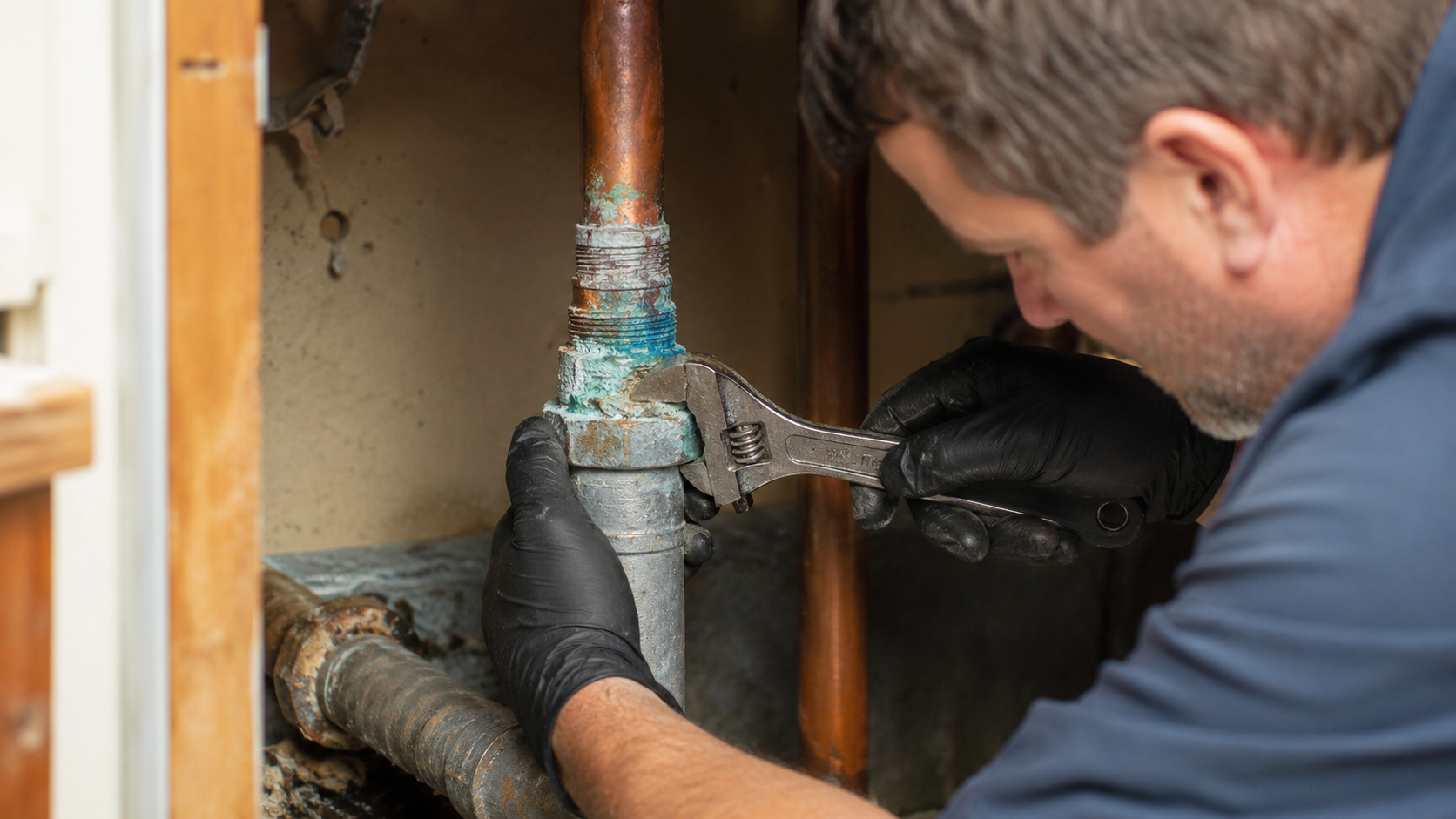
Galvanic corrosion sounds like a complicated chemistry lesson, but the idea is simple: some metals do not play nicely together when water is involved. In plumbing, that matters because homes often contain more than one metal, especially older homes that have been repaired, remodeled, or partially upgraded over time. Copper, galvanized steel, brass, stainless steel, and other fittings may all show up in the same system. When incompatible metals touch directly and water acts as the conductor, one metal can corrode faster than expected. That can lead to leaks, rust, stains, weak fittings, and expensive repairs that seem to appear out of nowhere.
What is galvanic corrosion in simple terms?
Galvanic corrosion happens when two different metals touch each other while water or another conductive liquid is present. The water acts like an electrolyte, which allows a small electrochemical reaction to happen. One metal becomes more protected, while the other becomes more likely to corrode.
In plumbing, the easiest way to picture it is like a tiny battery forming inside your piping system. The metals have different electrical potentials. When they are connected through water and direct contact, current can move between them. The less noble metal gives up material faster, which means it corrodes.
This is why a pipe connection can fail even when both materials are considered durable on their own. Copper can be a strong plumbing material. Galvanized steel can also serve a purpose in older systems. But when they are joined incorrectly, the connection point can become a corrosion hotspot.
That is the part homeowners miss. The problem is not always the pipe itself. Sometimes the problem is the transition between two materials that should have been isolated from each other.
Why does water make the reaction worse?
Water is the reason galvanic corrosion becomes a plumbing problem. Without moisture or conductivity, two different metals touching may not corrode quickly. Once water is present, the reaction has the path it needs to move.
Inside a plumbing system, water is always available. That water may also contain dissolved minerals, oxygen, salts, treatment chemicals, or other compounds that affect how aggressive the reaction becomes.
Water conditions that can influence corrosion include:
- pH level
- Mineral content
- Dissolved oxygen
- Chloride or salt content
- Hardness or softness
- Temperature
- Flow velocity
- Water stagnation time
That means two homes with similar pipe materials can have different outcomes. One mixed-metal connection may last for years with few visible signs. Another may corrode much faster because the local water chemistry makes the reaction more aggressive.
This is why water quality and plumbing materials should never be treated as separate topics. The pipe and the water are always interacting. If your home already has mineral buildup, staining, or recurring corrosion symptoms, how hard water impacts your plumbing system is a helpful next read because water chemistry can change how long plumbing components last.
Which metals are most often involved in home plumbing corrosion?
Most homes are not built from one single plumbing material. Even if the main supply lines are mostly copper, the system may also include brass valves, steel nipples, galvanized sections, stainless appliance connections, cast iron drains, or newer PEX transitions with metal fittings.
Common metals and materials homeowners may see include:
Copper
Copper is common in supply lines and has a strong history in residential plumbing. It resists many forms of corrosion, but it can still be affected by water chemistry, velocity, and mixed-metal contact.
Galvanized steel
Older homes may still have galvanized steel piping or fittings. Galvanized material is prone to internal corrosion over time and can be especially problematic when joined improperly to copper.
Brass
Brass is often used in valves and fittings. It is generally compatible in many plumbing applications, but not all brass products are identical.
Stainless steel
Stainless steel may show up in braided supply lines, fittings, or specialty components. Its compatibility depends on the surrounding materials and conditions.
Cast iron
Cast iron is more common in drain and sewer systems than pressurized water lines. It has its own corrosion issues, especially in older homes.
A good plumbing repair looks at the whole material chain. The transition matters as much as the main pipe.
Why is copper connected to galvanized steel such a classic problem?
Copper and galvanized steel are one of the most commonly discussed combinations because they often appear together in older homes that have been partially repaired or upgraded. A homeowner may have old galvanized lines in one section and newer copper lines in another. If the transition between them was not handled correctly, galvanic corrosion can accelerate.
In this pairing, galvanized steel is usually the material more likely to suffer. The zinc coating and steel can deteriorate faster near the connection, creating rust, buildup, leaks, or flow restriction.
Signs this connection may be causing trouble
- Rust at the transition point
- Green or blue staining near copper sections
- Flaking or crusty buildup near fittings
- Leaks at mixed-metal joints
- Reduced water pressure downstream
- Discolored water after sitting overnight
The issue may stay localized at first. That makes it easy to underestimate. A homeowner may think one fitting is simply old, when the real issue is that the transition was never designed correctly.
That is why understanding the pros and cons of different pipe materials matters. Each material has strengths, but compatibility and installation method decide whether those strengths hold up in real life.
What does galvanic corrosion look like before it leaks?
Galvanic corrosion does not always announce itself with a burst pipe. It often starts with small visual clues around fittings, valves, and transition points.
Look for:
- White, green, blue, or rusty crust around fittings
- Dampness at a joint
- Flaking metal or mineral buildup
- Staining on nearby walls, floors, or cabinets
- Pipe discoloration near mixed-metal contact points
- Small drips that return after tightening
- Reduced water flow in one area of the home
These signs matter because corrosion often works quietly before failure becomes obvious. A fitting may look ugly for a long time before it leaks. But once the metal has weakened enough, the leak can become sudden.
Do not assume corrosion is only cosmetic. Staining and crusting often mean water, minerals, oxygen, and metal reactions are already happening. If the same type of residue keeps coming back after cleaning, the system is trying to tell you something.
For a broader checklist of warning signs, review early warning signs of pipe corrosion. It can help homeowners spot trouble before a pipe failure causes damage.
Why do older homes have more mixed-metal risks?
Older homes often have more galvanic corrosion risk because plumbing systems change in layers. A house may have started with galvanized steel, then had copper added in one bathroom, then PEX added during a later renovation, then a new water heater installed with different fittings.
That layered repair history can create many transition points.
Common mixed-system situations include:
- Copper added to an older galvanized system
- New valves installed onto older pipe
- Water heater replacements using different connector materials
- Bathroom remodels tied into old branch lines
- Partial repiping instead of full-system replacement
- Emergency repairs made with whatever fit at the time
Partial upgrades are not automatically bad. They are often necessary. The risk comes when new and old materials are connected without the right transition method.
This is one reason old plumbing decisions should be made carefully. If multiple materials are present and leaks keep appearing, the homeowner may need to think beyond one repair. When to repair or replace old plumbing pipes is a strong internal next step because widespread corrosion and mixed-material problems often change the financial math.
How do dielectric unions help prevent galvanic corrosion?
A dielectric union is a fitting designed to separate dissimilar metals so they are not in direct electrical contact. It usually includes a nonconductive barrier between the metals. That barrier helps interrupt the electrical path that drives galvanic corrosion.
In practical plumbing terms, dielectric protection may be used when connecting materials like copper and steel, depending on the application, local code, and manufacturer requirements.
What dielectric isolation can do
- Reduce direct metal-to-metal contact
- Help slow accelerated corrosion at transitions
- Protect vulnerable connection points
- Support better long-term performance in mixed-metal systems
What it cannot do
- Fix pipes that are already badly corroded
- Solve poor water chemistry by itself
- Replace correct installation practice
- Make every material combination safe forever
A dielectric union is not a magic part. It is one tool in a larger strategy. The transition must be correct for the materials, the water conditions, the pressure, and the local plumbing requirements.
If the repair involves a water heater, water service line, or older piping, the right transition fitting can make the difference between a durable repair and a repeat leak.
Why do water heaters often show galvanic corrosion problems?
Water heaters are common places for galvanic corrosion concerns because they often include several metal transitions in a small area. You may have copper pipes, steel nipples, brass valves, dielectric fittings, flexible connectors, and the water heater tank connections all interacting.
Water heaters also add heat, pressure, sediment, and mineral concentration to the picture. Hot water can make reactions happen faster in some conditions, and the water heater area is often where homeowners first notice crust, rust, or staining.
Common warning signs around water heaters include:
- Rust around fittings
- White or green crust near connections
- Drips at hot or cold connections
- Corrosion near dielectric nipples
- Discolored water
- Moisture at the top of the unit
- Repeated connection leaks after replacement
This is one reason water heater maintenance should include more than flushing the tank. The visible connections matter too. Regular water heater maintenance can help catch corrosion, leaks, and connection issues before they damage the unit or the surrounding area.
Can galvanic corrosion happen without pipes touching directly?
Direct contact between dissimilar metals is the classic setup, but the full picture can be more complicated. In some systems, electrical continuity may occur through fittings, bonding, grounding, water, or connected metal pathways. Stray electrical currents can also contribute to corrosion issues in some situations.
That means homeowners should avoid oversimplifying the problem. If corrosion keeps appearing in the same area, the cause may involve:
- Direct metal-to-metal contact
- Poor transition fittings
- Water chemistry
- Electrical bonding or grounding conditions
- Stray current
- Pressure or velocity issues
- Localized water stagnation
- Previous repair materials
This is why a visual inspection is helpful but not always enough. A plumber may need to evaluate the connection, the surrounding materials, the water heater setup, and the water conditions.
Galvanic corrosion is a system issue. The visible damage is often only the final clue.
How does water quality change galvanic corrosion risk?
Water quality can make galvanic corrosion more or less aggressive. More conductive water tends to support electrochemical reactions more easily. Water with certain minerals, salts, oxygen levels, or pH conditions can accelerate corrosion or weaken protective layers inside pipe.
Water quality can influence:
- How quickly metals react
- Whether protective films form
- How much copper or iron dissolves
- Whether deposits create localized corrosion cells
- How fast fittings and valves deteriorate
This is especially relevant in homes with private wells, older plumbing, or recurring staining. If the water itself is part of the issue, replacing one fitting may not solve the underlying problem.
That is why water analysis for plumbing and water quality concerns is so valuable. Testing helps separate a material-compatibility issue from a water-chemistry issue, and many homes have both.
What is the difference between galvanic corrosion and ordinary pipe corrosion?
Ordinary corrosion can happen when a metal reacts with water, oxygen, chemicals, or environmental conditions. Galvanic corrosion is a specific type of corrosion caused by dissimilar metals being electrically connected in an electrolyte.
Ordinary corrosion may involve:
- Pipe age
- Oxygen exposure
- pH issues
- Mineral buildup
- Rust formation
- General material breakdown
Galvanic corrosion specifically involves:
- Two different metals
- Electrical connection between them
- Water or another electrolyte
- Accelerated attack on the more vulnerable metal
This distinction matters because the fix may be different. General corrosion may require water treatment, pipe replacement, or pressure correction. Galvanic corrosion may require a proper transition fitting, isolation, replacement of incompatible components, or correction of a bad repair.
If you only replace the corroded part without understanding which type of corrosion caused it, the failure may return.
Can galvanic corrosion cause low water pressure?
Yes, indirectly. Galvanic corrosion can create rust, scale, and internal buildup near metal transitions. If the affected material is galvanized steel, corrosion can narrow the inside of the pipe and restrict flow. Over time, the homeowner may notice weaker pressure at fixtures downstream.
Low pressure from corrosion often develops slowly. It may affect one bathroom, one branch, or one side of the house before the rest of the system seems impacted.
Possible signs include:
- One fixture losing flow first
- Rusty water after sitting
- Pressure improving briefly after a repair, then dropping again
- Old galvanized sections still present
- Corrosion near transitions or valves
A low-pressure complaint should not always be treated as a fixture issue. Sometimes the faucet is fine. The problem is that the pipe feeding it is closing off internally.
If water flow has changed along with visible corrosion or leaks, water line repair for leaks and pressure problems may become part of the solution.
What happens if galvanic corrosion is ignored?
Ignoring galvanic corrosion allows the reaction to continue until the vulnerable metal weakens further. At first, the issue may only be ugly buildup or staining. Over time, it can become a leak, a failed fitting, a restricted pipe, or a larger repair.
The cost of waiting can include:
- Repeated small leaks
- Water damage behind walls or cabinets
- Fixture staining
- Low water pressure
- Water heater connection failure
- Emergency pipe repair
- More expensive replacement later
- Damage to flooring, drywall, or ceilings
The biggest problem with waiting is that corrosion does not usually reverse itself. Cleaning the outside of the pipe does not restore the metal underneath. Tightening a fitting may temporarily slow a drip, but it does not fix the reaction.
The sooner the connection is evaluated, the more options the homeowner usually has. Once the pipe is leaking badly, the repair becomes urgent instead of planned.
Can DIY plumbing repairs create galvanic corrosion?
Yes. DIY repairs are one of the most common ways incompatible metals get connected. A homeowner may see two threaded pieces that physically fit and assume the connection is safe. Unfortunately, plumbing compatibility is not just about thread size.
DIY mistakes may include:
- Connecting copper directly to galvanized steel
- Using the wrong adapter
- Mixing metals without isolation
- Reusing corroded fittings
- Installing water heater connectors incorrectly
- Ignoring manufacturer instructions
- Choosing a part based only on what is available at the store
The repair may hold water at first, which creates false confidence. Then corrosion starts at the transition. Months or years later, the fitting leaks and the homeowner may not connect the failure back to the original repair.
This is why plumbing repairs should consider materials, water pressure, water chemistry, and code requirements. A connection that “works” today is not always a connection that will last.
How do plumbers diagnose galvanic corrosion?
A plumber starts by looking at where the corrosion appears. Location is one of the biggest clues. Corrosion concentrated at a transition between different metals suggests a different problem than corrosion spread evenly across old piping.
A professional evaluation may include:
- Identifying pipe and fitting materials
- Checking whether dissimilar metals touch directly
- Inspecting water heater connections
- Looking for dielectric fittings or nipples
- Checking for leaks or crust at transitions
- Evaluating water pressure
- Reviewing water quality clues
- Looking at the repair history of the system
- Deciding whether the issue is isolated or widespread
The plumber may also ask when the corrosion began, whether the home has private well water, whether a remodel was recently completed, and whether similar corrosion exists elsewhere.
Good diagnosis matters because not every green stain or rusty fitting is galvanic corrosion. The goal is to identify the real cause before recommending the repair.
How can homeowners prevent galvanic corrosion during upgrades?
Prevention starts with planning material transitions before the work begins. This is especially important during water heater replacement, bathroom remodels, kitchen updates, partial repipes, and repairs in older homes.
Smart prevention steps include:
- Identify existing pipe materials before choosing new materials
- Use approved transition fittings when metals differ
- Avoid direct copper-to-galvanized contact
- Consider water quality before selecting materials
- Replace badly corroded sections instead of tying into them casually
- Make sure water heater connections are correct
- Keep records of plumbing changes
Prevention is much easier than cleanup. Once galvanic corrosion damages a fitting, the repair may require cutting out pipe, replacing valves, or opening walls.
If your home is being renovated, important plumbing considerations for a bathroom renovation is a helpful planning resource because remodels often reveal old materials that need careful transitions.
When should mixed-metal plumbing be repaired instead of monitored?
Some mild surface discoloration may not be urgent, but active corrosion at a mixed-metal connection should not be ignored. Monitoring only makes sense when the issue has been professionally evaluated and there is no active leak, pressure issue, or structural weakness.
Repair is more urgent when:
- The fitting is damp
- Corrosion is growing quickly
- There is active dripping
- Water is discolored
- Pressure has dropped
- The connection is near a water heater
- The surrounding pipe is old or brittle
- Similar corrosion appears in multiple places
The question is not only whether the connection is leaking today. The question is whether the connection is likely to fail and what it will damage when it does.
If repeated corrosion is part of a broader aging-system pattern, benefits of upgrading your plumbing system can help homeowners think beyond the single bad fitting and consider long-term reliability.
What should you do if you find corrosion at a pipe connection?
If you find corrosion at a pipe connection, do not scrape aggressively, twist fittings, or try to force old valves unless you know what you are doing. Corroded plumbing can fail when disturbed.
A safer homeowner checklist
- Take clear photos of the area.
- Check whether the pipe or fitting is damp.
- Look for staining on nearby surfaces.
- Avoid storing items under or around the affected connection.
- Find the nearest shutoff valve.
- Note whether water pressure has changed.
- Schedule a professional evaluation if corrosion is heavy, wet, or recurring.
If water is actively leaking, shut off the water if safe and call for help. If corrosion is near a water heater, do not ignore it. Water heater connections can fail and release significant water.
Corrosion is a warning sign. Treat it as information, not decoration.
FAQs about galvanic corrosion in plumbing
What is galvanic corrosion?
Galvanic corrosion happens when two different metals are electrically connected in the presence of water or another electrolyte, causing one metal to corrode faster.
Why is copper and galvanized steel a problem?
Copper and galvanized steel can create a galvanic reaction when joined incorrectly, often accelerating corrosion of the galvanized material.
Does galvanic corrosion only happen in old homes?
No. It is more common in older or partially repaired systems, but it can happen in any home where dissimilar metals are connected incorrectly.
Can a dielectric union stop galvanic corrosion?
It can help reduce galvanic corrosion by isolating dissimilar metals, but it must be correctly selected and installed.
Is green crust on copper always galvanic corrosion?
Not always. Green or blue-green residue can also relate to copper corrosion, water chemistry, or small leaks. The location and materials matter.
Can water quality make galvanic corrosion worse?
Yes. Water pH, minerals, oxygen, salts, and conductivity can all influence corrosion speed and severity.
Should I replace all my pipes if one mixed-metal joint corrodes?
Not always. One bad transition may be repairable. Multiple failures or widespread corrosion may point to a larger system issue.
Can I fix mixed-metal corrosion myself?
It is better to have a plumber evaluate it. The correct fix depends on materials, code, water pressure, and the condition of the surrounding piping.
Stop mixed-metal corrosion before it becomes a leak
Galvanic corrosion is what happens when plumbing materials that should be separated are allowed to interact through water and electrical contact. It is common in older homes, partial repairs, water heater connections, and remodels where new materials meet old ones. The damage may start as crust, staining, or a tiny drip, but it can eventually become a failed fitting, low water pressure, or hidden water damage.
Here are the biggest takeaways:
- Different metals can create an electrochemical reaction when water connects them
- Copper and galvanized steel are one of the most common problem pairings in older plumbing
- Dielectric fittings and proper transition methods help reduce risk
- Water quality, pressure, and installation quality all affect how quickly corrosion develops
- Repeated corrosion should be diagnosed, not cleaned and ignored
If your home has rusty fittings, green buildup, mixed-material pipe connections, or repeat leaks near water heater or supply-line transitions, it is time to have the system evaluated. Start with professional plumbing services in Knoxville and East Tennessee so the repair protects the whole system, not just the one fitting you can see.


