


Heat Pump vs Furnace: What Knoxville Homeowners Should Know
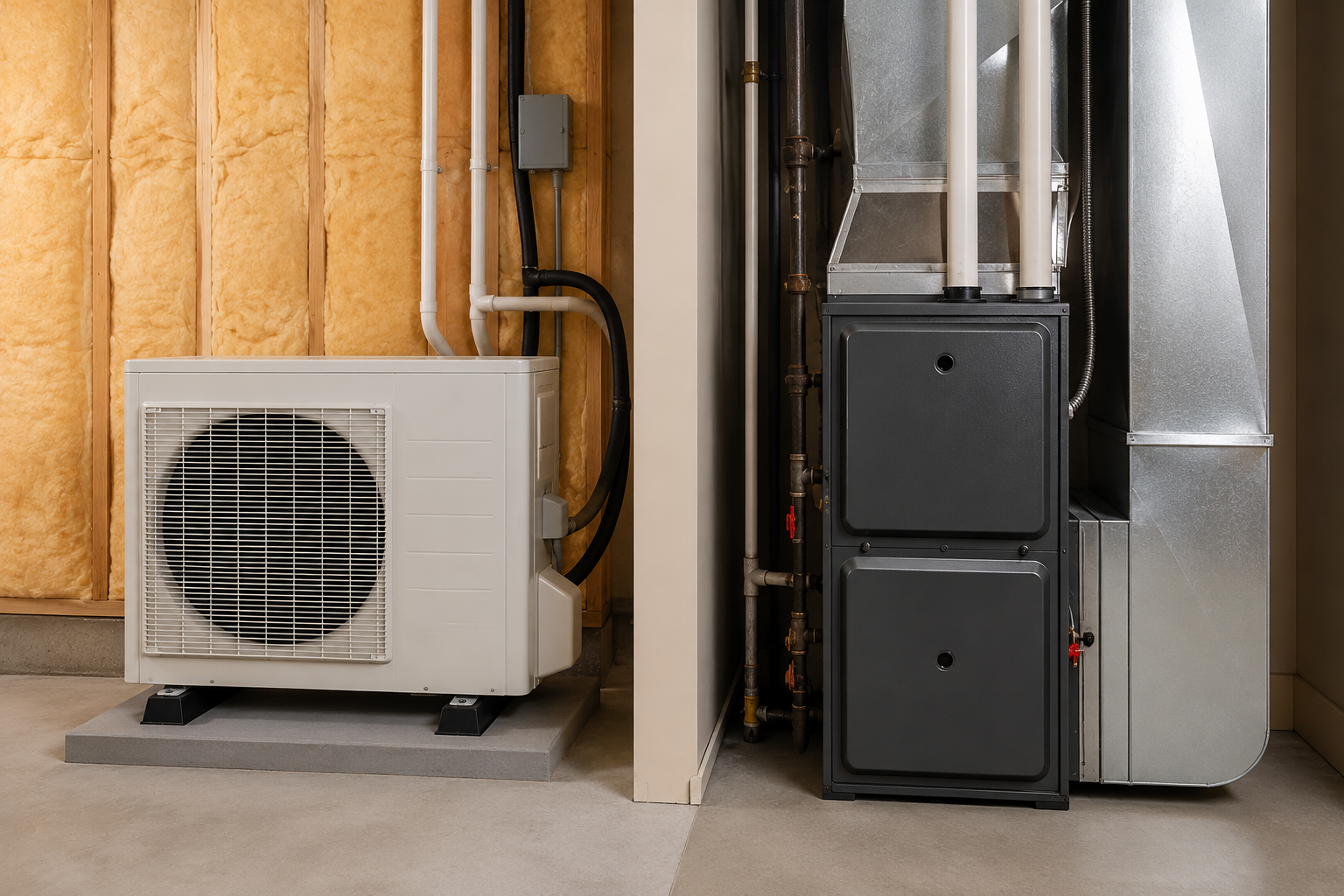
Choosing how to heat and cool your home is one of the most significant property management decisions you will make. In East Tennessee, our weather demands a lot from our mechanical systems. Homeowners in the greater Knoxville area face a dynamic climate loop: intense, humid summer stretches where temperatures regularly exceed 90°F, followed by sharp winter cold snaps that drop temperatures well below freezing.
Because our local weather swings dramatically from season to season, your heating, ventilation, and air conditioning (HVAC) configuration has a direct impact on your monthly utility costs, indoor comfort, and home safety.
When it comes to keeping your property warm during the chilly months, the choice generally comes down to two primary technologies: a heat pump or a furnace.
For many property owners, the structural and operational differences between these two systems are unclear. Is a heat pump powerful enough to handle a freezing Appalachian cold snap? Does a gas furnace make financial sense if you are looking to lower your overall carbon footprint?
This comprehensive guide breaks down the core engineering differences, operational economics, and regional climate factors to help you choose the best heating system for your Knoxville home.
1. Thermodynamic Mechanics: Moving Heat vs. Creating Heat
The fundamental difference between a heat pump and a furnace lies in the physics of thermal distribution. While both systems are designed to keep your indoor spaces warm, they achieve this goal through completely opposite thermodynamic methods.
+--------------------------------------------------------------------------+
|                     THERMODYNAMIC MECHANICS PROFILE                      |
+--------------------------------------------------------------------------+
|  HEAT PUMP MECHANICS (Moves Existing Heat):                              |
|  [Outdoor Ambient Air] ===(Extracts Heat Ions)===> [Indoor Air Handler]  |
|                                                                          |
|  FURNACE MECHANICS (Creates New Heat):                                   |
|  [Fuel Source: Gas/Electric] ===(Combustion/Resistance)===> [Creates Heat]|
+--------------------------------------------------------------------------+
How a Heat Pump Works
A heat pump does not actually create heat. Instead, it operates on a reversible refrigeration cycle that moves existing thermal energy from one location to another.
During the summer, a heat pump functions exactly like a standard air conditioner: it absorbs heat from inside your home and pumps it outdoors. When winter arrives, the system engages a specialized internal component called a reversing valve. This alters the flow of the chemical refrigerant, allowing the system to extract ambient thermal energy from the cold outdoor air and transfer it indoors to warm your living spaces.
Because it takes significantly less electrical energy to move heat than it does to create it from scratch, modern heat pumps are incredibly efficient. Their performance is measured via two primary efficiency standards: SEER2 (for cooling efficiency) and HSPF2 (Heating Seasonal Performance Factor 2, for heating efficiency).
How a Furnace Works
A furnace relies on direct thermal production. It consumes a dedicated fuel source to generate entirely new heat from scratch.
When your indoor thermostat signals for heat, the furnace opens a fuel valve, ignites the burner matrix (in a natural gas or propane system) or energizes a sequence of heavy electrical resistance coils (in an all-electric furnace). This energy warms an internal metal chamber known as a heat exchanger. The primary indoor blower motor then forces household air across the exterior walls of the hot heat exchanger, warming the air before distributing it through your ductwork network.
A furnace's efficiency is measured by its AFUE (Annual Fuel Utilization Efficiency) rating. A 95% AFUE gas furnace converts 95% of the fuel it consumes into usable household heat, while losing the remaining 5% through its exhaust ventilation pipe.
2. Local Utility Access and Regional Infrastructure
Your ideal heating choice is often determined by the infrastructure of your specific Knoxville neighborhood. Fuel availability and utility grid access vary significantly across East Tennessee.
The Natural Gas Grid Matrix
If you own a home in established urban or suburban areas like North Knoxville, Sequoyah Hills, or downtown Oak Ridge, your property likely has direct access to municipal natural gas lines managed by providers like the Knoxville Utilities Board (KUB).
In these areas, installing a high-efficiency gas furnace is highly practical. Natural gas provides a reliable, high-temperature heat source that keeps your home cozy regardless of how low the outdoor temperature drops.
All-Electric Suburban Developments
If your home is located in rapidly growing suburban areas like Hardin Valley, Farragut, or portions of Blount and Sevier counties, your property may be situated outside the municipal natural gas footprint.
For these all-electric properties, running a traditional electric furnace can be incredibly expensive, as relying entirely on electrical resistance coils draws a massive amount of power. In these neighborhoods, an electric heat pump is almost always the more economical choice, providing efficient year-round heating and cooling without the need for a utility gas connection.
3. Climate Performance: Surviving Knoxville Cold Snaps
To choose the right system, you must consider how each platform handles East Tennessee's winter weather. Our region experiences long stretches of mild winter days, mixed with sudden, below-freezing cold snaps.
Knoxville Winter Efficiency Curve:
[ Mild Winter Days: 40°F - 55°F ]   ======> Heat Pump operates at peak thermal efficiency
[ Freezing Cold Snaps: < 30°F ]      ======> Heat Pump engages auxiliary heat strips (higher cost)
[ Extreme Winter Lows: Any Temp ]    ======> Gas Furnace delivers consistent 120°F+ register heat
The Heat Pump Efficiency Horizon
Heat pumps operate at peak efficiency when the outdoor temperature remains above 32°F to 35°F. In this mild temperature window, a heat pump can deliver up to three to four times more heat energy than the electrical energy it consumes.
However, as the outdoor temperature drops below freezing, the volume of ambient heat ions in the outdoor air decreases. This forces the heat pump to work harder to extract thermal energy.
To bridge this gap during a hard freeze, the heat pump engages its auxiliary electric heat strips. These resistance coils act like a large hair dryer inside your air handler, providing extra heat to keep your home comfortable.
While these heat strips keep you warm, they consume a significant amount of electricity, which can cause your utility bills to spike during extended cold snaps.
The Consistent Heat Output of a Furnace
A gas furnace is completely unaffected by outdoor temperatures. Whether it is a mild 45°F autumn evening or a freezing 15°F winter night, a gas furnace produces the exact same high-temperature heat.
The air leaving your supply vents from a gas furnace typically ranges between 110°F and 130°F, creating a distinctly warm, cozy indoor environment.
A heat pump, by comparison, delivers supply air that typically hovers between 85°F and 95°F. While this is warm enough to heat your home to your thermostat's setting, the air can sometimes feel slightly cool to the touch as it blows out of the registers.
4. The Dual-Fuel Hybrid Solution: The Best of Both Worlds
For many Knoxville property owners who refuse to compromise on efficiency or comfort, a hybrid dual-fuel system offers the ideal solution. This configuration combines an electric heat pump with a backup natural gas furnace.
       [ INDOOR SMART THERMOSTAT / CLIMATE MATRIX ]
                             |
         +-------------------+-------------------+
         |                                       |
         v                                       v
[ Outdoor Temp Above 35°F ]            [ Outdoor Temp Drops Below 35°F ]
         |                                       |
         v                                       v
Engages High-Efficiency Electric       Shuts off heat pump and ignites
Heat Pump for low-cost warming         Gas Furnace for high-temp heat
During mild autumn and winter days (when the temperature is above 35°F), the system runs the electric heat pump to keep your home warm at the lowest possible operating cost. When a hard freeze hits and the temperature drops below freezing, the smart thermostat automatically shuts off the heat pump and turns on the gas furnace.
This hybrid approach ensures your system always uses the most cost-effective fuel source for the current weather, providing ultimate comfort and efficiency.
5. Comprehensive Comparison Matrix
To help streamline your decision-making process, this matrix provides a direct side-by-side comparison of both heating platforms:
6. Upfront Installation Costs vs. Long-Term Economics
Evaluating the financial impact of a new system requires balancing your upfront equipment and installation costs against your long-term monthly utility bills.
The Initial Investment Comparison
If your home already has functional ductwork, replacing an old system with a standalone heat pump is generally a simpler, more affordable process. A heat pump handles both your summer cooling and winter heating needs through a single outdoor unit.
If you choose a furnace framework, you are purchasing a single-purpose heating unit. To get year-round comfort, you must pair that furnace with a completely separate outdoor air conditioning unit and an indoor evaporator coil.
Purchasing a new furnace and a separate AC unit at the same time carries a higher upfront equipment cost than buying a standalone heat pump. However, if your existing air conditioner is still in good condition, you can simply replace your old furnace on its own, keeping your upfront costs manageable.
To ensure your home receives a properly sized, code-compliant upgrade, partnering with experienced professionals for a professional HVAC installation ensures your system's tonnage and linesets match your property's footprint perfectly.
Ongoing Utility and Fuel Expenses
The cost to run each system depends heavily on local utility rates. While electricity is generally more expensive per unit of energy than natural gas, a heat pump's high efficiency can often balance out that difference during mild winter weather.
However, if your heat pump is improperly installed, low on refrigerant, or paired with a leaking duct system, it will rely too heavily on its expensive auxiliary heat strips, causing your electric bills to climb.
If your heating system is running constantly or struggling to keep your home comfortable, scheduling expert HVAC repair diagnostics right away can help identify and resolve underlying issues before they lead to a high energy bill or an unexpected breakdown.
7. Operational Lifespan and Maintenance Needs
Because heat pumps and furnaces operate on different seasonal schedules, they have distinct service requirements and life expectancies.
System Lifespan and Wear
A standard residential furnace only runs for about four to five months out of the year, sitting dormant during the warm spring and summer months. Because it gets a regular seasonal break, a well-maintained furnace can easily last 15 to 20 years.
A heat pump, however, works year-round. It runs continuously during the summer to cool your home, and then switches gears to provide heat all winter long. Because a heat pump experiences double the operational wear and tear of a standalone furnace, its average reliable lifespan is typically closer to 10 to 15 years.
Preventative Service Habits
Because a heat pump never gets an off-season break, it requires more frequent professional maintenance. Homeowners should schedule a seasonal preventive maintenance check twice a year: once in the spring to prep for the summer cooling load, and once in the autumn to ensure the system is ready for winter.
A furnace only needs to be serviced once a year, ahead of the winter heating season. During a furnace tune-up, a technician will clean the burners, test the ignition switches, and inspect the heat exchanger for any cracks or safety hazards.
To protect your system through changing seasons, investing in a long-term HVAC service plan ensures your property automatically receives its essential safety and efficiency calibrations, keeping your manufacturer warranties fully intact.
Trust Knoxville's Premier Heating Professionals
There is no single "winner" in the debate between a heat pump and a furnace. If your home has access to natural gas and you prefer high-temperature register heat during cold winter snaps, a gas furnace is an exceptional, long-lasting choice.
On the other hand, if your property is all-electric, or if you want a single, highly efficient system that handles both heating and cooling, a modern heat pump is an ideal option for our East Tennessee climate.
Determining the exact capacity requirements, fuel economics, and system configurations for your home requires an on-site evaluation by an experienced, licensed HVAC team.
At Advanced Heat, AC & Plumbing, we have spent more than 40 years helping families across Knoxville, Blount County, and the surrounding areas design, install, and maintain their home comfort systems. As a third-generation, veteran-owned local family business, we combine advanced diagnostic technology with direct, honest service to give you real peace of mind.
Explore our dedicated options for heating services in Knoxville to see how we can optimize your home's comfort system ahead of the upcoming winter season.
📞 Unsure whether a heat pump or a furnace is the best financial and practical choice for your home? Don't leave your winter comfort to chance. Call Advanced Heat, AC & Plumbing today at 865-933-5538 to schedule an expert on-site system consultation!


