


How Often Should Commercial HVAC Systems Be Serviced in Knoxville
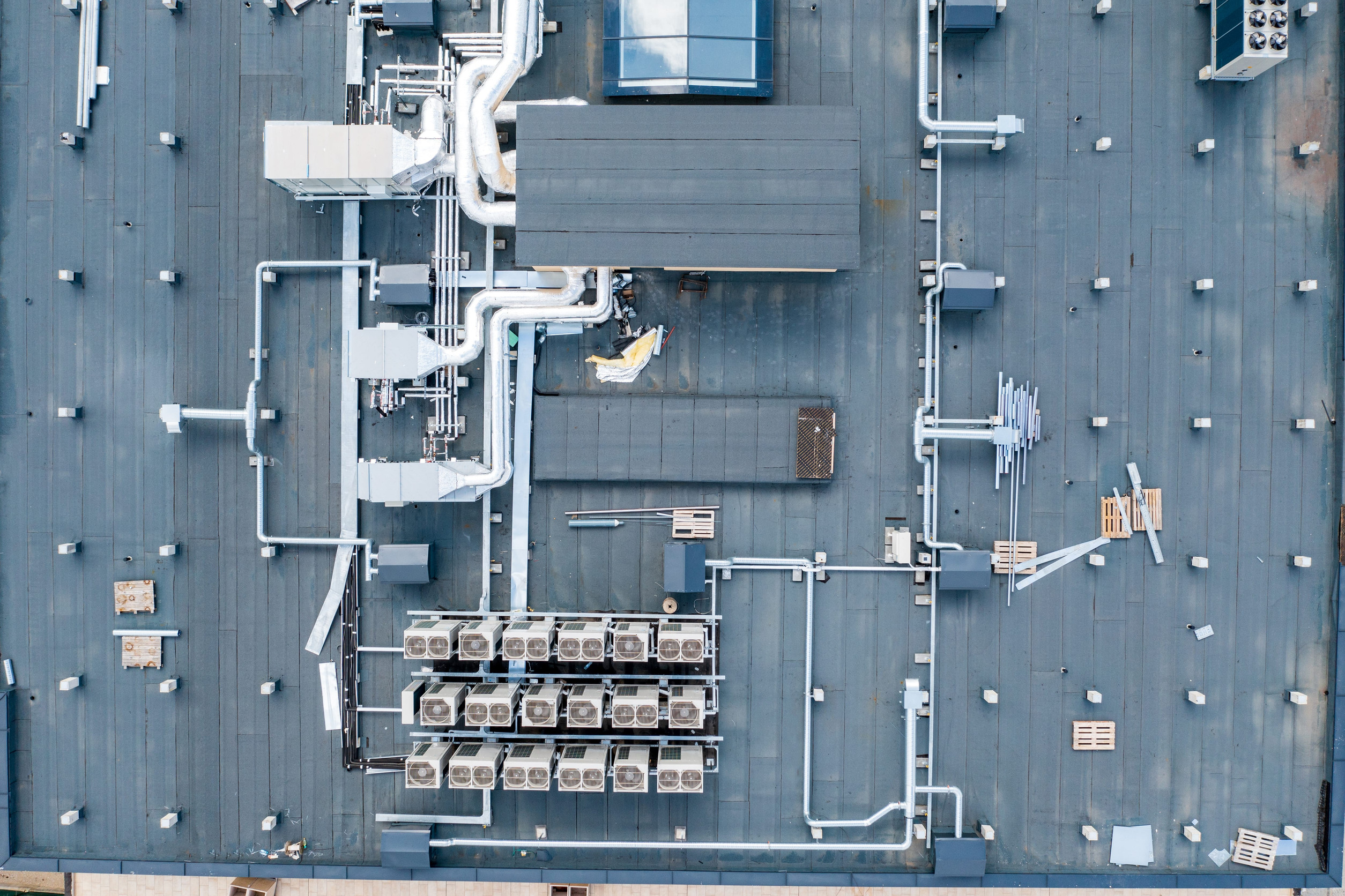
As a general baseline, commercial HVAC systems in Knoxville should be serviced four times per year (quarterly), with a strict absolute minimum of twice per year (bi-annually) for light-duty or low-occupancy facilities. While residential systems can often get by on bi-annual spring and fall tune-ups, commercial heating, cooling, and ventilation equipment operates under vastly different physical demands.
Rooftop units (RTUs), chillers, split systems, and Variable Refrigerant Flow (VRF) configurations in Knox County handle continuous operating hours, high foot traffic, heat from commercial electronics, and strict ventilation standards mandated by municipal building codes. In East Tennessee, these mechanical demands are compounded by extreme summer humidity, heavy spring pollen spikes, and sudden winter freeze-thaw cycles.
Establishing a routine, tailored maintenance schedule with specialized commercial HVAC services transitions a facility’s climate control strategy from costly emergency repairs to a predictable, budget-friendly operational model.
Why Commercial Systems Require More Frequent Maintenance Than Residential Units
It is a common misconception among commercial property managers and building owners that commercial HVAC equipment is simply a "larger version" of a residential unit. Mechanically and operationally, commercial systems function under entirely different parameters.
+-----------------------------------------------------------------------+
|              RESIDENTIAL VS. COMMERCIAL HVAC DEMAND MATRIX            |
+------------------------------------+----------------------------------+
| RESIDENTIAL SYSTEMS                | COMMERCIAL SYSTEMS               |
+------------------------------------+----------------------------------+
| • Intermittent, cycle-based runtime| • Continuous 12–24 hour runtime   |
| • Low occupant density (2–5 people)| • High occupant density (10–500+) |
| • Ground-level or closet placement | • Rooftop/weather-exposed pads    |
| • Standard MERV 8–11 filtration    | • High-CFM, heavy particulate filter|
| • Simple single/two-stage control  | • Complex DDC, BMS, & economizers|
+------------------------------------+----------------------------------+
1. Extended Runtime and Continuous Load
Residential units typically run periodically throughout the day to satisfy a single household thermostat setting. Commercial HVAC systems often operate 12 to 24 hours per day, 365 days a year. Even when outdoor temperatures are mild, internal heat loads generated by servers, commercial kitchens, manufacturing equipment, high-density lighting, and constant foot traffic require continuous cooling or ventilation.
2. Rooftop Exposure and Environmental Wear
The vast majority of commercial packaged units in Knoxville are installed on flat roofs (RTUs). While this keeps equipment out of sight and saves interior floor space, it subjects mechanical cabinets to intense environmental stress. Rooftop units absorb direct UV radiation, pooling rainwater, high wind gusts, and extreme ambient temperature fluctuations that ground-level residential units rarely encounter.
3. Fresh Air Intake and Code Compliance
Commercial systems must pull in outside air continuously to comply with ASHRAE standards and local Knox County ventilation codes. This constant intake of outdoor air draws in massive volumes of dust, airborne grime, exhaust fumes, and seasonal biological debris, causing filters and internal coils to clog far faster than in closed residential loops.
The East Tennessee Climate Factor: Why Local Weather Mandates Quarterly Care
Knoxville's location in the Tennessee River Valley creates a distinct set of microclimate challenges that accelerate wear on commercial heating and cooling components.
+-----------------------------------------------------------------------+
|                   KNOXVILLE SEASONAL MAINTENANCE RISKS                |
+-------------------+---------------------------------------------------+
| SEASON            | MECHANICAL IMPACT ON COMMERCIAL HVAC              |
+-------------------+---------------------------------------------------+
| Spring (Mar–May)  | Pollen blankets outdoor coils; high humidity      |
|                   | forces early latent cooling loads.                |
+-------------------+---------------------------------------------------+
| Summer (Jun–Sep)  | Sustained 90°F+ heat; high dew points cause drain  |
|                   | line algae buildup and coil freezing.             |
+-------------------+---------------------------------------------------+
| Autumn (Oct–Nov)  | Falling leaves block rooftop air intakes; gas     |
|                   | train and heat exchanger prep required.           |
+-------------------+---------------------------------------------------+
| Winter (Dec–Feb)  | Sub-freezing snaps engage auxiliary heat strips and|
|                   | heat pump defrost controls; thermal expansion.    |
+-------------------+---------------------------------------------------+
Summer Humidity and Microbial Growth
From June through September, relative humidity levels in East Tennessee routinely exceed 70% to 80%. Commercial air conditioners act as large-scale dehumidifiers, stripping hundreds of gallons of moisture from indoor air every week.
When condensate drain lines, primary drain pans, and condensate pumps are not flushed quarterly, dark, damp commercial drain systems become breeding grounds for algae, slime, and mold. Understanding how humidity affects your HVAC system in East Tennessee underscores why unmaintained drain lines rapidly lead to overflow water damage, ruined ceiling tiles, and indoor air quality complaints from building occupants.
Spring Pollen and Organic Debris
Springtime in Knox County brings picturesque views, but it also brings exceptionally high tree and grass pollen counts. Rooftop condenser fans pull thousands of cubic feet of outdoor air through aluminum coils every minute. Within weeks, fine pollen, dandelion seeds, and airborne dirt form an insulating blanket over the coil fins. This restriction traps heat inside the system, causing compressor head pressures to spike and increasing electrical power consumption by up to 30%.
Commercial HVAC Service Frequency by Facility Type
Not all commercial properties in Knoxville carry the same operational risk profile. A small retail storefront has vastly different mechanical demands than a 24-hour medical clinic or a high-volume restaurant.
+-----------------------------------------------------------------------------------+
|                    RECOMMENDED SERVICE FREQUENCY BY INDUSTRY                      |
+-------------------+--------------------+------------------------------------------+
| BUSINESS TYPE     | SERVICE FREQUENCY  | PRIMARY REASON / FOCUS AREA              |
+-------------------+--------------------+------------------------------------------+
| Retail Stores &   | Quarterly          | High foot traffic, automatic door        |
| Standard Offices  | (4x per year)      | cycles, consistent filter loading.       |
+-------------------+--------------------+------------------------------------------+
| Restaurants &     | Bi-Monthly to      | Heavy airborne grease, high heat loads,  |
| Food Service      | Monthly (6–12x/yr) | strict health department air codes.      |
+-------------------+--------------------+------------------------------------------+
| Manufacturing &   | Bi-Monthly         | Heavy industrial dust, chemical fumes,   |
| Warehouses        | (6x per year)      | continuous process cooling loads.        |
+-------------------+--------------------+------------------------------------------+
| Healthcare &      | Monthly to         | Strict sterile air filtration (HEPA),    |
| Medical Facilities| Quarterly          | mandatory humidity and infection control.|
+-------------------+--------------------+------------------------------------------+
| Server Rooms &    | Monthly            | Year-round 24/7/365 critical cooling;    |
| Data Centers      | (12x per year)     | zero tolerance for equipment downtime.   |
+-------------------+--------------------+------------------------------------------+
1. Standard Office Buildings and Retail Spaces: Quarterly (4x/Year)
For standard office parks in Cedar Bluff, West Hills, or Downtown Knoxville, a quarterly schedule provides optimal protection. Filters are replaced every 90 days, belts are tensioned, electrical connections are checked, and coils are washed thoroughly ahead of peak summer and winter loads.
2. Restaurants, Commercial Kitchens, and Cafes: Bi-Monthly to Monthly (6–12x/Year)
Food service facilities are notoriously tough on HVAC systems. Kitchen exhaust hoods draw grease-laden air through the building, while rooftop make-up air units work overtime to pull in fresh air. Grease film rapidly coats outdoor intake dampers, coils, and filters. Monthly or bi-monthly inspections prevent grease buildup from creating severe fire hazards or suffocating rooftop compressors.
3. Medical, Dental, and Cleanroom Facilities: Monthly to Quarterly (4–12x/Year)
Healthcare environments must maintain strict pressure differentials, precise relative humidity thresholds (typically 40% to 60% to prevent bacterial growth), and high-efficiency particulate air (HEPA) filtration. Regular filter changes, UV germicidal lamp checks, and damper calibrations are vital for patient health and regulatory compliance.
What Happens During a Professional Commercial Maintenance Visit?
A comprehensive commercial maintenance contract goes far beyond replacing air filters. It involves exhaustive electro-mechanical testing, thermal imaging, coil sanitization, and safety checks executed by certified commercial technicians.
Recognizing the importance of preventive maintenance for commercial properties helps property managers understand the technical rigor included in each visit:
+-----------------------------------------------------------------------+
|                COMMERCIAL MAINTENANCE TUNE-UP CHECKLIST               |
+------------------------------------+----------------------------------+
| ELECTRICAL & CONTROLS              | MECHANICAL & REFRIGERATION       |
+------------------------------------+----------------------------------+
| • Inspect contactors for pitting   | • Measure refrigerant superheat/ |
| • Test motor capacitors & relays   |   subcooling levels              |
| • Tighten high-voltage terminal block| • Wash condenser & evaporator coils|
| • Measure compressor amp draws     | • Inspect drive belts & sheaves   |
| • Verify BAS / DDC control signals | • Lubricate blower bearings      |
| • Calibrate economizer dampers     | • Flush condensate lines & pumps |
+------------------------------------+----------------------------------+
The Spring/Summer Maintenance Scope
- Condenser Coil Pressure Washing: Technicians wash outdoor aluminum fins with specialized eco-friendly chemical cleaners to remove baked-on grime, pollen, and leaves.
- Refrigerant Charge Diagnostics: Checking operational pressures ensures system subcooling and superheat match manufacturer specifications. Low refrigerant indicates a line leak that must be repaired before the compressor overheats.
- Economizer and Damper Testing: Verifying that free-cooling economizer dampers open and close properly allows the system to pull in cool outdoor air during mild spring mornings, lowering electricity costs.
- Condensate Management: Flushing primary and secondary drain lines with biocide treatments prevents algae blockages and pan overflows.
The Fall/Winter Maintenance Scope
- Gas Train and Burner Inspection: For gas-fired RTUs or commercial furnaces, technicians inspect gas valves, flame sensors, igniters, and burner orifices for clean combustion.
- Heat Exchanger Integrity Checks: Cracks in commercial heat exchangers can introduce deadly carbon monoxide into occupied tenant spaces. Technicians perform visual and flue-gas analysis checks to guarantee safety.
- Electric Heat Strip Operations: Verifying high-amp contactors and thermal limit switches for electric heat assemblies ensures reliable backup heat during hard winter freezes.
- Defrost Control Testing: Heat pump reversing valves and defrost sensors are tested to prevent outdoor coils from locking up in ice during sub-freezing nights.
The Financial Math: Emergency Repairs vs. Planned Maintenance
For Knoxville commercial building owners, deciding on maintenance frequency comes down to simple financial management. The cost of a quarterly commercial service contract is a fraction of the expense caused by a major equipment failure during peak operational hours.
+-----------------------------------------------------------------------+
|                    FINANCIAL COMPARISON FOR FACILITY MANAGERS         |
+-----------------------------------+-----------------------------------+
| PREVENTIVE SERVICE CONTRACT       | REACTIVE REPAIR APPROACH          |
+-----------------------------------+-----------------------------------+
| Fixed, predictable operational fee| Unpredictable, volatile expenses  |
| Optimized monthly utility bills   | 15% to 30% higher utility costs   |
| 15–20 year equipment lifespan     | Early system failure at 8–12 yrs  |
| Priority emergency service status | Standard rates & delayed dispatch |
| Minor repairs caught early        | Catastrophic compressor burnouts  |
+-----------------------------------+-----------------------------------+
1. Avoiding KUB Peak Demand Charges
Knoxville Utilities Board (KUB) and surrounding utility providers calculate commercial electric bills using both total kilowatt-hour (kWh) usage and peak demand charges. Peak demand measures the highest amount of power your facility draws during a brief window (typically 15 to 30 minutes).
If a commercial RTU operates with dirty coils, low refrigerant, or sticking contactors, its compressor draws significantly higher amperage to start up and run. This sudden power spike can raise your facility's peak demand threshold, triggering higher utility billing rates for the entire billing cycle.
2. Protecting Equipment Lifespan
A commercial rooftop unit in East Tennessee represents a major capital investment, typically ranging from $10,000 to over $40,000 per unit depending on tonnage and stage configuration. Understanding how long a commercial AC unit lasts in Tennessee's climate reveals that unmaintained RTUs frequently fail within 8 to 10 years, whereas properly maintained units routinely deliver 15 to 20 years of reliable service.
3. Preventing Business Disruption and Revenue Loss
When an HVAC system fails in a retail store, restaurant, or office building during a 95°F July heatwave, indoor temperatures quickly climb past 85°F. Customers leave, employees cannot work safely, and sensitive electronic equipment overheats. The loss of business revenue from a single day of forced closure far exceeds the annual cost of a quarterly maintenance agreement.
When emergency breakdowns occur, having access to fast, local commercial AC repair in Knoxville is critical to getting your building back online quickly.
Warning Signs That Your Facility Needs Immediate Maintenance
If your building’s HVAC system has not been serviced within the last six months, it may already be showing early signs of mechanical stress. Facility managers should watch for these common indicators:
- Unexplained Spikes in Utility Bills: A sudden increase in electric or gas costs without a corresponding change in operating hours indicates efficiency loss.
- Frequent Tenant Temperature Complaints: Rooms that remain stubbornly hot or cold point to sticking dampers, failing zone sensors, or incorrect refrigerant charges.
- High Indoor Relative Humidity: Clammy air, foggy windows, or musty odors indicate that cooling coils are short-cycling or condensate lines are clogged.
- Unusual Operational Noises: Squealing fan belts, grinding bearings, or loud metallic clanking on the roof signal imminent mechanical failure.
- Frequent Tripping of Circuit Breakers: High motor amperage caused by dirty coils or failing capacitors will trip electrical supply breakers repeatedly.
Addressing these issues early prevents minor component failures from snowballing into common business HVAC problems and expensive system repairs.
Upgrading vs. Maintaining Aging Commercial Systems
While quarterly maintenance dramatically extends equipment life, every commercial HVAC unit eventually reaches the end of its economic usefulness. If your building's units are over 15 years old, require frequent refrigerant recharges, or rely on phased-out R-22 refrigerant, continuing to sink repair dollars into them may no longer make financial sense.
Exploring the benefits of upgrading your business HVAC system allows building owners to take advantage of modern variable-speed technology, advanced Building Management System (BMS) integration, and federal energy efficiency tax incentives. Modern high-efficiency commercial equipment can cut facility cooling and heating costs by 20% to 40%, paying for itself over time.
When planning a system replacement or establishing a new multi-unit service contract, knowing how to choose an HVAC contractor for your business ensures you partner with a licensed, insured team possessing commercial license classifications, certified technicians, and dedicated emergency response capabilities.
Action Checklist for Knoxville Facility Managers
To maintain safe, efficient indoor conditions and protect your property’s mechanical investments, follow this operational checklist:
+-----------------------------------------------------------------------+
|                 FACILITY HVAC MAINTENANCE ACTION PLAN                 |
+-----------------------------------------------------------------------+
|  [✓] Audit Current Equipment: Record model numbers, serial numbers,    |
|      age, and filter sizes for all RTUs, split systems, and air handlers.|
|  [✓] Establish Service Schedule: Lock in a quarterly (or monthly)      |
|      preventive maintenance agreement with a licensed contractor.     |
|  [✓] Inspect Filters Monthly: Check high-traffic filters every 30 days |
|      and replace them as soon as loading occurs.                      |
|  [✓] Keep Rooftop Clear: Maintain a 6-foot clearance around RTUs free |
|      from stored items, roof debris, or vegetation growth.            |
|  [✓] Track Maintenance Logs: Keep digital records of all service       |
|      invoices, coil washings, and belt replacements for audits.       |
|  [✓] Monitor Energy Analytics: Review KUB utility bills monthly to     |
|      spot unexpected usage spikes or demand charge jumps early.       |
+-----------------------------------------------------------------------+
By prioritizing quarterly maintenance tailored to East Tennessee’s unique climate and your facility’s specific operational needs, you ensure continuous tenant comfort, protect indoor air quality, and keep long-term operating costs under firm control.


