


Understanding Your Home’s Main Stack: The backbone of your drainage system
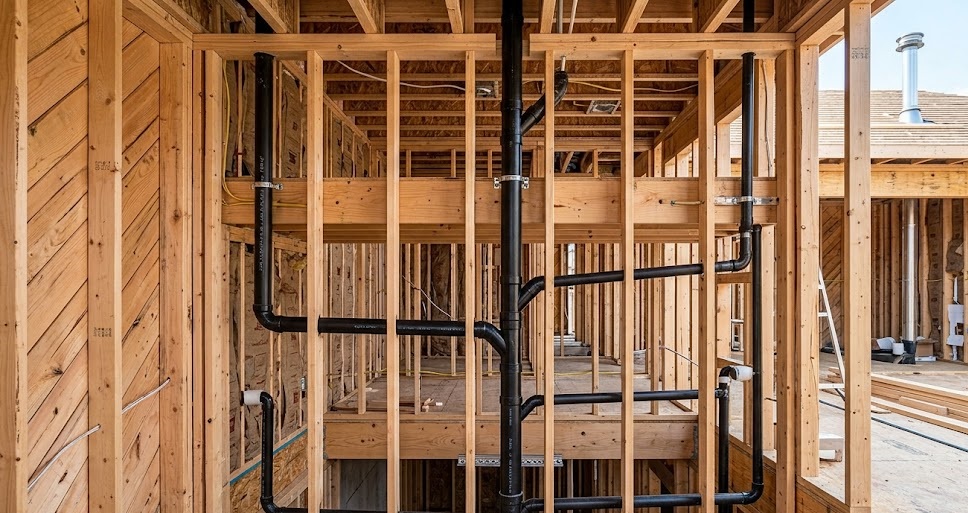
When most homeowners in East Tennessee think about their plumbing, they think about the things they can see: the polished chrome of a new kitchen faucet, the steady stream of a high-pressure showerhead, or perhaps the modern porcelain of a high-efficiency toilet. But beneath the drywall and under the floorboards lies a complex, vertical marvel of engineering that makes modern life possible.
It is the "spinal cord" of your home’s skeletal system. It is the Main Stack.
At Advanced Heating & Air Conditioning, we believe that an educated homeowner is a confident homeowner. While you hopefully won’t ever have to see your main stack, understanding how it works—and why it fails—is essential for maintaining a healthy, dry, and odor-free home. Whether you are in a historic home in Knoxville or a new build in Farragut, the main stack is the one component you cannot afford to ignore.
1. What Exactly is a Main Stack?
In technical terms, the main stack is part of your DWV system—which stands for Drain, Waste, and Vent.
Think of your home as a living organism. If the water lines are the arteries bringing "life" (clean water) in, the DWV system is the respiratory and waste system combined. The main stack is a large-diameter pipe (usually 3 to 4 inches) that runs vertically from the lowest point of your home—either the basement or the crawlspace—all the way up through the roof.
Its job is two-fold:
- Drainage: It collects waste from all your secondary drain lines (sinks, tubs, toilets) and carries it down to the sewer line or septic system.
- Venting: It allows air to enter the plumbing system, equalizing pressure so that water flows smoothly and sewer gases are safely exhausted out of the roof.
2. The Anatomy of the Stack: Three Roles in One
To the untrained eye, the main stack looks like one long pipe. However, it is functionally divided into three distinct zones. Understanding these zones helps our technicians at Advanced Heating & Air Conditioning diagnose whether you need a simple drain cleaning or a more intensive sewer line repair.
The Soil Stack
This is the portion of the vertical pipe that receives discharge from toilets (blackwater). It is the "heavy lifter" of the system. Because it carries solids, it requires a specific diameter to prevent clogs and ensure gravity can do its work effectively.
The Waste Stack
This portion receives discharge from "greywater" sources—your showers, bathtubs, bathroom sinks, and laundry machines. While it doesn't carry the same solid load as the soil stack, it is often the victim of soap scum and hair buildup, which we discussed in our deep dive into Hard Water Hair.
The Vent Stack (The "Lung")
This is the top portion of the pipe that extends through your roof. It doesn't carry any water at all—only air. Without this vent, your plumbing would behave like a soda straw with your finger over the top; the water would struggle to move, gurgling and splashing as it fights for air.
3. The Physics of Flow: Why Air Matters
Plumbing isn't just about pipes and glue; it’s about fluid dynamics and atmospheric pressure. To understand why your main stack needs a vent, we have to look at pressure differentials.
When you flush a toilet, a large volume of water enters the stack. As this "slug" of water falls, it creates a vacuum behind it. If there were no vent stack, that vacuum would suck the water out of your "P-traps" (the U-shaped pipes under your sinks). Those traps are designed to hold a small amount of water to act as a seal against sewer gases.
The physics of the air-to-water ratio in the stack can be simplified by looking at the pressure differential ($\Delta P$):
$$\Delta P = P_{atm} - P_{stack}$$
Where $P_{atm}$ is the atmospheric pressure outside and $P_{stack}$ is the internal pressure of the pipe. If the stack isn't vented, $\Delta P$ becomes too high, the water seal in your traps fails, and suddenly your home in Maryville or Oak Ridge smells like a wastewater treatment plant. This is what we call "trap siphonage," and it’s a leading cause of "ghost smells" in the home.
4. Materials of the Stack: From Cast Iron to PVC
Depending on the age of your East Tennessee home, your main stack could be made of several different materials. Each has its own lifespan and common failure points.
Cast Iron: The "Quiet" Standard
If your home was built before the mid-1970s, you likely have a cast iron stack. It’s incredibly durable and famous for being "quiet"—you don't hear the rush of water through the walls as much. However, cast iron is susceptible to internal "scaling." Over decades, the chemistry of local water can cause the inside of the pipe to become rough, catching hair and debris and eventually rusting through from the inside out.
PVC (Polyvinyl Chloride): The Modern Choice
Most modern homes in Sevierville and Lenoir City use PVC. It’s impervious to rust and has a perfectly smooth interior, which makes clogs less likely. The downside? It’s louder. You’ll definitely know when someone is taking a shower upstairs.
5. Common Main Stack Failures
Because the main stack is the "trunk" of your plumbing tree, when it fails, the symptoms are usually felt throughout the entire house.
1. The "Whole House" Clog
If you notice that flushing the toilet causes water to come up in the shower, or if every drain in the house is moving slowly, the problem isn't in a single sink. It’s a clog in the main stack or the sewer line replacement is needed.
2. Roof Vent Obstructions
In East Tennessee, we have plenty of squirrels and birds. Occasionally, a nest or a stray tennis ball can end up in the vent opening on your roof. In the winter, frost can even bridge across the vent. When the "lung" is blocked, you’ll hear a tell-tale "gurgle" from your sinks every time the toilet flushes.
3. Vertical Cracks
Cast iron stacks are prone to "seam leaks." Over time, a crack can develop along the entire vertical length of the pipe. This often manifests as a mysterious damp spot on a wall or a faint sewer smell that seems to move from room to room.
4. Corrosion and Scaling
As mentioned in our article on copper pipe corrosion, local water acidity can impact metal pipes. In cast iron stacks, this creates "tubercules" (rough bumps) that act like Velcro for toilet paper and waste.
6. The "Advanced" Diagnostic Process
When you call Advanced Heating & Air Conditioning for a stack issue, we don't just start tearing down drywall. We use a methodical approach to protect your home and your wallet.
- Video Pipe Inspection: We use high-definition, waterproof cameras to travel down the stack. This allows us to see exactly where the crack, clog, or scale buildup is located without making a single hole in your wall.
- Pressure Testing: If we suspect a venting issue, we can test the pressure levels within the system to ensure the $\Delta P$ is within safe plumbing codes.
- Strategic Repair: Sometimes, we can perform a "spot repair" or use pipe-lining technology. Other times, a full sewer line replacement is the only permanent solution to prevent future flooding.
7. Main Stack Maintenance: What Homeowners Can Do
While the main stack isn't a DIY-friendly repair zone, there are things you can do to extend its life:
- Watch What You Flush: The main stack is designed for water and human waste. "Flushable" wipes, feminine products, and excessive grease are the leading causes of stack "arteriosclerosis" (narrowing of the pipe).
- Check Your Roof Boots: The rubber "boot" where the vent exits the roof can crack over time, leading to leaks that look like plumbing issues but are actually roofing issues.
- Listen to Your Drains: If your drains start "talking" to you (gurgling), don't wait for a backup. Call a professional for drain cleaning early.
- Septic Awareness: If you are on a septic system, a backup in the tank will manifest as a backup in the stack. Regular pumping is the best defense for your home's internal plumbing.
8. Summary Comparison of Stack Materials
9. Why Your Stack Matters to Your Home Value
In the competitive East Tennessee real estate market—from Alcoa to Pigeon Forge—a failing main stack is a "deal-breaker" during home inspections. Potential buyers are terrified of the words "sewer backup."
By maintaining your stack and addressing leaks early, you aren't just keeping your floors dry; you are protecting your home’s equity. Whether it's a routine check during an AC maintenance call or a dedicated plumbing emergency, having a partner like Advanced Heating & Air Conditioning ensures your home's "backbone" stays strong.
Final Thought: Don't Ignore the Gurgle
Your main stack is the silent hero of your household. It works 24/7 to keep your environment sanitary and your air breathable. If you hear strange noises, smell sewer gas, or notice slow drains across multiple rooms, don't wait for a catastrophic failure.
From water line repairs to furnace installations, our team is dedicated to the total comfort of your East Tennessee home.
Contact Advanced Heating & Air Conditioning today to schedule an inspection of your home’s drainage system. Let’s keep your home’s backbone in perfect health.


