


Why "Soft" Water Feels "Slippery" on Your Skin: The science of ion exchange
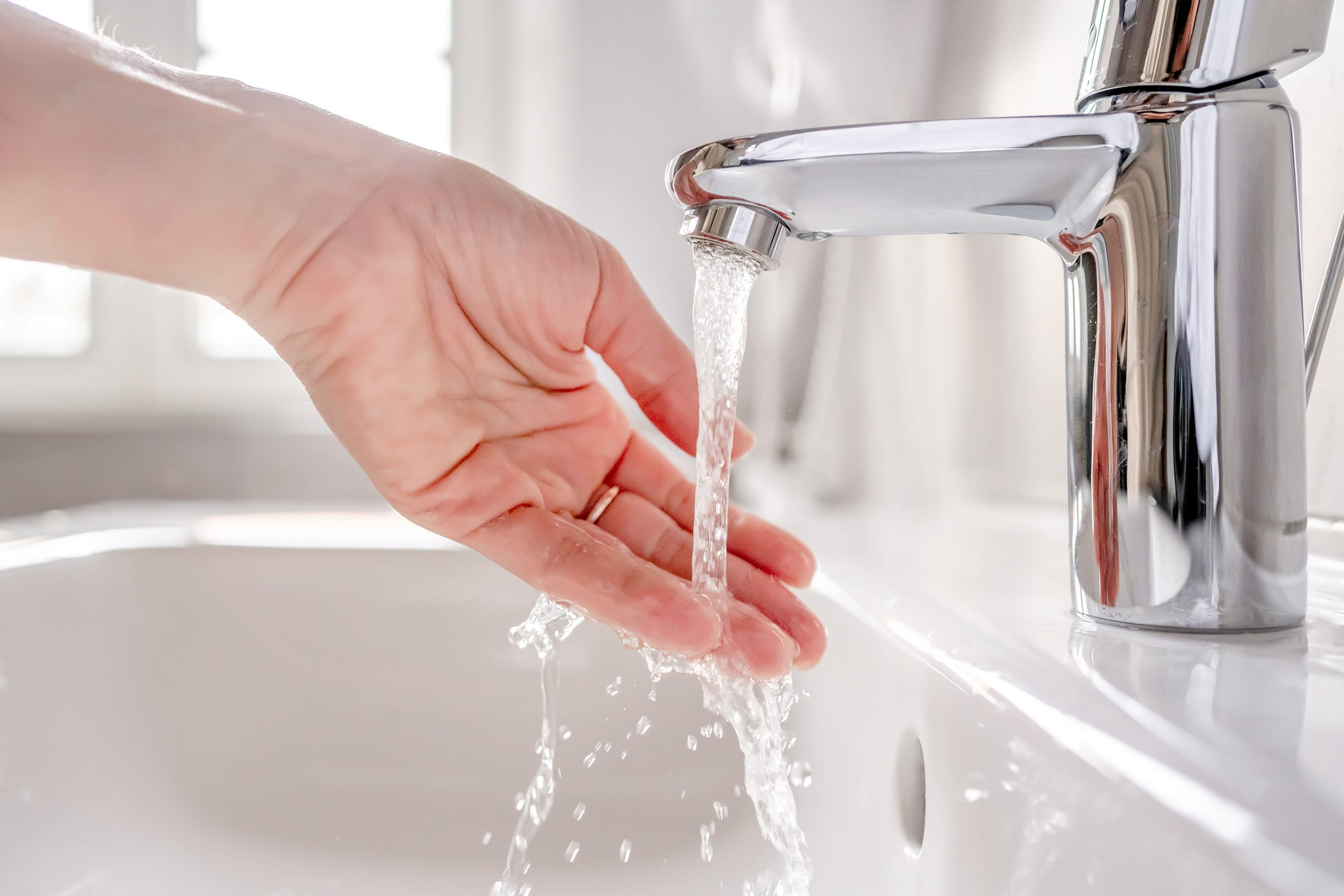
You’ve finally made the leap. After months of dealing with crusty white scale on your faucets, dull laundry, and a persistent layer of soap scum in the shower, you called in the professionals to install a water conditioning system. You step into the shower in your Knoxville or Farragut home, lather up with your favorite body wash, and prepare to enjoy the benefits of pure, treated water.
But as you go to rinse off, something unexpected happens.
You stand under the stream for five minutes, rubbing your arms, but the water feels different. Your skin feels slick, almost smooth to a fault—some might even describe it as "slimy" or "slippery." You dry off with a towel, convinced that you are still covered in a film of soap that refuses to wash away. You wonder if the technicians at Advanced Heating & Air Conditioning calibrated your system incorrectly, or if soft water is just an elaborate trick designed to make you use less soap.
Rest assured, your system is working perfectly. That signature "slippery" sensation isn't leftover soap at all. In fact, it is the tactile proof of clean, unburdened skin.
To understand why soft water behaves this way, we have to travel from the geology of the Tennessee Valley down to the molecular scale of your skin cells, exploring the fascinating physics of ion exchange and the chemical illusion of being "squeaky clean."
1. The East Tennessee Baseline: Why Our Tap Water is Aggressive
Before we can appreciate the slick feeling of soft water, we have to look at what your home's plumbing looks like without a treatment system. As we covered in our comprehensive guide to Hard Water Hair, East Tennessee is dominated by unique karst geology. The limestone and dolomite formations that give our landscape its rolling hills and deep caverns are heavily rich in calcium carbonate ($CaCO_3$) and magnesium carbonate ($MgCO_3$).
When rain falls over cities like Maryville, Oak Ridge, or Sevierville, it absorbs carbon dioxide from the atmosphere, becoming mildly acidic. As this water filters through our limestone bedrock into municipal reservoirs and private wells, it dissolves the rock, loading the water supply with positively charged calcium ($Ca^{2+}$) and magnesium ($Mg^{2+}$) ions.
By the time this water reaches your residential water line, it is heavily classified as "hard." These mineral ions are highly reactive, and their presence fundamentally changes how water interacts with everything it touches—especially your soap and your skin.
2. The Microscopic Alchemy: How Ion Exchange Changes the Water
When you install a professional water softening system, you are introducing a chemical gateway between the municipal water main and your home's internal faucets. The heart of a water softener is its mineral tank, which is packed full of millions of microscopic, negatively charged polystyrene resin beads.
During normal operation, these resin beads are pre-loaded with positively charged sodium ($Na^+$) or potassium ($K^+$) ions. Because calcium and magnesium ions carry a stronger positive charge ($2+$) than sodium or potassium ions ($1+$), they have a natural, electrostatic affinity for the resin beads.
As hard water forces its way through the tank, a literal swap takes place at the atomic level:
$$2\text{Resin}\text{-}Na^+ + Ca^{2+} \rightarrow \text{Resin}_2\text{-}Ca^{2+} + 2Na^+$$
The heavy calcium and magnesium ions "stick" to the resin beads, displacing the milder sodium ions into the water stream. By the time the water exits the tank and flows toward your water heater, showerheads, and appliances, it is completely free of the minerals that cause scale. It is now "soft water."
But how does swapping calcium for a tiny amount of sodium make your skin feel like silk? The answer lies in how these different ions interact with soap.
3. The Myth of "Squeaky Clean"
To understand why soft water feels slippery, we first have to deconstruct our cultural obsession with the "squeaky clean" sensation. Most of us grew up believing that if you rub your fingers across your skin after a shower and hear a literal squeak, your skin is perfectly clean.
In reality, that squeak is the sound of friction, irritation, and chemical residue.
Traditional soaps are made by combining fats or oils with a strong alkaline solution (like sodium hydroxide) in a process called saponification. This creates sodium stearate ($C_{17}H_{35}COONa$) or similar fatty acid salts. When you use this soap in untreated hard water, the dissolved calcium and magnesium ions instantly attack the soap molecules.
The calcium ions bond with the fatty acids, replacing the sodium in the soap matrix. Because calcium soap salts are completely insoluble in water, they precipitate out of the liquid solution, forming a sticky, curd-like solid.
In the plumbing world, we call this soap scum, and it is a leading contributor to clogged bathroom drains. On your body, this precipitate forms an invisible, microscopic crust over your skin cells.
When you rinse with hard water, you cannot wash this crust away. The "squeaky" feeling occurs because your fingers are dragging across an abrasive layer of insoluble mineral-soap curd. The hard water has stripped away your skin's natural moisture barrier and replaced it with a tactile speedbump.
4. The Two Reasons Soft Water Feels Slippery
When you switch to soft water, the absence of those aggressive calcium and magnesium ions changes the chemistry of your shower in two profound ways.
Reason A: True Saponification and Clean Rinsing
Without calcium or magnesium to disrupt the molecular structure of the soap, the sodium stearate molecules are allowed to do exactly what they were engineered to do: dissolve completely in water, trap oil and dirt within microscopic structures called micelles, and rinse away without leaving a trace.
Because there is no insoluble crust forming on your body, your skin is left in its natural, unaltered state. Human skin is naturally smooth, pliable, and lubricated by a delicate layer of oils known as sebum. Sebum is produced by your sebaceous glands to waterproof and protect your skin.
When you rinse with soft water, you are feeling the true, unhindered slickness of your skin’s natural oils. You aren't feeling leftover soap; you are feeling your own healthy skin without a layer of rock dust masking it.
Reason B: The Low-Friction Ion Layer
The second reason is purely physical. Soft water contains a slightly higher concentration of sodium ions ($Na^+$) due to the ion exchange process. These sodium ions form a loose, electrostatic bond with the water molecules themselves and the hydrogen bonds on your skin's surface.
This creates a highly lubricated, low-friction boundary layer between your hand and your skin. The water itself becomes structurally more fluid and less prone to surface tension resistance. It glides across your body effortlessly, creating that luxurious, velvety sensation that can feel foreign if you have spent decades bathing in the mineral-heavy water typical of Lenoir City or Alcoa.
5. The Biological Advantage: What Your Skin is Experiencing
While the slippery feeling can take a week or two to get used to, the physiological benefits to your body's largest organ are immediate and measurable.
Preserving the Acid Mantle
Your skin features a fine, mildly acidic film on its surface known as the acid mantle, typically maintaining a pH of around 4.5 to 5.5. Hard water minerals are highly alkaline and act as a chemical buffer, disrupting this acidity and leaving the skin vulnerable to environmental bacteria and moisture loss. Soft water allows your skin to preserve its ideal pH balance effortlessly.
Relief from Chronic Dryness and Eczema
For homeowners in areas like Clinton or Powell, chronic skin conditions like eczema, psoriasis, and severe winter dryness are frequently exacerbated by municipal water hardness. Because hard water leaves an abrasive residue that constantly chafes the skin barrier, it triggers inflammatory responses. Soft water eliminates this mechanical irritation entirely, frequently reducing the need for expensive medicated lotions and dermatological creams.
6. How Soft Water Impacts Your Soap Budget
Because soft water allows soap to dissolve completely without forming scum, its cleaning efficiency increases exponentially. In hard water, up to 50% of the soap you use is wasted simply reacting with calcium and magnesium to create scum before any actual cleaning takes place.
With a home water softener, you will quickly find that you only need a fraction of the product to achieve a rich, luxurious lather.
- Shampoo & Body Wash: You can typically cut your usage by half or more.
- Laundry Detergent: Your clothes will rinse cleaner, look brighter, and require significantly less chemical input to stay fresh.
- Dishwasher Detergent: No more spots on glasses, which means no more relying on aggressive chemical rinse aids.
7. Tactile Comparison: Hard Water vs. Soft Water Sensation
8. Is It Possible for Water to Feel Too Slippery?
Occasionally, we encounter homeowners in Pigeon Forge or Knoxville who feel that their water has crossed the line from "luxurious" to outright "greasy." If you feel like you truly cannot rinse off your soap, there are two common culprits that can be easily adjusted:
- Using Too Much Soap: This is the most common issue. Because you are accustomed to fighting hard water, you are likely using far too much product. Try reducing your shampoo or body wash to a dime-sized drop. You'll be amazed at how much cleaner the rinse cycle feels.
- Over-Softening (Incorrect Hardness Settings): If your water softener's control valve is set to treat water that is harder than your actual supply, it can introduce an excessive amount of sodium ions, making the water feel hyper-slick. Our team at Advanced Heating & Air Conditioning specializes in precision water testing to calibrate your system to the exact grains per gallon required for your specific neighborhood.
9. Protecting the Rest of Your Home’s Ecosystem
While the physical sensation on your skin is the most noticeable day-to-day difference, the true value of an ion exchange system happens behind your walls and within your home's infrastructure. The same calcium and magnesium that create an abrasive crust on your skin are constantly trying to precipitate inside your home's mechanical components:
- Your Water Heater: Hard water forms a dense layer of stone at the bottom of tanked systems or chokes the narrow pathways of tankless heat exchangers, drastically shortening their lifespans and driving up your utility bills.
- Your Plumbing Lines: Over decades, mineral scale restricts water flow, eventually requiring expensive pipe rehabilitation or localized leak repairs.
- Your Septic Infrastructure: Minimizing soap scum and chemical additives prevents premature solid accumulation in your system, safeguarding your septic system and pumping schedules.
Final Thought: Embrace the Smooth Flow
The next time you step out of the shower and notice that slippery, smooth sensation, you can smile knowing that your water treatment system is doing exactly what it was designed to do. You are experiencing your skin as nature intended: clean, hydrated, and completely free of the geological weight of the Tennessee Valley's limestone bedrock.
If you are ready to say goodbye to dry, itchy skin, stubborn soap scum, and appliance-killing scale, it’s time to talk to a local specialist. From high-efficiency water line installations to seasonal HVAC services, our team is committed to the total mechanical and structural health of your home.
Contact Advanced Heating & Air Conditioning today to schedule a professional water quality analysis. Let's transform your home's water into the cleanest, softest asset it can be.


