


Deferred Maintenance vs. Emergency Repair: The real financial math of waiting
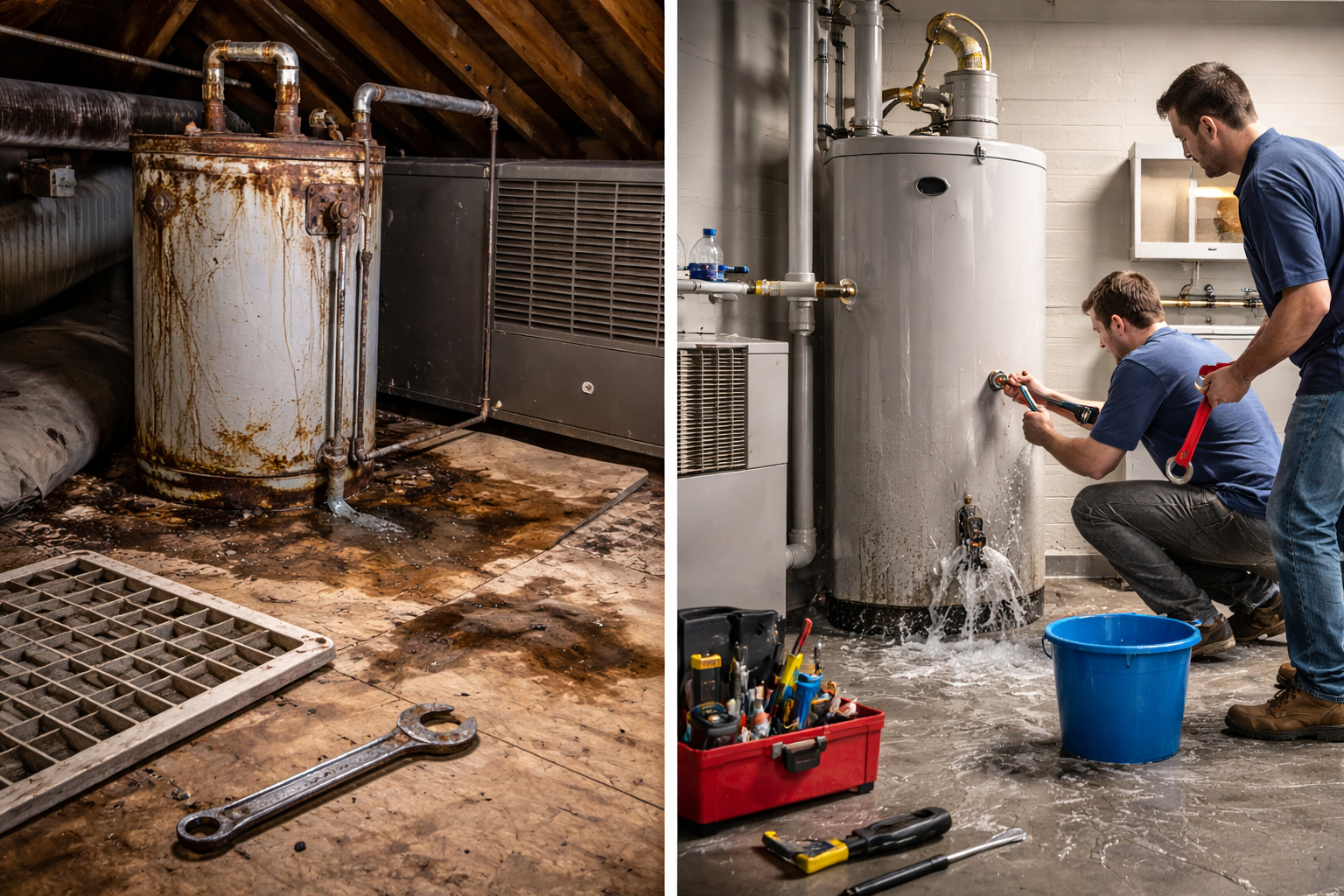
Most homeowners do not delay plumbing repairs because they do not care. They delay them because the issue feels small, the timing is inconvenient, and the house still seems to be functioning well enough. That is exactly why deferred maintenance becomes so expensive. A slow leak, a struggling water heater, a soft sewer warning sign, or a drain that clogs every few weeks rarely stays the same. It usually gets more disruptive, more expensive, and more urgent. The real financial math is not just repair cost versus repair cost. It is planned cost versus emergency cost, plus damage, disruption, stress, and lost time.
What is deferred maintenance, really?
Deferred maintenance is any repair, inspection, or replacement that a homeowner knows should happen but keeps pushing off. Sometimes that delay lasts a few weeks. Sometimes it lasts a few seasons. In plumbing, deferred maintenance often starts with things that feel easy to live with.
Common examples include:
- A dripping faucet under the bathroom sink
- A toilet that runs every so often
- A drain that clears slowly but still works
- A water heater making new noises
- A shutoff valve that is getting harder to turn
- A leak stain that has not changed much yet
The problem is that plumbing does not usually reward delay. A home can look stable while water damage, corrosion, buildup, or pressure strain continues quietly behind the scenes. That is why homeowner maintenance decisions should be judged not only by what the issue looks like today, but by what the system is likely doing when nobody is watching.
If you want a broader look at why early attention matters, annual plumbing maintenance checks are one of the clearest examples of how small proactive steps reduce larger future costs.
What counts as an emergency plumbing repair?
An emergency plumbing repair is what happens when a problem stops being optional. At that point, the homeowner is not choosing the timing anymore. The plumbing failure is choosing it.
Typical emergency situations include:
- A burst pipe
- An overflowing toilet that will not stop
- A sewer backup
- A water heater leaking heavily
- A supply line failure under pressure
- A major drain blockage affecting multiple fixtures
The financial difference is huge because emergency work rarely happens at a convenient time. It tends to show up during weekends, travel, holidays, overnight hours, or busy stretches when homeowners have the least flexibility. The repair itself may already cost more because of urgency, but the bigger issue is that emergencies often come with added cleanup, drying, material replacement, and temporary disruption that a planned repair could have avoided.
That is why the true comparison is not "small repair now versus big repair later." It is "controlled decision now versus uncontrolled event later."
Why do homeowners keep waiting when the warning signs are obvious?
Because delay feels cheaper in the moment. That is the real trap. A homeowner looks at a minor issue and compares the repair bill to the cost of doing nothing today. That makes waiting feel rational. What often gets missed is the cost of probability.
A few common reasons people delay include:
The issue still seems manageable
If the sink still drains and the toilet still flushes, it is easy to assume the problem is minor.
There is no visible disaster yet
People respond faster to standing water than to quiet moisture or recurring warning signs.
Other expenses feel more urgent
The plumbing issue gets pushed behind travel, school, holidays, home upgrades, or general life.
The fix sounds inconvenient
Scheduling service during a workweek often feels harder than ignoring the problem for another month.
This is understandable, but it is not free. Waiting is a financial choice. It is just a choice that many homeowners do not calculate clearly until the cost has multiplied.
What is the real financial math of waiting?
The real financial math of waiting is simple: the cost of delay is rarely limited to the original repair. It often expands into four separate categories.
1. The repair itself gets bigger
A small leak can become damaged cabinetry, drywall, subfloor, or trim.
2. The cleanup gets more expensive
Once water escapes its intended path, drying, demolition, and restoration costs enter the picture.
3. The timing becomes more expensive
Emergency service, rushed scheduling, and immediate material decisions usually cost more than a planned visit.
4. The disruption becomes more expensive
Canceled plans, missed work, lost use of a bathroom or kitchen, and stress all have real value even if they are not listed on the invoice.
That is why deferred maintenance is not really about saving money. It is often about delaying a smaller cost while increasing the chance of a larger one. The homeowner who waits is not just betting against failure. They are betting against water, pressure, age, and time.
How does a small leak turn into a much bigger bill?
A small leak becomes expensive because water does not stay politely contained. Even a slow drip can soak cabinet bases, stain walls, soften trim, rot subflooring, and create moisture conditions that are much harder to reverse than the original plumbing issue.
The typical pattern looks like this:
- A small drip starts at a fitting, valve, or supply line
- The area stays damp but not dramatic
- Materials around it begin absorbing moisture
- Odor, staining, swelling, or mold risk increases
- The homeowner now needs both a plumber and restoration work
This is one reason small leaks are so financially dangerous. They are quiet enough to live with but active enough to cause damage.
If you want a strong homeowner-facing companion topic here, how to prevent costly water damage in your home fits naturally because it explains how minor plumbing problems create much larger repair situations once moisture spreads.
Why are emergency drain and sewer problems so much more expensive?
Drain and sewer issues are expensive when they are deferred because they often worsen underneath the surface. A drain that clogs repeatedly is not just annoying. It is often warning you that buildup, damage, or a deeper blockage is already forming.
The same is true of sewer-related symptoms. Homeowners may ignore:
- Recurring clogs
- Gurgling fixtures
- Slow drains in multiple rooms
- Bad smells around drains
- Wet spots outside
- Occasional backup symptoms
The problem is that once drain and sewer issues cross into emergency territory, the homeowner is no longer paying only for diagnosis. They may now be paying for urgent clearing, line inspection, cleanup, contaminated materials, or major repair access.
This is where waiting gets especially expensive. A problem that might have been addressed during normal business hours becomes a house-disrupting event. If the issue has already crossed from nuisance to pattern, signs of a damaged sewer line that needs repair is exactly the kind of internal resource that helps readers understand when the financial risk is rising.
What is the difference between a soft outcome and a hard outcome?
This is one of the clearest ways to explain the financial math to homeowners. Deferred maintenance does not always lead to the worst-case scenario, but it often shifts the odds away from the softer outcome and toward the harder one.
A soft outcome
- You catch the issue early
- The repair stays local
- Materials around it are still dry
- The timing is planned
- The cost is mostly the plumbing work itself
A hard outcome
- The issue grows quietly
- Water or wastewater reaches surrounding materials
- More than one fixture is affected
- The repair becomes urgent
- Cleanup, access, and restoration are now part of the bill
This framework helps homeowners think more clearly. Waiting is not always punished immediately, but it increases the chance that the outcome will be harder, more expensive, and less predictable. When the system finally fails, the homeowner often realizes they were never comparing repair versus no repair. They were comparing controlled repair versus uncontrolled fallout.
Why do clogged drains get more expensive the longer you ignore them?
Because recurring drain problems are rarely static. Hair, grease, soap residue, sludge, and debris do not usually stop accumulating just because the fixture still drains a little. A slow drain that gets better briefly after a DIY fix often continues narrowing behind the scenes.
That matters financially because the cost escalates in stages:
- Early stage: slower drainage and minor inconvenience
- Middle stage: repeated clogs, smell, and growing frustration
- Late stage: standing water, backups, multi-fixture impact, or deeper line trouble
A homeowner who acts early may only need a targeted service call. A homeowner who waits may end up dealing with more severe blockage, line damage, or larger drain system problems.
If a reader is already asking whether they have crossed the line from inconvenience to real repair, when to call a professional for a clogged drain is the perfect natural next click because it helps clarify when delay stops being practical.
How does deferred maintenance affect water heaters?
Water heaters are classic deferred maintenance appliances because they often keep working just well enough to avoid attention. Homeowners notice a little noise, slightly reduced hot water, some sediment behavior, or a minor drip, and then keep moving.
That becomes expensive for a few reasons:
Performance drops quietly
The unit becomes less efficient while still appearing functional.
Stress builds internally
Sediment, age, and pressure issues can reduce the useful life of the tank or system.
Failure is disruptive
When a water heater finally fails, the homeowner may lose hot water completely and may also face leakage or surrounding damage.
Timing gets worse
A planned water heater decision usually gives the homeowner time to compare options. An emergency failure usually removes that flexibility.
Water heaters are one of the best examples of why deferred maintenance is not really a money-saving strategy. It often only postpones a decision while increasing the chance that the replacement will happen at the worst possible time.
What hidden costs do homeowners forget to include?
This is where the financial conversation usually becomes more honest. Many people compare a routine repair quote against the idea of "just waiting" and forget that waiting has its own price.
Common hidden costs include:
- Drywall, flooring, cabinet, or trim replacement
- Mold or odor remediation
- Higher water bills from silent leaks
- Time off work or disrupted schedules
- Emergency call premiums
- Hotel or alternate bathroom arrangements in severe cases
- Stress-driven rushed decisions
- Reduced enjoyment of the home while the problem lingers
These costs matter because they turn a plumbing issue into a whole-home issue. Even when the final plumbing work is manageable, the surrounding consequences may not be. Homeowners often regret not the repair itself, but the extra cascade of problems that came from waiting too long.
Are there cases where waiting actually makes sense?
Yes, but only when "waiting" really means monitoring with a plan, not ignoring without one. Not every plumbing issue needs to be handled as a same-day emergency. Some issues can be scheduled, budgeted, or grouped intelligently.
Waiting can be reasonable when:
- The problem is identified clearly
- The risk of immediate damage is low
- The homeowner knows what warning signs to watch
- A repair timeline is already being planned
- The system is being monitored, not neglected
For example, an aging fixture that still works may reasonably be scheduled for replacement before a remodel. A known old valve may be planned into a larger upgrade. But that is different from hoping a slow leak, repeat clog, or water heater warning sign will somehow stay harmless indefinitely.
The key difference is intention. Planned timing is not the same thing as deferred maintenance. One is strategic. The other is avoidant.
What are the most expensive homeowner delay mistakes?
Most homeowners do not make one giant mistake. They make one small excuse several times in a row. That pattern is what turns a manageable issue into an expensive one.
The most common delay mistakes include:
Assuming small means harmless
Many of the most expensive plumbing situations begin quietly.
Treating a repeat issue like a new issue each time
A recurring clog or leak is usually one ongoing problem, not bad luck.
Waiting for a more obvious sign
By the time the sign is dramatic, the repair is often larger too.
Using temporary fixes as if they are permanent
A bucket, towel, drain chemical, or quick patch may buy time, but it does not solve the underlying problem.
Never putting maintenance on the calendar
Homeowners often mean to deal with the issue later, but "later" becomes the season after next.
For readers who need the broader behavioral version of this topic, the top plumbing mistakes homeowners make fits naturally because many of those mistakes are really delay mistakes in disguise.
How should homeowners think about emergency preparedness if something does go wrong?
Even careful homeowners still face genuine emergencies sometimes. The goal is not perfection. The goal is reducing how bad the emergency becomes.
A few simple steps make a major difference:
- Know where the main water shutoff is
- Know which fixtures already show warning signs
- Address recurring issues before travel or holidays
- Keep a plumber’s contact information ready
- Act quickly when water is spreading or backing up
Preparedness changes the math because speed limits damage. A homeowner who knows how to shut water off quickly often avoids a much larger cleanup bill than a homeowner who loses time in confusion.
This is why what to do in a plumbing emergency is such a helpful related link. It gives readers something practical they can use immediately, especially if they are already worried they may have waited too long.
Can smart monitoring tools change the math?
Yes, in some homes they absolutely can. Smart leak detection does not replace maintenance, but it can reduce the cost of delay by shortening the time between "problem starts" and "homeowner knows."
That matters most in situations like:
- Travel or vacations
- Older homes with previous leak history
- Water heaters in finished spaces
- Under-sink areas that are easy to forget
- Laundry rooms or utility spaces
If a leak starts and gets caught sooner, the damage is often much smaller. That shifts the financial math back toward the soft outcome. It does not make delay a good strategy, but it does reduce the chance that a hidden leak becomes a major restoration project.
For homeowners who want an additional protection layer, smart leak detectors are a natural fit in this conversation because they help close the gap between maintenance and emergency response.
Why is routine maintenance almost always the cheaper path?
Because routine maintenance works with the system before failure forces the issue. It catches the small stuff when the small stuff is still cheap. It also gives homeowners time, which is one of the most valuable things you lose during an emergency.
Routine maintenance tends to be cheaper because it allows for:
- Better repair timing
- Smaller repair scope
- Less surrounding damage
- Fewer rushed choices
- More predictable budgeting
- Lower chance of repeat surprise failures
This is especially true in plumbing because water rarely damages only the plumbing. Once it escapes, it starts affecting finishes, framing, cabinets, flooring, and indoor air quality. Maintenance is what keeps the problem inside the pipe or fixture conversation instead of letting it become a house-wide one.
That is why the homeowner who handles problems earlier is not just paying for service. They are buying stability.
When should a homeowner stop waiting and schedule help?
If a homeowner is asking themselves this question, the answer is usually now. Most people do not seriously wonder whether to call until the issue has already become persistent enough to be inconvenient, visible enough to be concerning, or expensive enough to worry them.
It is time to schedule help when:
- A leak has happened more than once
- A drain keeps slowing down
- A toilet, valve, or fixture sounds wrong regularly
- Water stains, cabinet swelling, or soft materials are showing up
- Sewer-related signs are recurring
- A "temporary" workaround has been in place for too long
At that point, waiting is no longer neutral. It is an active gamble. If the house is already giving warning signs, the smartest next step is to move from guessing to a real inspection or repair plan through residential plumbing services in Knoxville and East Tennessee.
FAQs about deferred maintenance vs. emergency repair
Is deferred maintenance always a bad idea?
Not always, but true deferred maintenance usually increases risk. Planned scheduling is different from avoiding a known problem.
Why do small plumbing issues get expensive so fast?
Because water spreads, materials absorb moisture, and repeated warning signs usually point to larger underlying problems.
Is a slow drain really worth fixing early?
Yes, especially if it keeps coming back. Recurrent drain problems often get more expensive over time.
What is the biggest hidden cost of waiting?
Usually the surrounding damage and disruption, not just the plumbing repair itself.
Are emergency repairs always more expensive?
They often are, especially once timing, cleanup, and urgency are factored in.
Can a leak detector actually save money?
Yes. Catching a leak earlier can reduce the total cost of damage significantly in the right situation.
What is the smartest homeowner mindset?
Treat recurring plumbing symptoms as system warnings, not random annoyances.
Why early action almost always wins the math
The real financial math of waiting is not complicated once you strip away the wishful thinking. Deferred maintenance feels cheaper only because the full cost has not arrived yet. Emergency repair feels expensive because by the time it happens, the repair is no longer the only thing you are paying for.
Here are the three biggest takeaways:
- Delaying small plumbing problems often increases both repair cost and damage cost
- Emergencies remove your ability to choose the timing, pace, and budget calmly
- The cheapest fix is often the one that happens before water, pressure, or waste gets the chance to spread
If a plumbing issue in your home has already been sitting on the "we should deal with that soon" list, that is usually the best sign that waiting has already started costing you.


