


How Often Should Knoxville Homeowners Service Their AC Unit
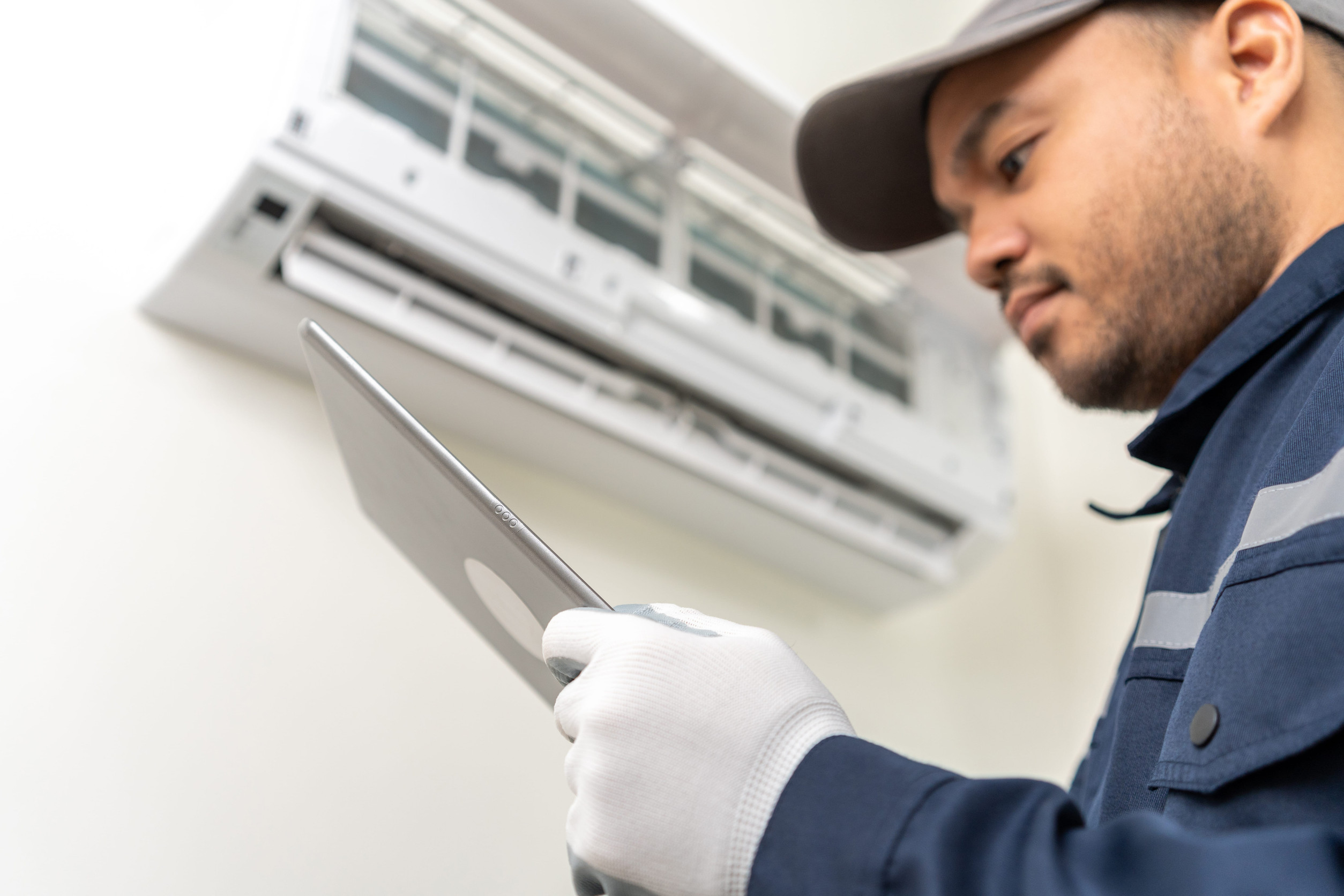
Anyone who has spent a full July afternoon in East Tennessee knows that our summer heat is not just a matter of high temperatures. It is the dense, oppressive humidity rolling off the Tennessee River and settling into the valley that truly tests the limits of residential comfort. When the heat index climbs past 95°F, your home’s air conditioning system transitions from a modern convenience to a critical piece of mechanical life-support infrastructure.
Yet, despite how heavily we rely on these systems, the average cooling unit is completely neglected until the day it stops blowing cold air. Homeowners turn down their thermostats, expect instantaneous comfort, and ignore the complex thermodynamic and electrical processes happening inside their outdoor condenser and indoor air handler.
This leads to a fundamental question for property owners across Knox, Blount, and Sevier counties: How often should you actually service your AC unit? While a quick internet search will yield a generic, one-word response—"annually"—the realities of managing a home in the greater Knoxville region demand a much more nuanced approach. Between our unique geographical pollen blankets, extreme seasonal temperature swings, and the prevalence of dual-purpose heat pump systems, a cookie-cutter maintenance schedule simply will not cut it.
This comprehensive guide will break down the ideal service frequencies for East Tennessee homes, explore the mechanics of professional HVAC tuning, analyze the financial benefits of preventative care, and provide an actionable roadmap to keep your home cool through our longest summer stretches.
1. The Baseline Standard vs. The Knoxville Reality
In a perfect, climate-controlled laboratory, a standard air conditioning system can function relatively well with minimal intervention. But Knoxville is far from a laboratory. Our regional environment places a unique set of operating stressors on an HVAC unit that can rapidly degrade mechanical components if they are left unchecked.
+--------------------------------------------------------------------------+
|                     THE HVAC HEAVY-USAGE TIMELINE                        |
+--------------------------------------------------------------------------+
|  [March - April]    --> Heavy Tree Pollen Blocks Outdoor Condenser Coils  |
|  [May - August]     --> Non-Stop High-Humidity Cooling Demand Phase       |
|  [September - Oct]  --> Late Summer Heatwaves Straining Weakened Motors   |
+--------------------------------------------------------------------------+
The Annual Rule for Straight Air Conditioning Systems
If your home utilizes a traditional split-system configuration consisting of a dedicated outdoor air conditioner paired with an indoor gas furnace, the hard-and-fast rule is a minimum of one professional service visit per year.
This tune-up must be performed in the spring, well before the first true seasonal heatwave forces the system to run continuously. Servicing a straight AC unit once a year ensures that the mechanical components are cleared of winter debris, electrical connections are tightened, and the chemical refrigerant charge is balanced for peak performance.
The Twice-Yearly Rule for Electric Heat Pumps
Here is where many Knoxville homeowners inadvertently damage their systems. A massive percentage of residential properties in East Tennessee do not have access to natural gas lines, relying instead on all-electric heat pump systems.
Unlike a straight AC unit, which sits dormant for nearly half the year, a heat pump works around the clock. It runs in reverse during the winter to heat your home, and then switches its internal reversing valve in the spring to provide cooling.
Because a heat pump experiences double the operational wear and tear of a standalone air conditioner, it requires two professional service visits per year:
- The Spring Tune-Up: Focused entirely on cooling efficiency, airflow optimization, and moisture management.
- The Fall Tune-Up: Focused on heating element validation, defrost cycle calibration, and auxiliary heat strip testing.
Skipping either of these critical visits forces the equipment to transition between completely different operational modes while harboring hidden mechanical deficits, leading to premature component fatigue. To safeguard your system ahead of these seasonal shifts, securing professional preventive maintenance is the single most effective action a homeowner can take.
2. The Unique Environmental Factors of East Tennessee
To truly appreciate why routine maintenance is so non-negotiable in our region, we have to look at the specific atmospheric conditions that your outdoor condenser unit must battle every single day.
The Spring Pollen Blanket
Knoxville consistently ranks as one of the most challenging areas in the country for seasonal allergy sufferers, and your AC unit experiences a remarkably similar struggle. In March and April, tree pollen, cottonwood seeds, and heavy dandelion fluff create a thick yellow layer across the region.
Your outdoor condenser unit cools your home by using a high-powered fan to pull massive volumes of ambient outdoor air through its metallic aluminum fins, dissipating the heat absorbed from inside your house. As it pulls air in, it acts like a giant vacuum cleaner, trapping pollen, dirt, and lawn clippings inside the delicate coil webbing.
Within a matter of weeks, this debris forms an insulating blanket over the coils. This prevents the system from releasing heat efficiently, causing internal operating temperatures and pressures to skyrocket.
[ Ambient Outdoor Air ] ---> [ Pollen & Grass Fin Blanket ] ---> [ Coils Trapped in Insulated Heat ]
                                                                             |
     (Result: Compressor runs hotter, draws double the amperage, and risks sudden electrical burnout)
Extreme Relative Humidity and Biological Slime
The Tennessee Valley experiences high relative humidity during the summer peaks. Your air conditioner is designed to remove this moisture from the air as it passes over the indoor evaporator coil. On a muggy July day, a standard residential AC system can pull several gallons of water out of your indoor air every single hour.
This water drains into a plastic condensate pan and flows out through a dedicated drain line. However, because that dark, damp indoor environment is rich in microscopic dust and organic material, it acts as a breeding ground for biological algae and slime.
Without regular flushing, this slime will completely choke off the drain line, causing the condensate pan to overflow. This results in ruined drywall ceilings, warped flooring, and hidden mold growth inside your structural walls.
Learning how to keep your AC running efficiently all summer in east tn requires a deep understanding of these localized environmental hazards, ensuring your drainage paths remain completely free and clear.
3. What Actually Happens During a Professional AC Service?
A common misconception among homeowners is that an HVAC service visit is simply a glorified filter change and a quick wipe-down of the equipment. In reality, a professional diagnostic tune-up performed by a licensed technician is a highly precise engineering evaluation.
An incomplete or superficial check leaves the most vulnerable points of your system completely exposed to summer failure. A comprehensive, professional system evaluation must analyze several independent operational zones:
Electrical Diagnostics and Component Testing
- Capacitor Value Verification: The start and run capacitors are the electrical storage batteries that give your system’s compressor and fan motors the massive surge of energy required to kick on. Capacitors degrade steadily over time due to heat exposure. Technicians measure their electrical capacitance in microfarads. If a capacitor's value drops by more than 5% to 10% of its factory rating, it must be replaced immediately; otherwise, it will cause the compressor motor to overheat and seize.
- Contactor Inspection: The contactor is a heavy-duty mechanical switch that closes to send 240-volt power to the outdoor unit. Every time the system cycles on, a tiny electrical arc forms between the silver contacts. Over time, this arcing creates pits, burn marks, and carbon buildup. If the contacts pit severely or weld themselves together, your outdoor unit will run continuously without stopping, leading to catastrophic equipment failure.
Thermodynamic and Refrigerant Evaluation
Refrigerant is the chemical lifeblood of your cooling system. It does not get "used up" or consumed like fuel; it flows through a completely closed loop. A technician must attach specialized manifold gauges to measure both the liquid-line pressure and suction-line pressure inside your system.
| Diagnostic Metric | Main Operational Focus | Improper Reading Consequence |
|---|---|---|
| Superheat & Subcooling | Tells the technician if the exact weight of refrigerant matches factory specifications. |
Too Low: Liquid slugging destroys the compressor valves.
Too High: System starves for oil, causing thermal lockup.
|
| Delta-T Airflow Drop | Measures the air temperature difference before and after passing over the indoor coil. |
Under 16°F: Suggests weak heat transfer or low charge.
Over 22°F: Points to dangerous ductwork restrictions or a clogged filter.
|
| Amperage Draw | Tracks the precise electrical current pulled by the compressor and outdoor fan. |
Over-amping: Indicates internal mechanical friction or a failing motor winding.
|
If your system's thermodynamic readings are fundamentally skewed, running the unit continuously will cause immediate, irreparable damage to the compressor. In these scenarios, a rapid intervention via professional ac repair is absolutely essential to stabilize pressures before a minor component issue turns into a total system failure.
4. The Financial Math: Maintenance Costs vs. Neglect Expenses
Many property owners view preventative HVAC maintenance as an optional luxury expense. However, when you look at the actual operational numbers over a standard 10-to-15-year equipment lifecycle, skipping your routine service is an incredibly expensive mistake.
Furthermore, neglecting regular cleanings directly accelerates your timeline for a full system replacement. A compressor forced to fight high internal pressures caused by dirty coils will fail years ahead of its time.
By analyzing the comprehensive benefits of how to extend the life of your air conditioning system, it becomes clear that spending a modest amount on annual preventative care saves thousands of dollars in premature replacement costs and avoidable structural emergencies.
The Manufacturer Warranty Catch-22
Here is a legal reality that catches many homeowners completely off guard: nearly every major HVAC manufacturer (including American Standard) explicitly states in their warranty text that their 5-to-10-year parts warranty is completely voided if the equipment is not maintained annually by a licensed professional.
If your system's expensive compressor or indoor evaporator coil fails inside the warranty window, the manufacturer will require you to provide physical copies of your annual maintenance invoices before they will ship out a free replacement part. If you cannot provide proof of regular service, your warranty claim will be denied, leaving you on the hook for a massive repair bill.
5. Critical Warning Signs Your AC Needs Immediate Professional Attention
While regular scheduling is ideal, your cooling system will often flash distinct operational red flags when it is suffering from acute mechanical distress between its standard service intervals. Homeowners must learn to spot these warning signs immediately:
- Short-Cycling Behavior: If your AC unit kicks on, runs for three to five minutes, shuts down, and then repeats the process ten minutes later, it is short-cycling. This behavior places immense mechanical strain on the compressor start windings and is frequently caused by a severely clogged air filter, an overheating motor, or an improperly matched thermostat sensor.
- The Dreaded Ice Accumulation: If you look at your outdoor unit's brass lines or notice physical ice forming across your indoor air handler's casing, do not assume the system is simply working extra hard. Ice indicates that the evaporator coil's temperature has dropped below freezing. This occurs due to severe airflow restrictions (like a completely blocked air filter) or a dangerous leak in your refrigerant line. Running an iced-over system will quickly flood liquid refrigerant back into the compressor, instantly destroying it.
- Strange Structural Noises: Screeching or squealing noises usually point to a dry, failing bearing inside the blower motor or condenser fan assembly. Loud banging or clanking indicates that a fan blade has bent out of alignment or a internal motor mount has fractured. A buzzing noise often signals an electrical contactor chattering or an electrical circuit undergoing dangerous arcing.
       [ LAUNDRY ROOM / MECHANICAL DISTRESS CHECKLIST ]
                             |
         +-------------------+-------------------+
         |                                       |
         v                                       v
[ Physical Ice on Lines ]              [ Chronic Short-Cycling ]
         |                                       |
         v                                       v
Shut down system immediately to        Check filter status and schedule
prevent liquid compressor flooding     an emergency airflow diagnostic
If your older unit is displaying these symptoms on a frequent basis despite repeated repair attempts, it may be approaching its natural structural limit. In these situations, transitioning your home's infrastructure to a modern, highly efficient platform through a planned ac installation is often a much wiser financial investment than continually pouring money into a failing, obsolete system.
6. Proactive DIY Maintenance Steps for Homeowners
While technical electrical diagnostics and chemical refrigerant adjustments must be left exclusively to licensed professionals, there are several vital preventative actions that homeowners should take to protect their cooling systems between professional visits.
- Commit to the 30-to-90-Day Filter Rule: Your air filter's primary job is not to clean the air you breathe—it is to protect the indoor evaporator coil from becoming matted with dust and pet hair. Check your air filter every 30 days. If you utilize standard 1-inch pleated filters, replace them at least once every 90 days. If you own shedding pets, that timeline should be stepped up to every 30 to 45 days without exception.
- Maintain a 2-Foot Clearance Perimeter: Your outdoor condenser unit needs to breathe. Never plant heavy landscaping, decorative shrubs, or dense flower beds right against the metal casing. Maintain a clear, open perimeter of at least 2 feet around the entire unit, and regularly clear away fallen autumn leaves, tall weeds, and stray branches that can choke off the intake vents.
- Never Clear an HVAC Drain with Chemical Bleach: If you want to keep your condensate line clear of biological slime, flush it with a cup of simple white vinegar every few months. Never pour caustic chemical drain cleaners down your AC drain; these harsh chemicals will aggressively dissolve the glue holding the plastic PVC drain lines together, causing a major water leak behind your drywall.
Secure Your Comfort with a Comprehensive Service Framework
Your home's heating and cooling grid is likely the single most expensive, complex mechanical system you own. Treating it with proactive, structured care is the absolute best way to maximize your comfort, lock down low monthly energy bills, and eliminate the stress of sudden, mid-summer mechanical failures.
Rather than trying to remember to call for service every spring, the smartest strategy is to enroll in a structured, long-term care framework. Utilizing a dedicated, professional hvac service plan ensures that your home automatically receives its required spring cooling tune-up and fall heating calibration, keeping your system fully compliant with manufacturer warranties and completely optimized for East Tennessee’s demanding climate.
At Advanced Heat, AC & Plumbing, we have spent more than 40 years helping families across Knoxville, Blount County, and the surrounding areas keep their homes safe and comfortable. As a veteran-owned, third-generation family business, we combine advanced diagnostic gauges with honest, reliable craftsmanship to deliver real peace of mind.
📞 Is your AC unit overdue for its seasonal tune-up? Don't wait for a hot summer day to find out if your cooling system is up to the challenge. Call Advanced Heat, AC & Plumbing today at 865-933-5538 to schedule an expert precision maintenance service!


