


The Physics of Siphonage: How your home’s plumbing keeps sewer gases out
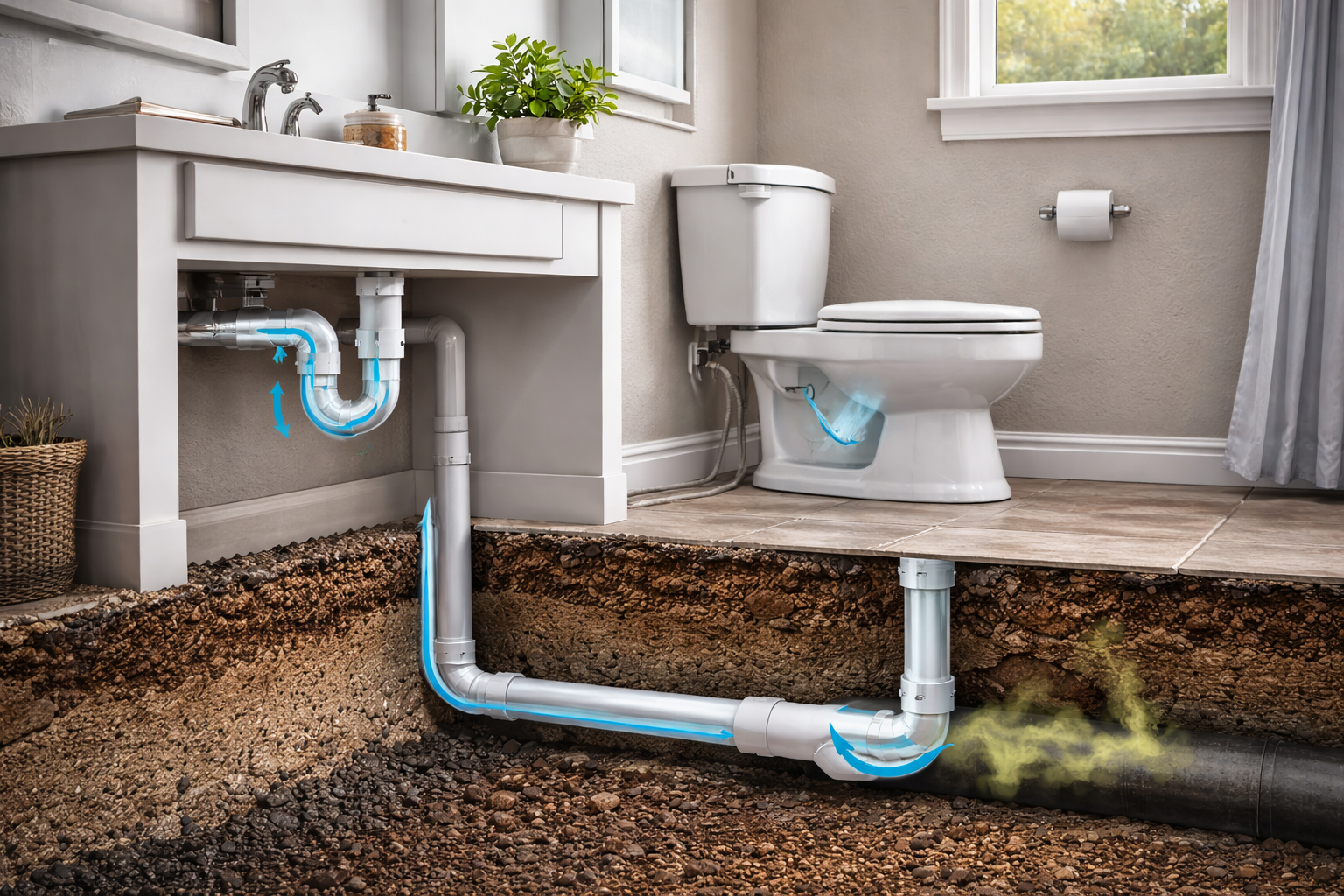
Most homeowners never think about sewer gas until a bathroom, laundry room, or basement starts to smell wrong. The good news is that your plumbing system is designed to stop those odors from entering the house every day. The key is a simple but powerful idea: water standing inside traps creates a seal, and proper venting keeps that seal from being pulled out by siphonage. Once you understand the physics behind it, a lot of common drain smells, gurgling sounds, and mysterious plumbing problems start to make much more sense.
What is siphonage in plumbing, and why does it matter?
Siphonage in plumbing happens when moving water creates negative pressure that pulls water out of a trap. A trap is the curved section of pipe under a sink, tub, shower, or floor drain. Its job is to hold a small amount of water at all times. That water acts like a barrier between your home and the sewer system.
If that water seal gets pulled out, sewer gases can move into the room. That is why siphonage matters. It is not just a technical plumbing term. It is the reason a bathroom can go from normal to foul-smelling even when nothing is visibly leaking.
The trap seal is one of the simplest protections in your home, but it only works when it stays full. Every time wastewater flows through your plumbing, the system has to manage air pressure correctly so the trap can do its job. When the pressure balance fails, the trap may lose water and the room may lose its protection.
What are sewer gases, and why are they kept out by water?
Sewer gases are the mix of gases that form inside drains and sewer systems as waste breaks down. Homeowners usually notice them as unpleasant odors first, but the larger point is that these gases belong inside the drainage system, not inside the living space.
Your plumbing keeps them out using a surprisingly basic method: water standing in traps. That water does not need to be deep to work well. It only needs to remain in place. As long as the trap holds water, gases from the drain system cannot move freely through the pipe opening into the room.
This is one of the best examples of simple physics doing important work. Water is heavier than the gas trying to move past it, and the trap shape keeps that water positioned where it needs to stay. The problem begins when that seal is disturbed by siphonage, evaporation, capillary action, leaks, or poor venting. Once the water seal is weakened, the barrier between your home and the sewer system is no longer reliable.
How does a plumbing trap actually stop sewer gas?
A trap works by holding water in a low section of the drain line after the fixture is used. The most familiar example is the P-trap under a sink. When water flows through it, some continues onward to the drain system, while some remains in the curved portion of the pipe.
That standing water becomes a seal. It is not mechanical. It is not electronic. It is just a shape and a small volume of water. Yet it is one of the most important health and comfort protections in residential plumbing.
Why traps work so well
- They create a physical barrier without moving parts
- They reset every time the fixture is used
- They work continuously when kept full
- They protect against odors and gas movement
The trap only fails when the water inside it disappears or gets disturbed. That is why plumbing design is not only about moving water out. It is also about keeping enough water in the right place afterward. The whole venting system exists largely to protect that goal.
How does siphonage pull water out of a trap?
Siphonage happens when water rushing through a drain creates a pressure drop behind it. If the system cannot pull in enough replacement air, that moving column of water can start acting like a piston. It drags air along with it and creates suction in nearby branches or fixture drains.
That suction may pull water right out of a trap. In some cases, it removes the entire seal. In others, it only lowers the water level enough to weaken the barrier. Either way, the result is the same problem: easier passage for sewer gases.
A simple way to picture it
Imagine pouring liquid quickly out of a bottle with no easy way for air to get in behind it. The flow becomes uneven, noisy, and pressure-sensitive. Plumbing behaves in a similar way when air cannot enter the system where needed.
This is why siphonage is not random. It is tied to air movement, flow speed, pipe configuration, and venting. The water is not only draining. It is interacting with pressure every second it moves through the system.
Why do plumbing vents matter so much?
Plumbing vents are what let the drainage system breathe. They allow air into the system so water can flow without creating destructive pressure imbalances. In simple terms, vents protect traps by preventing suction from forming where it should not.
When a fixture drains, air has to move with the water. If the system is properly vented, air enters through the vent and pressure stays close to neutral. That lets wastewater move smoothly while the trap seal stays in place.
What vents help prevent
- Trap siphonage
- Slow draining caused by pressure lock
- Gurgling fixtures
- Sewer odors entering rooms
- Pressure stress on connected drains
A vent is not there only to release odor to the outdoors. Its deeper purpose is pressure control. That is why a plumbing system can seem like it is draining fine at times and still have a venting problem. The problem may only show up when larger volumes of water move through the line or when multiple fixtures are used close together.
If a layout change, fixture addition, or poorly planned renovation interferes with airflow, the signs can show up quickly. That is why it helps to understand how venting can be affected during a remodel before a simple project creates a hidden drain problem.
Why do drains gurgle when venting is wrong?
Gurgling is often the sound of pressure imbalance. When a drain or toilet gurgles, the fixture may be pulling or pushing air through water in a way it should not. That sound can happen when air is trying to pass through a trap because it cannot move properly through the vent system.
In a well-vented system, air should enter or exit where designed, not through the water seal of another fixture. If venting is restricted, the plumbing may start using the trap itself as a pressure relief point. That is when you hear bubbling or gurgling sounds.
What gurgling can suggest
- A blocked or undersized vent
- Partial drain blockage creating pressure issues
- Trap siphonage beginning to occur
- One fixture affecting another nearby fixture
Gurgling is worth paying attention to because it often shows up before odor problems become obvious. It is one of the early warning signs that the system is not balancing air correctly. Homeowners often think the sound is harmless because the drain still works, but the noise may be telling you the trap seal is already being stressed.
Why does one fixture sometimes affect another?
This is one of the clearest signs that plumbing is behaving like a connected system, not a group of isolated drains. If flushing a toilet makes a shower drain gurgle, or draining a bathtub affects a nearby sink, the cause is often shared venting trouble, partial blockage, or pressure imbalance.
When one fixture sends a large volume of water into the drain system, it displaces air. If the venting path is compromised, the system may look for air somewhere else. That somewhere else can be another fixture’s trap.
Common examples
- A toilet flush makes a tub bubble
- A washing machine drain causes a floor drain odor later
- A sink drain pulls water from a nearby trap
- A shower makes a vanity drain gurgle
This is why plumbing problems sometimes feel mysterious to homeowners. The smelly drain is not always the fixture causing the issue. The real problem may be happening somewhere else in the branch or vent network. Good diagnosis starts by recognizing that water flow in one location can change pressure somewhere nearby.
Why do sewer smells show up even when nothing is clogged?
A sewer smell does not always mean a full blockage. It often means the trap seal is gone, reduced, or compromised. That can happen even when the drain still appears to work normally.
Common non-clog reasons for sewer odor
- A dry trap in a rarely used fixture
- Partial siphonage from poor venting
- A hidden leak at the trap or drain connection
- A floor drain that has evaporated dry
- A vent problem creating repeated pressure imbalance
This is important because many homeowners assume odor means they need a drain cleaner. Sometimes the real solution is simply restoring water to the trap. Other times it means investigating why the trap keeps losing water in the first place.
The smell is not the problem by itself. It is the symptom. The real question is what removed the water seal. Once you answer that, the fix becomes much clearer. Treating odor without understanding trap loss often leads to repeated frustration. A useful companion read here is why your home smells like sewage indoors, especially if the odor is showing up without an obvious clog.
What happens to traps in guest bathrooms, basements, and unused spaces?
Unused fixtures create a different kind of trap problem. In these cases, the seal may disappear not because of siphonage, but because of evaporation. A guest bath sink, a basement floor drain, or a shower in a detached room may sit long enough for the water seal to shrink or vanish.
Once that happens, the fixture no longer blocks sewer gas. The drain itself may still be perfectly intact, but the trap has lost the one thing that makes it protective.
Fixtures most likely to dry out
- Basement floor drains
- Guest bathroom showers
- Laundry sinks used rarely
- Detached building sinks
- Seasonal or vacation property drains
This is a time-focused plumbing issue. The longer a trap sits unused, the more likely evaporation becomes. In dry indoor conditions, that can happen sooner than homeowners expect. The simple fix is often to run water into the fixture periodically. The more important lesson is that plumbing protection depends not only on installation quality, but also on regular use or periodic maintenance.
How do vent blockages create siphonage and odor problems?
A vent blockage cuts off the system’s air supply or release path. That can happen from debris, nesting material, buildup, damage, or design limitations. Once the vent path is restricted, water movement inside the drain system starts affecting pressure more dramatically.
Without proper vent airflow, the system may create vacuum effects behind draining water or force trapped air to escape through fixture drains instead. That is how blocked vents can lead to both siphonage and odor.
Signs a vent issue may be involved
- Repeated gurgling
- Slow drainage with no obvious fixture clog
- Sewer odor that returns after cleaning
- Multiple fixtures acting strangely
- Problems worse when large fixtures drain
Vent issues are often overlooked because the vent is out of sight and most homeowners think about the drain line first. But plumbing is always a water-and-air system, not just a water system. If air cannot move where it should, water flow becomes less stable and trap protection becomes less dependable.
What is the difference between self-siphonage and induced siphonage?
These two terms sound technical, but the underlying idea is simple.
Self-siphonage
This happens when a fixture drains in a way that pulls water out of its own trap. Poor design, bad venting, or excessive flow conditions can make the fixture harm its own seal.
Induced siphonage
This happens when one fixture’s discharge affects the trap of another fixture. For example, a strong drain flow from one part of the system may create suction that lowers the trap seal in a nearby sink, tub, or floor drain.
This distinction matters because it helps explain two very different homeowner experiences. Sometimes the smelly fixture is the one being used heavily. Other times the smelly fixture is a nearby drain that seems innocent but is being affected by something else. Knowing the difference can make troubleshooting much more logical.
If one drain keeps smelling only after another fixture is used, induced siphonage becomes much more likely. That pattern is often the clue that points to shared venting or branch-line pressure imbalance instead of a simple localized issue.
Can modern plumbing fixtures still have siphonage problems?
Yes. Modern plumbing is better understood and more standardized, but the physics has not changed. Traps still need water. Water still moves with air. Pressure still has to be managed. A newer home can still experience siphonage if venting is blocked, drainage is modified poorly, or fixtures are added without respecting the original design.
Situations that can create modern siphonage problems
- Remodeling that changes drain layout
- Added fixtures without proper vent review
- Long branch runs with poor design
- Partial vent obstruction
- Repeated strain from heavy discharge fixtures
That is why siphonage is not only an old-house topic. It is a plumbing-system topic. Newer materials do not remove the need for correct venting and trap protection. In fact, homeowners sometimes assume a newer home cannot have this kind of issue, which delays diagnosis when the warning signs appear.
The lesson is simple: the design still matters. No matter how new the fixtures are, the system still obeys the same pressure rules.
What mistakes make sewer gas problems worse?
Homeowners often try to solve drain odors in ways that treat the smell but ignore the cause. That can waste time and allow the real trap or vent issue to continue.
Common mistakes
- Pouring cleaner into a drain without checking if the trap is dry
- Ignoring gurgling because the fixture still drains
- Assuming every odor means a clog
- Forgetting rarely used drains entirely
- Covering the smell instead of tracing the pressure issue
- Treating one fixture when another nearby fixture is causing the imbalance
A better approach is to think in sequence:
- Is the trap holding water?
- Does the odor return after water is added?
- Do nearby fixtures gurgle or interact strangely?
- Is the problem worse after a toilet flush or large drain event?
How do plumbers actually diagnose siphonage problems?
Plumbers usually diagnose siphonage by looking for patterns in water movement, odor timing, fixture interaction, and vent behavior. The goal is to determine whether the trap seal is being lost, how it is being lost, and what part of the system is causing it.
What they usually look for
- Trap condition and water level
- Evidence of repeated dry-out
- Gurgling during nearby fixture use
- Whether the problem affects one fixture or several
- Signs of vent restriction or poor branch design
- Whether the issue is tied to heavy flow events
The fix may be as simple as restoring trap water in an unused drain, or it may involve correcting venting, clearing blockages, or redesigning problematic drain sections. That range is why diagnosis matters so much. Sewer odor is not a one-cause problem. It is a symptom with several possible sources.
A good diagnosis follows the physics. It asks how water moved, where air should have moved, and what pressure imbalance likely happened instead. When the symptoms point to a larger drain-system issue, a sewer line video inspection can make the next step much more precise.
What if the smell is really a sewer line problem instead of a trap problem?
Not every sewer smell begins at the trap. Sometimes the trap is doing its job, but the odor is pointing to a bigger issue in the main drain or sewer line. This is especially important when smells come with multiple slow drains, recurring gurgling, or unusual behavior across more than one fixture.
Bigger warning signs to watch for
- Multiple drains slowing down together
- Toilets gurgling when sinks or tubs drain
- Smells getting worse in lower levels of the house
- Repeated backup symptoms
- Yard or basement odor patterns that keep returning
In those cases, the issue may be beyond a single fixture or room. If the house is showing broader drainage warning signs, it helps to know the most common signs your sewer line may be failing before a localized odor turns into a much larger repair.
How can homeowners help keep sewer gases out over time?
Homeowners do not need to become plumbing engineers to protect trap seals. A few simple habits go a long way.
Practical best practices
- Run water periodically in rarely used drains
- Pay attention to new gurgling sounds
- Do not ignore repeat sewer odors
- Notice whether one fixture affects another
- Address slow draining before it becomes a pressure issue
- Have strange recurring odor patterns checked instead of masked
The biggest takeaway is that trap protection is active, not passive. Your plumbing system is always balancing water and air. As long as the trap seal remains intact and venting works properly, sewer gases stay where they belong. When those conditions change, the system usually gives clues. Smell, sound, and fixture interaction are often the first ones.
Routine checkups help here too. If you want fewer surprises, annual plumbing maintenance checks are one of the easiest ways to catch trap, vent, and drain issues before they turn into persistent odor problems.
When is it time to stop troubleshooting and call a plumber?
There is nothing wrong with adding water to a dry trap or checking whether a little use solves the smell. But once the odor returns, multiple fixtures start acting strangely, or gurgling becomes a pattern, it usually makes sense to stop guessing.
Call a plumber when
- Sewer smell keeps coming back
- One fixture affects another
- Gurgling gets worse over time
- Several drains are involved
- You suspect a hidden leak or deeper drain problem
- Basic trap refilling does not solve the issue
That is where a full system view matters more than one more home remedy. If you are past the point of simple maintenance, your next step is through professional plumbing services in Knoxville and East Tennessee, where the focus can shift from masking symptoms to fixing the real source.
FAQs about siphonage and sewer gas protection
What is siphonage in simple terms?
It is when moving water creates suction that pulls water out of a trap.
Why does my shower drain gurgle when I flush the toilet?
That often suggests pressure imbalance or venting trouble affecting connected fixtures.
Can a drain smell bad even if it is not clogged?
Yes. A dry or partially siphoned trap can let sewer gases in even when the drain still works.
Why do floor drains smell in basements?
They are often used infrequently, which allows the trap seal to evaporate.
Does every sewer odor mean I need drain cleaner?
No. Sometimes the issue is missing trap water or poor venting, not buildup.
What keeps sewer gas out of the house?
Primarily the water seal inside each plumbing trap, supported by proper venting.
Can one fixture cause another fixture to smell?
Yes. Induced siphonage can happen when one fixture’s discharge affects another trap.
Is siphonage more common in older homes?
It can be, but newer homes can have it too if venting is blocked or drain changes are poorly designed.
Why understanding siphonage helps you spot plumbing trouble earlier
The physics of siphonage sounds technical, but the core idea is surprisingly simple. Your home relies on standing water in traps to block sewer gases, and it relies on vents to protect that water from suction and pressure imbalance. When that balance holds, your plumbing works quietly in the background. When it breaks, you hear gurgling, smell odors, and start chasing mysterious fixture problems.
Here are the biggest takeaways:
- Trap seals are your home’s first defense against sewer gas
- Siphonage happens when pressure imbalance pulls water out of those traps
- Venting is what keeps water flowing without sacrificing odor protection
If your home has a drain that smells, gurgles, or keeps acting strangely after other fixtures are used, the problem may be less mysterious than it seems. Often, it comes back to the same thing: water, air, and pressure not staying in balance.


