


The Role of Vent Stacks in Modern Home Design: Why your roof has pipes
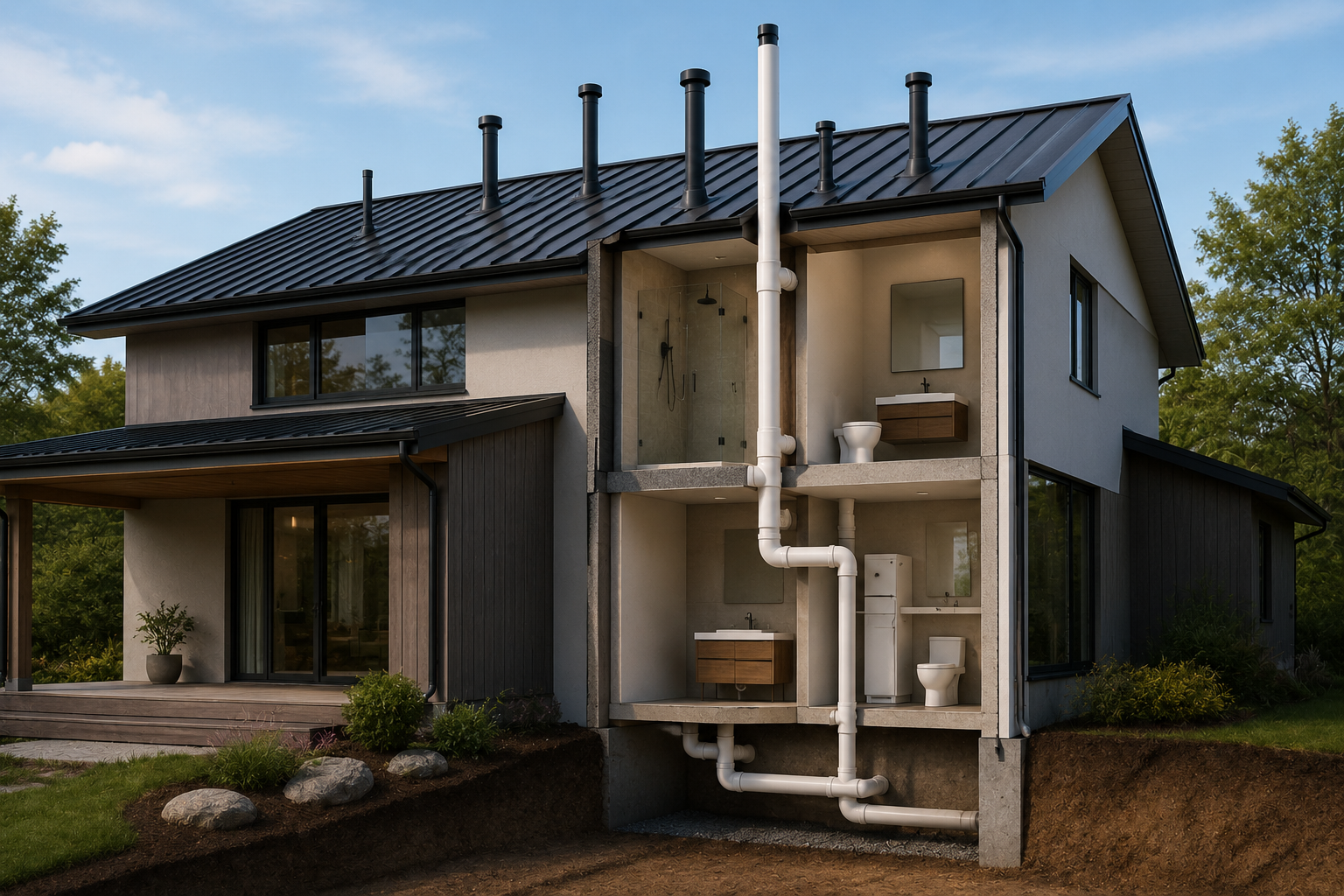
Most homeowners notice plumbing vent pipes sticking through the roof but never think much about them until a problem develops.
Those roof pipes are called vent stacks, and they are one of the most important components of a modern plumbing system.
Without vent stacks, drains would flow poorly, toilets would gurgle, sewer gases could enter the home, and plumbing systems would become unreliable and unsafe.
Vent stacks are not optional additions. They are essential pressure-balancing components that allow your entire drainage system to function correctly.
Modern plumbing depends on airflow just as much as water flow.
Understanding how vent stacks work helps homeowners recognize early warning signs of plumbing problems before they turn into expensive repairs.
What Is a Vent Stack?
A vent stack is a vertical pipe connected to your plumbing drainage system that extends upward through the roof.
Its job is to regulate air pressure inside the plumbing system.
As wastewater moves through drainpipes, it creates pressure changes inside the piping network.
Without ventilation:
- Vacuums can form
- Water flow slows down
- Traps can siphon dry
- Sewer gases can enter the house
- Drains become noisy and inconsistent
Vent stacks allow air to enter the plumbing system so wastewater can move smoothly through drainpipes.
They also allow sewer gases to safely escape above the roofline rather than inside the home.
Why Plumbing Systems Need Airflow
Most people think plumbing is only about moving water.
In reality, plumbing systems rely on both water movement and air movement.
Every time a toilet flushes or a sink drains, water displaces air inside the pipes.
If air cannot move freely:
- Pressure imbalances develop
- Water flow becomes unstable
- Drains slow down
- Trap seals fail
Vent stacks stabilize these pressure changes.
This is why properly vented plumbing systems drain faster, quieter, and more reliably.
Homes with venting problems often develop symptoms homeowners mistake for clogs or sewer issues.
How Drain Traps Work With Vent Stacks
Every sink, shower, bathtub, and floor drain contains a curved pipe section called a trap.
The trap holds standing water that blocks sewer gases from entering the house.
That water seal is critical for indoor air quality and safety.
But traps only work properly when vent stacks regulate pressure inside the system.
Without proper venting:
- Negative pressure can siphon trap water away
- Positive pressure can force sewer odors through drains
This is why vent stack failures sometimes cause mysterious sewer smells inside bathrooms or kitchens.
Homeowners experiencing recurring drain odors often benefit from understanding the best ways to prevent plumbing odors before the issue worsens.
Why Vent Pipes Exit Through the Roof
Vent stacks terminate above the roofline for a simple reason: sewer gases must safely disperse outdoors.
Sewer gas contains:
- Methane
- Hydrogen sulfide
- Ammonia
- Moisture
- Odor-causing compounds
Allowing these gases to vent outdoors prevents pressure buildup and protects indoor air quality.
Roof placement also keeps sewer odors away from windows, doors, and occupied spaces.
Modern plumbing codes carefully regulate:
- Vent pipe height
- Pipe sizing
- Roof penetration requirements
- Distance from openings
Improper vent placement can create both functional and safety issues.
What Happens When a Vent Stack Gets Blocked
Vent stacks are exposed to outdoor conditions year-round.
Over time, they can become blocked by:
- Leaves
- Bird nests
- Ice
- Debris
- Animal activity
When vent stacks become restricted, the plumbing system loses pressure balance.
Common symptoms include:
- Slow drains
- Gurgling toilets
- Bubbling sinks
- Sewer odors
- Inconsistent flushing
- Water backing up unexpectedly
In severe cases, blocked vents can mimic major sewer line problems.
Homeowners sometimes assume they have a drain clog when the real issue is inadequate venting.
Why Toilets Gurgle When Venting Fails
Toilets are highly sensitive to pressure changes inside the plumbing system.
When vent stacks become blocked, flushing water creates pressure vacuums that pull air through nearby fixtures.
This often creates:
- Gurgling sounds
- Bubbling water
- Weak flushes
- Water level fluctuations
Many homeowners notice these symptoms at night because overall household water usage is lower and the sounds become more noticeable.
Gurgling toilets should never be ignored because they often signal developing venting or sewer system issues.
Homeowners troubleshooting strange toilet behavior may also find it helpful to review how to fix a constantly running toilet since multiple plumbing problems can sometimes appear together.
Vent Stacks Protect Against Sewer Gas Intrusion
One of the most important roles of vent stacks is controlling sewer gas movement.
Without proper ventilation:
- Sewer gases can accumulate
- Trap seals can fail
- Odors can spread indoors
Hydrogen sulfide gas, which creates the familiar rotten egg smell, becomes especially noticeable when traps dry out or pressure problems develop.
Persistent sewer odors are often signs of:
- Vent restrictions
- Trap failures
- Drainage issues
- Pipe damage
In some cases, homeowners assume odors come from dirty drains when the real issue involves improper venting.
Modern Homes Require More Precise Venting Design
Older homes sometimes relied on simpler plumbing layouts with fewer fixtures.
Modern homes contain:
- Multiple bathrooms
- Larger kitchens
- Laundry rooms
- Tankless water heaters
- Advanced appliances
- Complex drainage layouts
These larger plumbing systems require carefully engineered venting networks.
Modern plumbing codes regulate:
- Pipe diameters
- Vent distances
- Fixture groupings
- Drain slope
- Airflow requirements
Improper vent sizing can create chronic drainage issues throughout the house.
This becomes especially important during remodels or home additions.
Homeowners planning renovations often review essential plumbing checklists for home renovation projects to avoid hidden plumbing design problems.
Island Sinks and Air Admittance Valves
Kitchen islands create unique venting challenges because there may not be a nearby wall cavity for a traditional vent stack.
Some homes use:
- Loop vents
- Island vents
- Air admittance valves (AAVs)
Air admittance valves allow air into the plumbing system while preventing sewer gas from escaping indoors.
While useful in certain situations, AAVs are not direct replacements for full vent stack systems in many plumbing designs.
Improper use of mechanical vents can lead to:
- Slow drainage
- Odor problems
- Pressure instability
Professional plumbing design becomes important whenever layouts change significantly.
Cold Weather Can Affect Vent Stacks
In colder climates, vent stacks can freeze.
Warm sewer vapor rises through the vent pipe and condenses near the colder roof exit.
Over time, frost buildup can narrow or block the vent opening.
This is more common when:
- Vent pipes are undersized
- Insulation is inadequate
- Temperatures fluctuate repeatedly
Frozen vent stacks may cause:
- Slow draining fixtures
- Toilet bubbling
- Sewer odors
- Pressure imbalances
East Tennessee winters are generally moderate, but freezing conditions can still affect exposed plumbing vents during cold snaps.
Homeowners preparing plumbing systems for winter often review how to prepare your plumbing for winter to reduce seasonal plumbing risks.
Vent Stack Problems Can Mimic Sewer Line Failures
Many venting issues produce symptoms similar to sewer line damage.
Both problems may cause:
- Gurgling drains
- Slow flushing toilets
- Sewer odors
- Drain backups
This is why professional diagnosis matters.
A homeowner may assume they need expensive sewer repairs when the actual issue is a blocked or undersized vent stack.
At Advanced Heat AC & Plumbing, our technicians evaluate the entire drainage and venting system to identify the true source of plumbing performance problems before recommending repairs.
Plumbing Venting and Home Air Quality
Poor plumbing ventilation can directly affect indoor air quality.
When sewer gases enter the home, occupants may notice:
- Musty smells
- Rotten egg odors
- Headaches
- Irritated sinuses
- General indoor discomfort
This becomes more noticeable in tightly sealed modern homes with limited natural airflow.
Ventilation problems sometimes combine with moisture issues, increasing the risk of mold growth around drains or plumbing fixtures.
Homeowners concerned about moisture and drainage conditions may also benefit from reviewing how to prevent mold growth in your plumbing.
Why DIY Vent Modifications Can Create Serious Problems
Some homeowners accidentally create venting problems during renovations or DIY plumbing projects.
Common mistakes include:
- Removing vent connections
- Installing incorrect pipe sizes
- Improper drain slopes
- Using unapproved fittings
- Creating vent dead ends
Even small venting mistakes can disrupt the pressure balance of the entire plumbing system.
Improper venting may not cause immediate failure, but symptoms often develop over time.
Professional plumbing installation ensures:
- Code compliance
- Proper airflow
- Correct drainage performance
- Safe sewer gas control
Vent Stack Placement Affects Roof Design
Vent stacks also influence roof layout and construction.
Roof penetrations must be carefully sealed to prevent leaks around vent pipes.
Improper flashing around vent stacks can allow:
- Water intrusion
- Roof leaks
- Rot
- Mold growth
Over time, damaged vent flashing may become one of the hidden causes of water damage inside attics or ceilings.
Professional roofing and plumbing coordination becomes especially important during:
- Roof replacements
- Home additions
- Bathroom remodels
- Pipe relocations
Signs Your Home May Have a Vent Stack Problem
Homeowners should watch for symptoms that suggest venting issues.
Common warning signs include:
- Gurgling drains
- Bubbling toilets
- Sewer odors
- Slow sinks
- Recurring drain backups
- Fluctuating toilet water levels
- Multiple fixtures draining poorly at once
These symptoms often worsen gradually over time.
Ignoring venting problems can eventually increase strain on the overall drainage system.
Homeowners experiencing recurring drainage issues may also want to review how to tell if your sewer line is failing since sewer and venting symptoms can overlap.
Why Professional Vent Inspection Matters
Vent stacks are difficult for homeowners to inspect safely because much of the system is hidden:
- Behind walls
- Inside ceilings
- Above the roofline
Professional plumbers use diagnostic methods such as:
- Camera inspections
- Smoke testing
- Pressure testing
- Drain flow analysis
This allows technicians to identify:
- Vent obstructions
- Pipe damage
- Improper vent sizing
- Drainage imbalances
At Advanced Heat AC & Plumbing, we help East Tennessee homeowners identify hidden plumbing vent issues before they lead to larger drainage or sewer problems.
The Future of Plumbing Vent Design
Modern plumbing systems continue evolving alongside home design trends.
New construction increasingly incorporates:
- More efficient layouts
- Better airflow engineering
- Improved drain materials
- Advanced venting configurations
As homes become tighter and more energy efficient, proper plumbing ventilation becomes even more important for maintaining:
- Indoor air quality
- Drainage performance
- Sewer gas control
- Fixture reliability
Vent stacks may not be the most visible part of a plumbing system, but they are one of the most critical.
Those simple roof pipes quietly protect your home every day by balancing pressure, protecting air quality, and allowing modern plumbing systems to function safely and efficiently.


