


Whole-House Repiping in Knoxville: What to Expect, What It Costs, and When You Need It
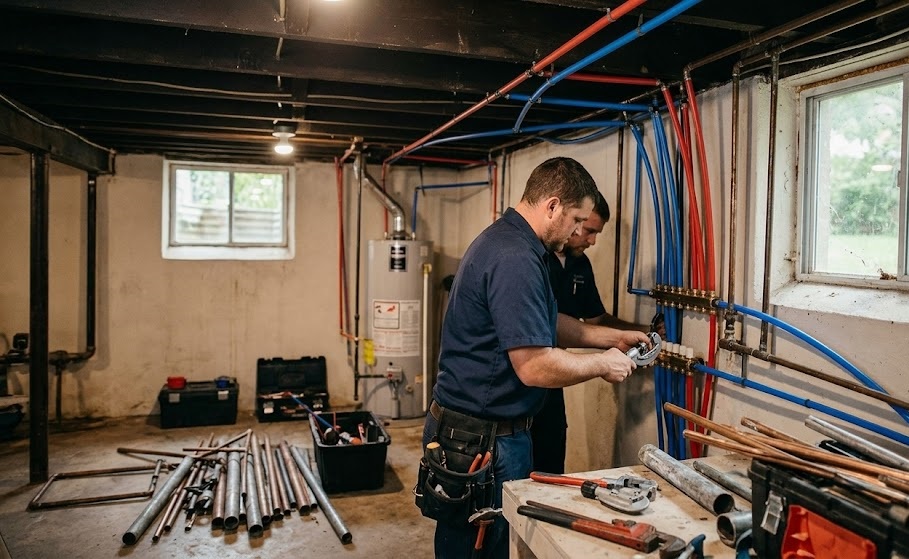
Your plumbing system is one of the few systems in your home that you rarely see but rely on every day. Water travels through dozens or even hundreds of feet of piping hidden behind walls, under floors, above ceilings, and throughout crawl spaces. When those pipes begin to fail, the consequences can be expensive. Leaks, water damage, poor water pressure, discolored water, mold growth, and rising repair costs often become recurring problems.
At some point, many Knoxville homeowners face a difficult question: Should I continue repairing individual plumbing problems, or is it time to replace the entire system?
The answer is often whole-house repiping. While repiping is a significant project, it can permanently solve many chronic plumbing issues and protect your home from future water damage.
What Is Whole-House Repiping?
Whole-house repiping is the process of replacing most or all of the water supply piping throughout a home. This typically includes:
- Hot and cold water supply lines
- Branch lines feeding individual fixtures
- Pipe connections and fittings
- Main and local shutoff valves
- Damaged or outdated plumbing materials
Repiping generally does not involve replacing sewer lines unless those systems also require upgrades. The goal is simple: remove aging or failing water supply pipes and install a modern plumbing system designed to provide reliable performance for decades.
Why Knoxville Homeowners Eventually Need Repiping
No plumbing system lasts forever. Pipe materials age due to unique water chemistry, mineral buildup, pressure fluctuations, and normal wear and tear. East Tennessee water conditions can also contribute to long-term pipe deterioration, especially in homes built decades ago containing obsolete plumbing materials.
Many homeowners begin researching repiping after experiencing recurring plumbing problems that never seem to fully disappear. If you are constantly dealing with unexplainable drops in water volume or damp spots, it is highly beneficial to understand the early signs your home has hidden plumbing leaks before minor drips turn into severe structural damage.
Common Reasons Homes Need Repiping
Frequent Leaks
One isolated leak is not usually a reason to repipe. However, multiple leaks over a short period often indicate a system-wide problem. When one section of aging pipe fails, nearby sections may be close behind. If your plumber is returning every few months to repair another leak, repiping may be more cost-effective than continued patchwork.
Low Water Pressure
Aging pipes often accumulate mineral deposits, corrosion buildup, and internal scaling. Over time, the effective internal diameter of the pipe shrinks, restricting water flow. Homeowners often notice weak shower pressure, slow faucet flow, or reduced appliance performance. In some cases, implementing proven methods to improve water pressure at home can resolve minor flow issues; in other situations, deteriorated pipes simply require total replacement.
Discolored Water
Brown, yellow, or rust-colored water frequently points to corrosion inside older piping systems. Rust particles can enter household water supplies when aging metal pipes begin deteriorating internally. Discolored water may appear first thing in the morning, after returning from vacation, or during heavy water usage. Persistent discoloration often indicates significant pipe aging.
Visible Corrosion
Corrosion visible on exposed plumbing often signals larger hidden issues. Warning signs include green staining, rust buildup, flaking metal, and white mineral deposits. Homeowners concerned about system degradation should learn how to spot early warning signs of pipe corrosion before a major pipe failure occurs.
Water Damage History
Homes that have experienced repeated plumbing leaks face compounding risks, including mold growth, structural wood rot, flooring damage, and repeated insurance claims. Preventing future leaks through a total repipe can ultimately cost less than repeatedly repairing extensive drywall and framing damage.
Pipe Materials That Commonly Require Replacement
- Galvanized Steel Pipes: Widely installed in older homes, these pipes eventually corrode internally, leading to rust contamination, pressure loss, and complete pipe blockages.
- Polybutylene Pipes: Popular between the late 1970s and mid-1990s, these plastic pipes are notorious for premature, catastrophic failures as they become brittle over time when exposed to water treatment chemicals.
- Aging Copper Pipes: While copper remains an excellent material, it can still deteriorate after decades of service due to aggressive water chemistry, high water pressure, or improper original installation.
Modern Pipe Materials Used During Repiping
PEX (Cross-linked Polyethylene)
PEX is now one of the most popular repiping materials due to its exceptional corrosion resistance, flexibility, freeze resistance, and long lifespan. Because it can be snaked through walls like electrical wiring, PEX can often be installed with significantly fewer wall openings than rigid pipe systems, lowering installation costs.
Copper
Copper remains a premium plumbing material prized for its durability, natural biostatic properties, heat resistance, and proven performance over many generations. Many homeowners prefer copper despite its higher material costs.
What Happens During a Whole-House Repiping Project?
Many homeowners imagine repiping as a highly destructive process, but modern techniques are remarkably streamlined.
- Initial Inspection & Planning: The project begins with a comprehensive plumbing evaluation to map out existing pipe paths, fixture connections, and optimal routing strategies.
- Installation of New Water Lines: New piping is systematically run throughout the home via crawl spaces, attics, utility rooms, and wall cavities. Experienced plumbers strategically minimize wall openings whenever possible.
- Fixture Reconnection: Once the new piping network is fully secure, all sinks, toilets, showers, tubs, and appliances are hooked into the clean lines.
- Pressure Testing: The entire system is pressure-tested to verify leak-free operation, proper flow rates, and code compliance.
- Wall Repairs: Any small wall access points created during the installation are professionally patched and finished.
Cost, Timelines, and Home Value
Project Timelines
The timeline depends heavily on the home's size, layout complexity, and accessibility. However, many standard residential repipes can be completed within several days, keeping household disruption to a minimum.
Financial Investment
Repiping costs vary based on the number of bathrooms, the specific pipe material selected, and the existing layout. PEX installations often cost less than copper due to reduced labor and material expenses. The only way to obtain accurate pricing is through an on-site inspection and a detailed estimate.
Long-Term Value Return
Buyers view aging plumbing systems as a massive financial risk. A recently repiped home offers greater reliability, improved water quality, and lower future repair risks. For additional insight on maximizing equity, homeowners may find value in learning how a professional plumbing audit affects your home’s resale value during real estate negotiations.
Frequently Asked Questions
Will repiping improve water quality?
Yes. Repiping significantly improves water quality when deteriorated pipes are actively contributing rust particles or metallic tastes to your water. Some homeowners choose to pair their new pipe infrastructure with advanced systems for improving water quality with filtration and treatment systems for maximum purity and taste.
Should you repipe before a remodel?
Absolutely. Opening walls for a major renovation creates ideal, cost-saving access to your plumbing infrastructure. Homeowners planning renovations should review these important plumbing considerations for a bathroom renovation to avoid having to tear out brand-new tile work down the road due to an old pipe failure.
Why Knoxville Homeowners Choose Advanced Heating & Air Conditioning
Repiping requires more than simply swapping out pipes—it requires an expert understanding of how an entire plumbing system functions as a connected network.
At Advanced Heating & Air Conditioning, our team evaluates the complete condition of your plumbing infrastructure before making a recommendation. Our technicians understand the unique plumbing challenges found throughout East Tennessee, including aging regional pipe materials, hard water concerns, and classic home layouts. Whether you're dealing with recurring leaks, poor water pressure, or preparing for a major renovation, our team provides honest recommendations, quality workmanship, and long-term solutions designed to protect your home and bring you peace of mind.


