


The Insurance Claim Process for Water Damage: What your plumber needs to document
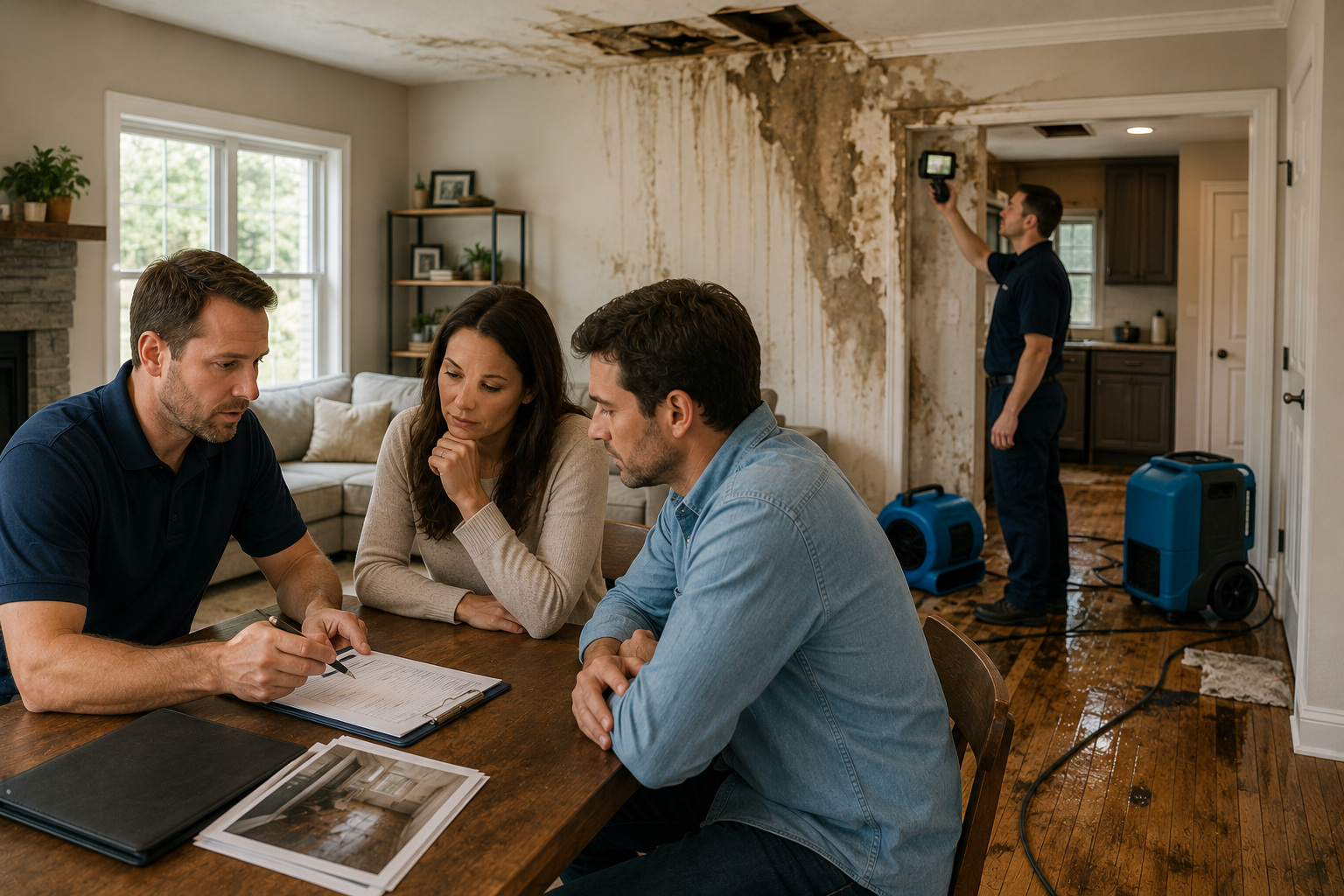
Water damage claims are some of the most common and most disputed homeowners insurance claims in the United States.
Many homeowners assume that if water damage occurs, insurance will automatically cover the repairs.
In reality, insurance companies heavily evaluate:
- The source of the water
- How long the leak existed
- Whether the damage was sudden or gradual
- Maintenance history
- Plumbing documentation
- Mitigation efforts
- Professional inspection findings
This is where plumbing documentation becomes critical.
A properly documented plumbing issue can help support a successful insurance claim.
Poor documentation can delay payouts, reduce settlements, or lead to denied claims altogether.
For homeowners dealing with water damage, the plumber is not only repairing the problem. They are often one of the most important sources of technical evidence in the entire claim process.
Understanding what plumbers need to document helps homeowners protect themselves financially while improving the chances of a smoother insurance experience.
Why Water Damage Claims Become Complicated
Insurance companies investigate water claims carefully because water damage can result from many different causes.
Not all water damage is treated equally.
Claims are often evaluated based on whether the damage resulted from:
- Sudden pipe failure
- Appliance malfunction
- Sewer backup
- Frozen pipes
- Long-term leaks
- Neglect
- Flooding
- Drain overflows
Coverage decisions frequently depend on timing and cause.
For example:
- A sudden burst pipe may be covered
- A slow leak hidden for years may not be
This distinction makes professional plumbing documentation extremely important.
The Plumber Often Becomes the First Technical Witness
When water damage occurs, the plumber is usually among the first professionals to inspect the scene.
Their findings often become part of:
- Insurance reports
- Mitigation documentation
- Restoration estimates
- Claim investigations
Insurance adjusters rely heavily on plumber observations because plumbing failures involve technical causes most homeowners cannot accurately describe.
The plumber may help identify:
- Where the leak originated
- Why the failure occurred
- Whether the issue was sudden
- Whether prior damage existed
- Which components failed
- What immediate mitigation was required
Detailed documentation can significantly influence claim outcomes.
The Exact Source of the Water Must Be Identified
Insurance companies want precise answers about where the water came from.
A plumber should clearly document:
- The failed component
- The exact location
- The type of plumbing involved
- Whether the water was clean or contaminated
Examples may include:
- Burst supply line
- Failed shutoff valve
- Cracked drainpipe
- Water heater rupture
- Toilet overflow
- Appliance hose failure
The exact source matters because different policy rules may apply depending on the type of water involved.
Insurance carriers often categorize water as:
- Clean water
- Gray water
- Black water
Sewer backups and contaminated water events usually involve more complex claim evaluations.
Plumbers Should Document Whether the Damage Was Sudden or Gradual
One of the biggest insurance questions is whether the plumbing failure happened suddenly or developed slowly over time.
Insurance policies typically favor sudden accidental damage.
Gradual deterioration is often disputed or excluded.
A plumber should document signs such as:
- Fresh pipe rupture
- Corrosion patterns
- Long-term mineral buildup
- Mold growth
- Rotting materials
- Chronic moisture staining
For example:
- A sudden freeze-related pipe burst may support coverage
- A heavily corroded pipe leaking for years may trigger claim disputes
Professional observations help establish the likely timeline of failure.
Photos Are Critical for Insurance Documentation
Visual evidence is one of the most important parts of a water damage claim.
Plumbers should photograph:
- Failed pipes
- Leaking components
- Water damage areas
- Corrosion
- Cracks
- Broken fittings
- Moisture spread
- Appliance failures
Photographs should ideally be taken:
- Before repairs
- During inspection
- During mitigation
- After repairs
Good documentation helps establish the condition of the plumbing system at the time of failure.
This can become especially important if disputes arise later.
Water Damage Often Extends Beyond Visible Areas
One challenge with water claims is that damage often spreads far beyond what homeowners initially see.
Water may travel:
- Under flooring
- Behind walls
- Into insulation
- Through ceilings
- Into crawlspaces
A plumber should document all potentially affected areas.
Insurance adjusters want to understand:
- The likely path of water migration
- Which building materials were exposed
- Whether hidden damage may exist
Early detection significantly reduces long-term structural damage.
Homeowners concerned about hidden moisture often benefit from understanding how to detect hidden water leaks before problems escalate.
Plumbing Material Type Matters in Claims
Insurance companies frequently evaluate the condition and age of plumbing materials.
A plumber may need to document:
- Copper piping
- Galvanized steel
- PEX
- Polybutylene
- PVC
- CPVC
Certain older pipe materials are associated with higher failure risks.
For example, aging polybutylene systems have been linked to widespread leak problems in older homes.
The pipe material may affect:
- Claim investigations
- Future underwriting
- Coverage eligibility
- Repair recommendations
Homeowners with aging systems may also benefit from reviewing the evolution of pipe materials comparing 1980s polybutylene to modern PEX.
Appliance Failures Commonly Trigger Water Claims
Modern water damage claims frequently involve appliances.
Common sources include:
- Washing machine hoses
- Dishwashers
- Refrigerators
- Water heaters
- Ice maker lines
Plumbers should document:
- Appliance age
- Failure location
- Supply line condition
- Installation quality
- Valve integrity
Insurance companies may investigate whether the appliance was:
- Properly maintained
- Improperly installed
- Near expected end-of-life
Small appliance leaks can sometimes cause major hidden damage before discovery.
Water Heater Failures Require Careful Documentation
Water heaters are among the most common sources of catastrophic residential water damage.
When a water heater fails, plumbers should document:
- Tank age
- Corrosion condition
- Pressure relief valve status
- Sediment buildup
- Failure location
- Leak pattern
Insurance adjusters often ask whether:
- The heater exceeded normal lifespan
- Maintenance was neglected
- Warning signs existed beforehand
Sediment buildup and corrosion may suggest long-term deterioration rather than sudden accidental failure.
Homeowners maintaining aging systems often review signs your water heater needs repair and when to replace it before major failures occur.
Moisture Mitigation Timing Is Extremely Important
Insurance companies expect homeowners to act quickly after discovering water damage.
A plumber should document:
- When the issue was reported
- When water was shut off
- Emergency mitigation steps
- Active leak conditions
- Water extraction recommendations
Delays in mitigation can worsen damage significantly.
Insurance carriers may question whether additional damage resulted from delayed response rather than the original plumbing failure.
Fast professional action helps protect both the home and the claim.
At Advanced Heat AC & Plumbing, we help homeowners quickly isolate leaks and reduce ongoing water damage before problems spread further through the property.
Mold Concerns Can Complicate Water Damage Claims
Mold growth often begins within 24 to 48 hours after significant water exposure.
Insurance companies carefully evaluate mold-related claims because mold remediation can become extremely expensive.
Plumbers should document:
- Visible mold conditions
- Ongoing moisture exposure
- Humidity conditions
- Leak duration indicators
Even if mold remediation falls outside the plumber's direct role, their observations may become important evidence later.
Long-term hidden leaks frequently contribute to:
- Wall cavity mold
- Subfloor deterioration
- Structural moisture damage
Homeowners trying to reduce secondary moisture damage often review how to prevent mold growth in your plumbing.
Sewer Backup Claims Are Handled Differently
Sewer backup claims involve unique insurance challenges.
Many standard homeowners policies provide limited sewer backup coverage unless additional endorsements exist.
When sewer backups occur, plumbers should document:
- Cause of blockage
- Pipe condition
- Root intrusion
- Backup location
- Drain condition
- Contamination severity
Sewer-related water damage often falls into higher contamination categories, increasing restoration complexity.
Professional drain inspections can help determine whether:
- Tree roots caused the blockage
- Pipe collapse occurred
- Grease accumulation restricted flow
- External sewer issues contributed
Homeowners experiencing recurring sewer issues may also review how root intrusion damages sewer lines.
Insurance Companies Often Request Repair Invoices
Detailed invoices help support claim legitimacy.
Plumbing invoices should clearly describe:
- Labor performed
- Failed components
- Materials replaced
- Diagnostic findings
- Emergency services
- Mitigation recommendations
Vague invoices may create confusion during claim review.
Strong documentation improves clarity for:
- Adjusters
- Restoration companies
- Homeowners
- Underwriters
Professional plumbing companies understand the importance of accurate reporting during insurance-related repairs.
Maintenance History Can Affect Claims
Insurance carriers sometimes investigate whether homeowners properly maintained the plumbing system.
A plumber may be asked about:
- Prior repairs
- Known leaks
- Corrosion conditions
- Deferred maintenance
- Previous service recommendations
This is one reason preventive maintenance matters financially as well as mechanically.
Routine inspections help identify problems before catastrophic failures occur.
Homeowners focused on reducing future claim risks often review the importance of regular plumbing inspections.
Frozen Pipe Claims Require Specific Evidence
Frozen pipes are especially common during winter cold snaps.
Insurance carriers often investigate whether homeowners took reasonable precautions to prevent freezing.
Plumbers should document:
- Pipe location
- Freeze point
- Burst areas
- Insulation conditions
- Heating status
- Exposure conditions
Insurance companies may ask:
- Was the home heated?
- Were pipes insulated?
- Was the property vacant?
- Were preventive measures taken?
Vacation homes and seasonal properties face higher frozen pipe risks.
Homeowners preparing for winter often benefit from reviewing how to prevent frozen pipes in winter.
Leak Detection Technology Can Support Claims
Modern leak detection systems increasingly play a role in insurance claims.
Smart systems may provide:
- Leak timestamps
- Water usage history
- Automatic shutoff records
- Mobile alerts
This data can help establish:
- When the leak started
- How quickly it was addressed
- Whether mitigation occurred promptly
Insurance carriers increasingly encourage leak monitoring systems because they reduce catastrophic damage severity.
Homeowners interested in proactive protection often explore smart leak detectors that can remotely shut off water valves.
Why Professional Plumbing Documentation Matters
Water damage claims are technical investigations, not just repair situations.
Insurance companies want detailed evidence explaining:
- What failed
- Why it failed
- When it failed
- How severe the damage became
- Whether mitigation happened quickly
Clear plumbing documentation helps reduce uncertainty during the claim process.
At Advanced Heat AC & Plumbing, we help homeowners throughout East Tennessee document plumbing failures thoroughly so they can move through the insurance process with better clarity and stronger technical support.
Good Documentation Helps Protect Homeowners Financially
The quality of plumbing documentation can directly affect:
- Claim approval speed
- Settlement amounts
- Coverage decisions
- Restoration timelines
- Dispute resolution
Professional plumbers do more than repair pipes.
They often help establish the technical foundation of the entire insurance claim.
When water damage occurs, accurate documentation becomes one of the homeowner's most important forms of protection.


