


Bio-film in Pipes: What is that "pink slime" in your drain?
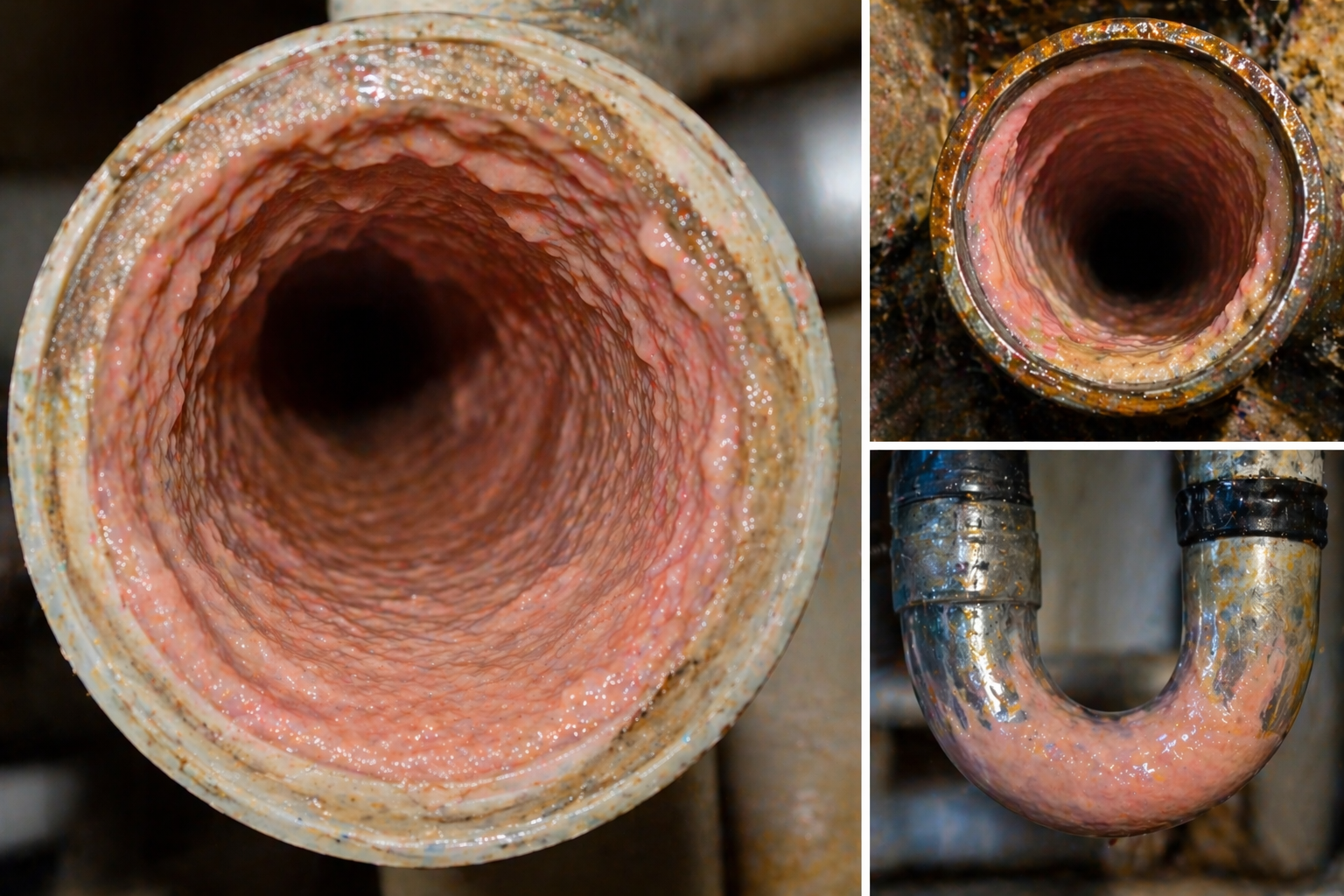
If you have ever looked around a sink drain, shower edge, tub overflow, or bathroom caulk line and noticed a pink, salmon, or orange-tinted slime, you are not alone. Most homeowners assume it is mold. In many cases, it is not mold at all. It is biofilm, which is a slimy microbial layer that forms where moisture, residue, and time all come together. The good news is that this problem is common and usually manageable. The bad news is that if it keeps coming back, it may be telling you more about your bathroom habits, drain condition, or plumbing environment than you realize.
What is the pink slime in my drain, exactly?
The pink slime homeowners notice around drains and wet bathroom surfaces is usually a type of biofilm. Biofilm is a sticky layer formed when microorganisms attach to a damp surface and begin producing a protective coating. In bathrooms, the pink or reddish-orange form is commonly associated with Serratia marcescens, a bacterium that thrives in moist environments and feeds on residues from soap, shampoo, and similar organic material.
This matters because the slime is not just sitting there randomly. It is growing in a place where the conditions are favorable:
- Moisture stays present
- Soap residue builds up
- Airflow may be limited
- The surface is not being scrubbed deeply enough
That is why it often shows up in the same places over and over again. The drain opening, the underside of the stopper, the tub ledge, the shower curtain edge, and the caulk line are all common targets. Once a biofilm gets established, it can return quickly unless the underlying conditions change.
Is pink slime actually mold, or is that a myth?
Most of the time, the pink slime people call “pink mold” is not actually mold. It is commonly a bacterial biofilm, not a fungal colony. That distinction matters because the growth pattern, cause, and cleanup approach are a little different. Public sources consistently describe the common pink residue in showers and drains as biofilm associated with Serratia marcescens, not true household mold.
That said, homeowners should not overcorrect and assume all pink, orange, or reddish staining is harmless or always the exact same organism. Bathrooms can support more than one kind of microbial growth, and a damp environment that supports pink slime may also support real mold in nearby materials if moisture is trapped long enough.
The practical takeaway is simple:
- Pink slime is usually biofilm, not mold
- It still deserves attention
- Persistent moisture is the real common denominator
- A repeatedly damp bathroom can support multiple problems over time
So while “pink mold” is usually the wrong label, “ignore it” is still the wrong response.
Why does biofilm form so easily around bathroom drains?
Biofilm forms easily because drains create a nearly perfect environment for microbial growth. They provide moisture, warmth, trace organic material, and surfaces that are rarely scrubbed deeply enough to remove the whole film. Once microorganisms attach to that damp surface, they produce a protective matrix that helps them stay in place and trap additional residue. EPA material on biofilms also reflects that biofilm formation on damp hard surfaces is a serious enough concept that products making anti-biofilm claims require efficacy support.
In everyday homeowner terms, that means the drain area gives biofilm everything it wants:
- Water exposure
- Soap and shampoo residue
- Skin oils
- Minimal sunlight
- Limited disturbance below the visible surface
The biofilm is not just a stain. It is a living layer that protects itself. That is why rinsing it off with hot water rarely solves the problem. The visible surface may lighten, but the remaining film can quickly rebuild.
If recurring odor is part of the same problem in your bathroom, best ways to prevent plumbing odors is a useful next read because odor and biofilm often go together.
Why is it pink instead of black, green, or clear?
The pink or orange color is part of what makes this slime so distinctive. In the case of Serratia marcescens, public explanations often point to the pigment the organism produces, which becomes especially noticeable when it grows in a biofilm form on wet bathroom surfaces.
Homeowners often notice that the color can vary. It may look:
- Pale pink
- Peach
- Salmon
- Orange-pink
- Rusty or reddish near edges
That variation does not necessarily mean a different plumbing problem every time. It often reflects the thickness of the film, how recently it was disturbed, how much residue is present, and what kind of surface it is growing on.
The real point is not the exact shade. The real point is what the color signals: a persistent wet environment with enough residue to support microbial regrowth. Once you understand that, the drain stops looking like a mysterious stain and starts looking like a maintenance and moisture-control issue.
Is pink slime in a drain dangerous, or just gross?
For most healthy people, pink slime is more of a nuisance and sanitation issue than a major threat. At the same time, public and science-style guidance consistently notes that Serratia marcescens is an opportunistic pathogen, which means it can pose greater concern for people with weakened immune systems, infants, older adults, or anyone with open wounds or eye exposure concerns.
That means the right way to think about it is:
- Usually low risk for healthy people with casual household contact
- Still not something you want spreading around wet surfaces
- Worth cleaning thoroughly rather than tolerating
- More important to address in homes with vulnerable occupants
The bigger household risk is often not direct illness. It is what the slime reveals about the environment. If biofilm keeps returning aggressively, it may indicate poor ventilation, heavy residue buildup, standing moisture, or drain hygiene problems that can also contribute to smell and other plumbing frustrations.
Why does pink slime keep coming back even after I clean it?
Because most homeowners clean the visible stain, not the biofilm system. That is not a criticism. It is just how biofilm works. The protective layer sticks to surfaces and often extends into crevices, drain openings, under stoppers, under strainers, and along damp seams where a quick wipe does not reach.
Why recurrence is so common
- The surface was wiped, not fully scrubbed
- The drain cover or stopper was not removed
- Soap and body-oil residue stayed behind
- The bathroom stays humid too long after use
- Water keeps collecting in the same spots
- The deeper drain area remains coated
This is exactly why homeowners get frustrated. The bathroom looks clean for a day or two, then the pink slime seems to return “out of nowhere.” In reality, the conditions never changed enough to stop regrowth.
If your drains also clog repeatedly or seem to hold grime more than they should, why your drains keep clogging again and again fits naturally here because recurring drain issues often create the same stagnant, residue-friendly environment that helps biofilm return.
Does pink slime mean there is something wrong deeper in the pipes?
Not always, but sometimes it points in that direction. A little pink residue around a frequently wet drain opening does not automatically mean your whole drain line is failing. In many homes, it is mostly a surface and moisture-management issue. But if the slime keeps returning along with bad smells, slow drainage, or repeated clogs, there may be more buildup deeper inside the line.
That deeper issue matters because drains do not just collect water. They collect:
- Soap scum
- Shampoo residue
- Hair
- Toothpaste
- Skin oils
- Grease from bathroom or vanity use
- Mineral scale
All of that can create a rough, sticky interior that helps slime and odor-causing residue persist. If the drain smells bad, drains slowly, or coats over again soon after cleaning, the problem may be more than cosmetic.
That is where the benefits of professional drain cleaning become relevant. A deeper clean can remove the residue layer that keeps giving biofilm a place to hold on.
What causes pink slime to show up faster in some homes than others?
Some homes simply create a better environment for biofilm than others. That does not mean the homeowner is doing anything terribly wrong. It usually means the conditions line up more strongly.
Common reasons it appears faster
- Poor bathroom ventilation
- High humidity after showers
- Soap-heavy or shampoo-heavy routines
- More people sharing one bathroom
- Hard water mineral residue
- Drain covers and stoppers that trap grime
- Slower drains that hold more organic material
Hard water can be a major hidden factor because mineral residue makes surfaces rougher and gives buildup more places to cling. That roughness can make it easier for soap scum and microbial film to re-establish quickly. If that sounds familiar in your home, how hard water impacts your plumbing system is a very natural supporting article because water quality often changes how fast drain and fixture buildup returns.
How should you actually clean pink slime in a drain?
The key is mechanical removal first, then disinfecting or treating the surface, then reducing the conditions that let it come back. Homeowners often want one magic liquid, but pink slime usually responds better when the layer is physically broken up.
A simple step-by-step approach
- Put on gloves.
- Remove the drain cover or stopper if possible.
- Scrub visible slime from the drain opening, stopper, and nearby surfaces.
- Clean the underside of hardware, not just the top.
- Use an appropriate bathroom disinfecting approach for the affected surface.
- Rinse and dry the area as much as practical.
- Improve airflow and reduce lingering moisture.
The point is not just bleaching the top layer. The point is removing the film that protects the microbes and gives them a place to reattach.
If the slime keeps returning around the same drain, it helps to think of it as part of a larger drain-care issue rather than a one-time stain problem.
What should homeowners avoid doing?
There are a few common mistakes that make the issue linger longer or push it deeper into the drain without actually solving it.
Common mistakes
- Only rinsing with hot water
- Spraying cleaner without scrubbing
- Ignoring the stopper or overflow area
- Using harsh chemicals repeatedly instead of cleaning the residue
- Treating odor but not the slime
- Assuming the problem is gone because the color faded temporarily
Another mistake is assuming the drain is fine if the water still goes down. Biofilm can build in a drain that is technically still functional. It may not block flow completely, but it can still contribute to odor, slow drainage, and a recurring dirty look around the fixture.
If repeated chemical use has become part of the routine, top causes of clogged drains and how to fix them is worth reading because the wrong approach can make drain maintenance more frustrating over time.
How do you stop pink slime from coming back so quickly?
Long-term control comes down to changing the environment, not just cleaning the stain. Biofilm returns where moisture and residue stay available.
Best prevention habits
- Run the exhaust fan during and after showers
- Wipe down wet surfaces more often
- Clean drain covers and stoppers regularly
- Reduce soap scum buildup
- Flush infrequently used drains with water
- Address slow-drain issues early
- Keep the area drier between uses
This is especially important in bathrooms that get heavy daily use or stay humid for long periods. A cleaner drain opening helps, but a drier bathroom is what often slows regrowth most effectively.
If your goal is more prevention and fewer repeat cleanups, top tips to keep your drains from clogging fits naturally here because prevention habits that keep drains moving also reduce the residue that supports biofilm.
When does pink slime become a plumbing-service issue instead of a cleaning issue?
Pink slime becomes a plumbing issue when it stops behaving like a simple surface nuisance and starts showing deeper drain symptoms. That means the question is no longer just “how do I wipe this away?” but “why does this drain keep creating the same environment?”
Signs it may be more than surface buildup
- The drain smells bad regularly
- Water drains slowly
- The slime returns very fast after cleaning
- The drain gurgles
- More than one fixture has the issue
- The bathroom has recurring sewage-like odor
- You suspect buildup deeper in the line
Those patterns suggest the drain may need more than household cleaning. At that point, the problem may involve deeper sludge, partial blockage, poor drain hygiene inside the pipe, or even a damaged section.
If the line itself is compromised or leaking, drain line repair becomes the more relevant conversation because broken or poorly functioning drains tend to trap odor and organic buildup far more easily.
Is hydro jetting ever the right answer for biofilm?
In some cases, yes, especially when the biofilm issue is part of a larger drain buildup problem rather than just a little slime at the surface. Biofilm often thrives where there is already a coating of organic residue, grease, soap scum, or sludge deeper in the line. Hydro jetting is specifically positioned as a way to remove stubborn internal buildup from the full pipe diameter, not just punch a narrow opening through a clog.
That makes it useful when:
- Drains smell persistently bad
- Slime returns alongside slow drainage
- Repeated clogs are part of the same story
- The line needs a more thorough cleaning than snaking provides
This is where hydro jetting services in East TN fit naturally in the article. It is not the first answer for every bathroom drain with pink slime, but it can absolutely be the right answer when biofilm is part of a bigger deep-cleaning problem inside the drain system.
When should a homeowner stop experimenting and call a plumber?
A homeowner should stop experimenting when the issue becomes repetitive, smelly, deeper than the visible surface, or clearly tied to drain performance. Cleaning the drain opening is reasonable. Repeatedly fighting the same slime, smell, and slowdown without lasting improvement is where professional help starts making more sense.
Good reasons to call
- Persistent odor
- Slow drainage
- Repeat clogs
- Slime returning very quickly
- Multiple affected drains
- Suspected deeper buildup
- Concern about a damaged drain line
At that point, the smarter move is not another round of guessing. It is a real diagnosis. If the issue has moved from surface cleanup to actual plumbing performance, your best next step is through professional plumbing services in Knoxville and East Tennessee, where the focus can shift from cosmetic cleanup to the real cause.
FAQs about biofilm and pink slime in drains
Is pink slime in the drain mold?
Usually no. It is often a bacterial biofilm, commonly associated with Serratia marcescens, rather than true mold.
Is pink slime dangerous?
For most healthy people, it is usually more of a nuisance than a major threat, but it can matter more for immunocompromised people, infants, and older adults.
Why does it keep coming back?
Because the moisture, residue, and surface film that support it are still there even after a quick cleaning.
Does pink slime mean my pipes are dirty?
Not always deeply dirty, but it often means the drain area has enough residue and moisture to support biofilm growth.
Can slow drains make biofilm worse?
Yes. Slower-moving drains can hold more residue and give biofilm a better place to grow.
Should I use chemical drain cleaner for pink slime?
Not as your only strategy. Surface biofilm usually responds better to physical cleaning and moisture control, and recurring drain issues need the right diagnosis.
Does hard water make pink slime worse?
It can contribute by leaving mineral residue that helps soap scum and buildup cling more easily.
When should I call a plumber?
When the slime is paired with odor, slow drainage, recurring clogs, or signs of deeper buildup.
Stop treating pink slime like a mystery and start treating the cause
Pink slime in your drain is gross, but it is not random. It is usually biofilm, often associated with Serratia marcescens, and it grows where moisture, soap residue, and poor airflow give it a stable place to keep coming back. For many homes, the solution starts with better cleaning and better drying. For others, it is a clue that the drain itself needs deeper attention.
Here are the biggest takeaways:
- Pink slime is usually biofilm, not true mold
- It keeps coming back when moisture and residue stay in place
- If it is paired with odor, slow drainage, or recurring clogs, the problem may be deeper than the surface


