


Commercial Grease Trap Maintenance Schedule for Knoxville Restaurants

Knoxville, Tennessee boasts a vibrant, rapidly growing culinary scene. From busy southern kitchens in historic Market Square and popular breweries in the Old City to high-volume dining establishments in Bearden, Fountain City, and Turkey Creek, local restaurants serve thousands of patrons daily. However, behind every successful commercial kitchen lies an essential piece of environmental protection infrastructure: the commercial grease trap or grease interceptor.
Commercial kitchens produce significant quantities of fats, oils, and grease, commonly referred to in the plumbing industry as FOG. When hot grease, animal fats, butter, vegetable oils, and heavy food solids enter dishwashing sinks and floor drains, they travel downstream into building wastewater lines. As FOG cools inside drainage pipes, it hardens into solid, rock-like deposits. Unmanaged grease quickly clogs commercial drain lines, causes raw sewage backups into kitchen prep areas, emits foul odors, and threatens municipal sewer networks.
To protect public wastewater infrastructure, the Knoxville Utilities Board, local municipal utility districts, and the Knox County Health Department enforce strict grease management standards. Establishing and adhering to a rigorous commercial grease trap maintenance schedule is essential for legal compliance, health code adherence, and smooth daily restaurant operations.
1. Understanding Grease Interceptor Mechanics and Infrastructure
To manage a commercial grease trap effectively, restaurant owners and kitchen managers must understand how these systems function and distinguish between different grease interceptor designs.
The Physics of Fats, Oils, and Grease Separation
Grease traps operate on the fundamental principle of gravity separation. Fats, oils, and grease are less dense than liquid water, while food solids and heavy debris are denser than water.
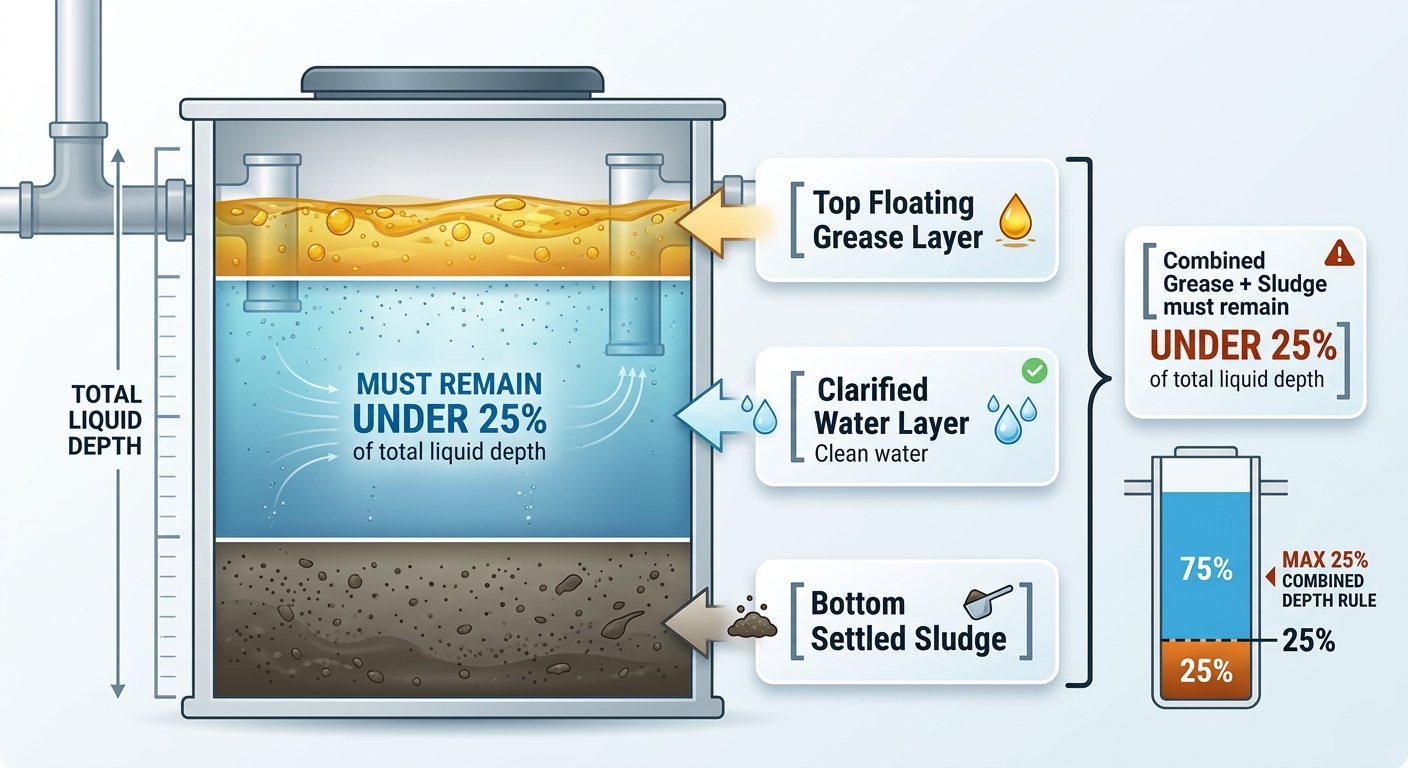
As warm kitchen wastewater flows into the interceptor tank, internal flow baffles slow the water velocity. This cooling, quiet environment allows floating FOG to rise to the top surface, forming a thick grease cap. Concurrently, heavy food particles settle to the bottom, forming a sludge layer. The cleaner, clarified water sandwiched between the top grease cap and bottom sludge layer flows under an outlet baffle and discharges safely into the municipal sewer main.
Indoor Hydromechanical Grease Traps vs. Outdoor Gravity Interceptors
Commercial dining facilities utilize two primary types of grease retention systems, depending on kitchen size, seating capacity, and daily meal volume:
- Hydromechanical Grease Traps (Indoor Units): These compact units are located inside the kitchen, typically under multi-compartment prep sinks or recessed into floor slabs near dishwashing stations. Constructed of stainless steel or heavy plastic, indoor traps handle flow rates ranging from 10 to 50 gallons per minute. They hold smaller amounts of grease and require frequent manual or professional cleaning.
- Gravity Grease Interceptors (Outdoor Underground Units): Designed for medium to high-volume restaurants, these large concrete, fiberglass, or composite tanks are buried outside the building near loading docks or parking spaces. Holding capacities range from 750 gallons to more than 2,500 gallons. Their large volume provides extended retention time, allowing thorough gravity separation of heavy FOG loads.
Regular evaluations by licensed plumbing professionals ensure your grease interceptors, fixtures, and main drain connections remain fully operational. Learning why you need a professional plumbing inspection outlines how certified plumbers evaluate commercial drain lines, test backflow preventers, and identify hidden mechanical vulnerabilities before regulatory audits.
2. Knoxville Utilities Board (KUB) Regulations and the 25 Percent Rule
Restaurant owners operating within Knox County must comply with the Knoxville Utilities Board Fats, Oils, and Grease Management Program, as well as guidelines enforced by neighboring purveyors such as First Utility District and West Knox Utility District.
The 25 Percent Rule Explained
The cornerstone of local grease management enforcement in East Tennessee is the industry-standard 25 Percent Rule. Municipal codes mandate that a grease trap or interceptor must be fully pumped out whenever the combined volume of the top floating grease layer and the bottom settled sludge layer equals or exceeds 25 percent of the tank's total liquid depth.
When a grease interceptor exceeds the 25 percent threshold, its operating efficiency drops sharply. Water velocity increases through the restricted space, forcing floating grease and bottom solids directly out of the tank and into the public sewer system.
Regulatory Inspections and Enforcement Penalties
Municipal FOG inspectors conduct unannounced site visits at Knoxville restaurants to measure grease caps, audit maintenance logs, and inspect downstream sampling manholes.
Failing to maintain a grease trap according to the 25 percent rule results in severe consequences:
- Official notices of violation requiring immediate emergency pump-outs.
- Re-inspection fees and hefty administrative civil penalties.
- Surcharges levied on monthly municipal water and sewer bills for high-strength wastewater discharge.
- Immediate revocation of health department operating permits and mandatory kitchen shut-downs in cases of active sewage backups.
FOG accumulation ranks among the primary triggers for severe commercial drainage failures. Reviewing the top causes of clogged drains and how to fix them explains how grease, food scraps, and foreign debris form stubborn blockages across commercial lateral lines.
3. The Master Commercial Grease Trap Maintenance Schedule
A proactive maintenance schedule prevents emergency drain overflows, eliminates noxious kitchen odors, and guarantees compliance with local utility regulations.
Daily Best Practices for Kitchen Staff
Preventing grease trap overload starts at the prep station and dish pit. Implementing daily kitchen discipline significantly reduces the volume of FOG entering your plumbing lines:
- Scrape Plates and Cookware Dry: Require line cooks and dishwashers to scrape all leftover food, fat trimmings, sauces, and dressings into trash cans or compost bins using rubber spatulas before rinsing plates.
- Install Fine Mesh Sink Strainers: Place removable stainless steel mesh strainers over all prep sink drains, floor sinks, and mop basins to catch coffee grounds, rice, and food particles before they enter grease lines.
- Collect Waste Cooking Oil Separately: Never pour used fryer oil, skillet grease, or pan drippings down kitchen sinks or floor drains. Collect yellow grease in dedicated outdoor recycling barrels for disposal by certified grease recyclers.
- Prohibit Hot Water Flushes: Never run continuous hot water down sinks to wash grease down the drain. Hot water melts grease temporarily, allowing it to travel past small indoor traps into building lateral pipes where it cools, hardens, and forms massive main line clogs.
Weekly In-House Checks
Facility maintenance staff should inspect indoor hydromechanical grease traps weekly:
- Measure the thickness of the top floating grease cap using a calibrated dipping rod.
- Clear minor food debris from inlet strainers and internal baffles.
- Verify that indoor cover gaskets form an airtight seal to prevent foul odors from escaping into kitchen prep zones.
Monthly Professional Maintenance
Compact indoor hydromechanical traps (10 to 50 GPM) installed under sinks require thorough pumping and cleaning at least once per month, or whenever they reach the 25 percent fill limit. High-volume breakfast diners, fried chicken establishments, and pizzerias often require bi-weekly pumping due to heavy grease loads.
Quarterly (3-Month) Deep Pumping for Outdoor Interceptors
Large outdoor underground gravity grease interceptors (750 to 2,500+ gallons) must be fully pumped out, scraped, and inspected by a licensed liquid waste hauler at least once every 90 days. Even if a large interceptor has not reached the 25 percent limit at 90 days, stagnant grease undergoes anaerobic decomposition, producing volatile fatty acids that generate foul odors and corrode concrete tank walls.
Annual Line Hydro-Jetting and Structural Audits
Once a year, restaurants should schedule comprehensive preventive maintenance with a certified commercial plumber:
- High-Pressure Hydro-Jetting: Blast accumulated grease scale, soft sludge, and mineral deposits out of kitchen branch lines running between dish stations and the exterior grease tank.
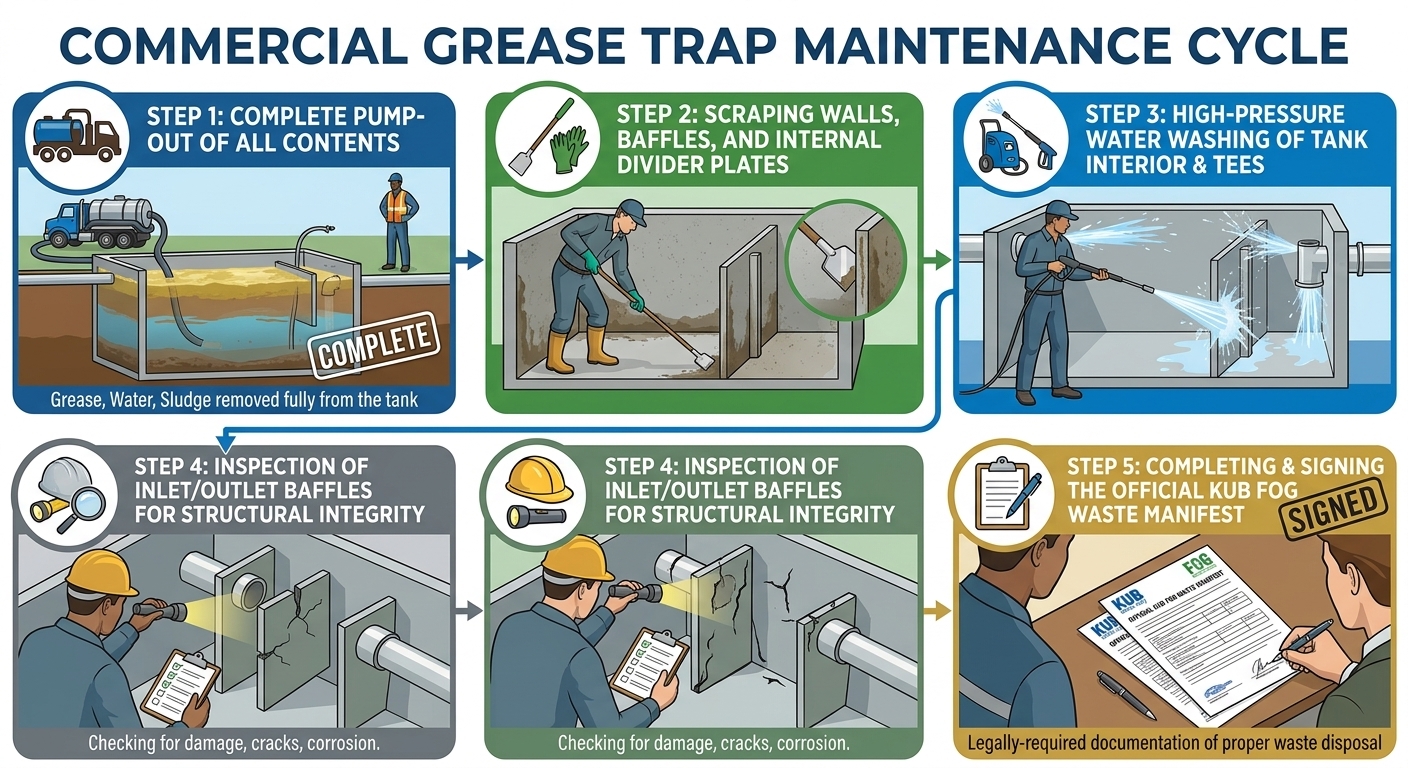
- Structural Tank Inspection: Once the outdoor interceptor is fully pumped dry, inspect internal concrete baffles, PVC sanitary tees, and tank walls for acid erosion, cracking, or structural degradation.
Ignoring early signs of grease accumulation leads to catastrophic drainage failures. Exploring the signs of commercial sewer line problems in Knoxville TN helps facility managers recognize when main sewer laterals are becoming choked with grease scale.
4. Warning Signs Your Restaurant Grease Trap Requires Immediate Service
Waiting for a scheduled pumping date when a grease trap is already overflowing creates severe health hazards and operational risks. Train your staff to report these early warning indicators immediately:
- Slow-Draining Kitchen Sinks and Floor Drains: When multiple dish sinks, prep basins, and floor drains drain sluggishly at the same time, the grease trap or main outlet line is restricted.
- Gurgling Sounds in Plumbing Lines: Air trapped behind a dense grease blockage creates distinct gurgling or bubbling noises in floor sinks when dishwashers discharge.
- Foul, Rancid Odors: A saturated grease trap filled with decaying organic waste releases potent sulfur and rancid butter odors into kitchen prep zones and customer dining areas.
- Wastewater Backups in Floor Sinks: Raw wastewater backing up out of low-lying floor drains during peak kitchen hours indicates a total grease interceptor blockage.
- Grease Visible in Downstream Sampling Ports: If floating grease is visible inside the utility sampling manhole located downstream of your interceptor, the trap has exceeded its 25 percent capacity and is discharging raw FOG into the municipal main.
When grease lines become severely restricted or structural pipes collapse beneath heavy traffic, immediate specialized repairs are necessary. Utilizing expert professional drain line repair services ensures your kitchen lateral lines are cleared with high-pressure hydro-jetting or restored using modern trenchless pipe lining.
5. Professional Pumping and Cleaning Procedures
Complete grease interceptor maintenance involves far more than skimming floating oil off the top of the tank. Proper professional service requires specialized liquid waste equipment and rigorous cleaning protocols.
Complete Pump-Out Protocol
A certified waste hauler must pump out 100 percent of the grease trap contents, removing the top grease cap, middle water layer, and bottom sludge accumulation simultaneously. Skimming only the top grease layer leaves heavy food solids on the bottom, accelerating toxic hydrogen sulfide gas formation and rapidly triggering 25 percent rule violations.
Mechanical Scraping and Washing
After vacuuming out liquid and solid contents, technicians must scrape accumulated grease crust off interior walls, flow baffles, and divider walls. High-pressure water hoses are used to wash down internal surfaces and flush inlet and outlet sanitary tees.
Why Chemical Solvents and Enzymes are Prohibited
Some restaurant managers attempt to use chemical degreasers, caustic drain openers, or biological enzyme additives to break down grease in traps.
The Knoxville Utilities Board and Tennessee plumbing codes strictly prohibit the use of chemical solvents, emulsifiers, and enzymes in commercial grease traps. These chemicals break grease down into fine emulsions temporarily, allowing FOG to pass through the trap into public sewer mains. Once the chemicals dilute downstream, the grease re-solidifies, causing massive main line blockages in municipal infrastructure.
Enrolling in an automated preventive maintenance program ensures your commercial facility never misses critical pumping windows or backflow tests. Joining a comprehensive plumbing service plan provides scheduled commercial inspections, priority emergency dispatch, and peace of mind.
6. FOG Manifest Tracking and Health Code Documentation
Maintaining immaculate record-keeping is just as critical as performing physical grease trap cleanings. Regulatory agencies enforce strict paper trails to verify that commercial waste is disposed of legally.
The FOG Waste Manifest System
Every time an outdoor grease interceptor or indoor trap is pumped, the licensed waste hauler must complete an official Fats, Oils, and Grease Manifest document. This manifest details:
- Restaurant name, physical address, and facility manager contact details.
- Date and exact time of pump-out service.
- Total volume of waste removed (measured in gallons).
- Measurements of grease and sludge depth prior to pumping.
- Final disposal location details, verifying the waste was delivered to a state-licensed wastewater receiving facility.
On-Site Log Retention Requirements
Knoxville restaurants must maintain a dedicated on-site FOG Maintenance Logbook containing copies of all completed waste manifests and service invoices for at least three years. This logbook must be kept on the premises and made immediately available upon request to KUB FOG inspectors, city plumbing officials, and Knox County Health Department sanitarians.
Failing to present completed service manifests during a health inspection can result in immediate compliance warnings, points deducted from food service inspection scores, and mandatory re-inspection costs.
Frequently Asked Questions
What is the 25 percent rule for commercial grease traps in Knoxville?
The 25 percent rule is a regulatory standard enforced by KUB and local utility districts requiring grease traps to be fully pumped out whenever the combined depth of the floating grease layer and bottom sludge layer reaches 25 percent of the tank's total liquid capacity.
How often should an outdoor gravity grease interceptor be pumped?
Outdoor underground gravity grease interceptors (750 to 2,500+ gallons) should be fully pumped out, scraped, and inspected at least once every 90 days (quarterly), or sooner if the unit reaches the 25 percent fill threshold.
How often do indoor under-sink grease traps require cleaning?
Compact indoor hydromechanical grease traps (10 to 50 GPM) typically require thorough professional pumping and cleaning every 2 to 4 weeks, depending on kitchen meal volume, menu items, and daily dishwashing activity.
Can I use chemical degreasers or enzymes to clean my restaurant grease trap?
No. Local plumbing codes and KUB regulations strictly prohibit adding chemical degreasers, solvents, or biological enzymes to grease traps. These products emulsify grease temporarily, allowing FOG to pass into municipal sewer lines where it re-solidifies and causes major main line blockages.
What happens if a restaurant violates KUB grease trap regulations?
Violating local FOG regulations can result in official notices of violation, mandatory re-inspection fees, civil financial penalties, high-strength wastewater surcharges added to monthly utility bills, and potential revocation of health department permits leading to kitchen closure.
What is the difference between a grease trap and a grease interceptor?
A grease trap refers to a smaller indoor hydromechanical unit installed under sinks or in floor slabs (10 to 50 GPM flow rate). A grease interceptor refers to a large outdoor underground tank (750 to 2,500+ gallons) that relies on gravity separation over longer retention times.
Why is raw sewage backing up into my commercial kitchen floor drains?
Sewage backups in kitchen floor drains indicate a total blockage in the main grease lateral line or an overflowing grease interceptor. When the main exit line is blocked, wastewater from dishwashers and sinks forced down the line overflows through the lowest open drainage points.
How long must Knoxville restaurants keep grease pumping records on site?
Knoxville food service establishments must maintain completed FOG waste manifests and pumping service invoices in an on-site logbook for at least 3 years. These records must be available for immediate review during unannounced municipal inspections.
Does hot water from dishwashers break down grease in a grease trap?
Hot water melts grease temporarily, allowing liquid FOG to flow through small indoor grease traps. However, as the water travels downstream into unheated underground pipes, it cools rapidly, causing the grease to solidify and form heavy scale blockages along pipe walls.
What should I do if my restaurant grease trap emits foul odors?
Foul odors indicate dry P-trap seals, damaged cover gaskets, or anaerobic decomposition of stagnant organic waste. Verify that floor drain traps contain water, inspect cover gaskets for tight seals, and schedule a complete pump-out and line hydro-jetting service with a professional commercial plumber.


